It's common to ask for the best football brand as if there's one correct answer. There isn't. A collector chasing an older third shirt, a parent buying for muddy weekend sessions, and a friend looking for a gift should not shop the same way, even if they all end up with something carrying a famous crest.
That's where most rankings fall short. They sort logos into a neat top ten, but they don't help you decide what fits your use case, your budget, or your tolerance for risk. In football shirts and gear, brand matters. So do fabric, licensing, fit, durability, resale appeal, and whether you want certainty or surprise.
A better question is this. Best for whom?
Here's a practical framework I'd use if I were helping a serious fan buy a shirt, a ball, or a football gift today.
| Buyer type | What matters most | Better strategy | What to avoid |
|---|---|---|---|
| Collector | Era, rarity, authenticity, condition | Target iconic seasons, licensed shirts, retro drops, mystery formats for discovery | Buying “too cheap” with no proof of authenticity |
| Parent | Durability, washability, sensible pricing | Choose practical materials and standard fan fits | Fragile player-issue shirts for heavy weekly use |
| Gift-giver | Ease, sizing flexibility, surprise factor | Buy authenticated shirts or curated mystery options | Guessing a club-specific shirt the recipient may dislike |
| Budget fan | Value, versatility, longevity | Buy by fit, material, and season rather than hype | Paying a premium just for a current launch |
| Player or coach | Function, comfort, repeat use | Focus on build quality, intended use, and regulation suitability | Confusing match prestige with training practicality |
Table of Contents
- What Makes a Football Brand the Best
- The Titans of the Pitch and Their Challengers
- The Six Pillars for Judging a Football Brand
- Brand Showdown Comparing the Giants
- Finding Your Perfect Shirt Recommendations for Every Buyer
- A Smart Shopper's Guide to Football Shirts
- The Mystershirt Advantage Guaranteed Authentic Delivered with Surprise
What Makes a Football Brand the Best
Which football brand is best for you?
Global giants can be the strongest commercial brands and still be the wrong pick for your budget, your sizing needs, or the way you plan to use the shirt. Buyers run into that problem all the time. A shirt looks great on launch day, then the fit feels off, the sponsor print starts to age badly, or the fabric never quite suits regular wear.
For shirt buyers, the useful test is practical. Judge a brand on build quality, authenticity, design identity, fit, and value over time. Those factors matter more than badge prestige once the shirt is out of the packaging and into your rotation, your collection wall, or a gift box.
Start with purpose.
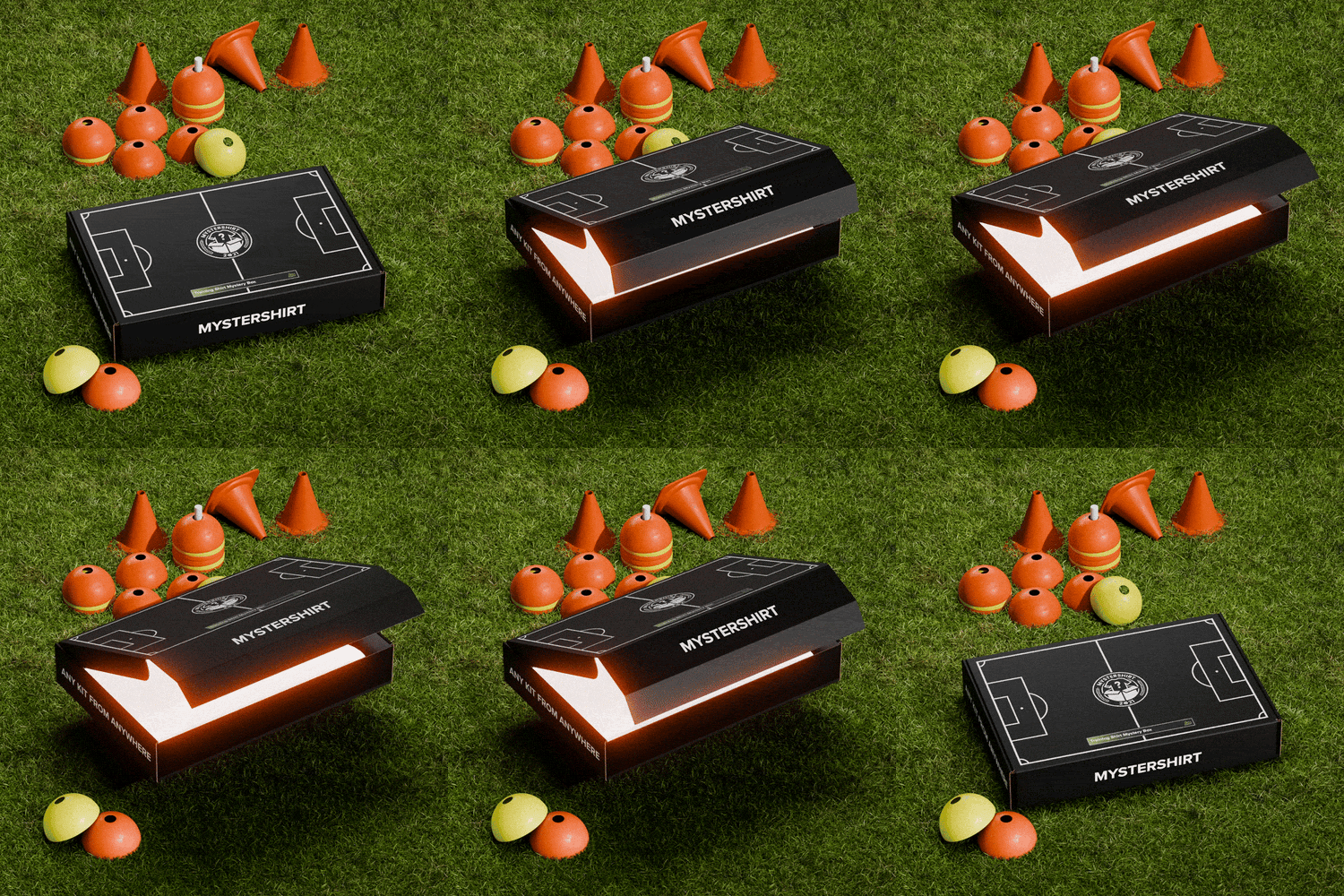
A collector often values season-specific details, sponsor era, patch compatibility, and long-term display appeal more than softness or everyday comfort. A parent usually cares more about wash tolerance, fit consistency, and whether the print can survive repeated wear. A gift buyer needs a safer route, which is why mystery shirt services such as Mystershirt have become a smart modern option. They reduce the risk of choosing the wrong club shirt outright while keeping the surprise element that makes football gifts memorable.
The same brand can score very differently depending on who is buying. Adidas might appeal to a fan chasing heritage and classic templates. Nike may suit someone who prefers a sharper athletic cut and newer fabric feel. A smaller label can beat both if the buyer wants something less common, more local, or easier on the wallet.
That is the gap in many rankings. They treat brand power as the answer, when brand fit is what decides whether a purchase feels right six months later.
I use one simple rule. Do not rank a football brand until you know whether the shirt is for collecting, weekly wear, a child, or a gift.
Design also matters in a more practical way than many guides admit. Some brands handle retro references better. Others are stronger with modern templates, heat-applied finishes, or slim match-style cuts. If your taste runs toward standout club designs, looking through recent best Premier League kits gives a better read on brand direction than a generic popularity list.
Even fan habits outside shirts tell you something about brand choice. A buyer who wants clean, durable display items may care about finish and longevity across all football merchandise, whether that is a framed shirt, scarf, or a premium vinyl Steelers decal. The instinct is the same. Buy for use, finish, and staying power, not just name recognition.
The best football brand is the one that matches your priorities with the fewest compromises. Fame helps. Fit, fabric, and purpose decide the result.
The Titans of the Pitch and Their Challengers
Who makes the best football shirt. The brand with the biggest contracts, or the one that fits the buyer in front of you?
The market still revolves around Nike and Adidas, but buying well means looking past headline sponsorships. The giants dominate visibility, club deals, and shelf space. Serious buyers still split into very different camps. Collectors often chase era-defining designs and sponsor pairings. Parents usually care more about price, wash durability, and easy sizing. Gift-givers need something authentic that feels personal without spending weeks hunting for the perfect club and season. That is why the strongest brand on paper is not always the right one to buy.

Why the leaders stay on top
Nike sells modern football style better than anyone. Its best shirts usually feel sharp, current, and closely tied to star players and big-stage marketing. Adidas wins a different kind of loyalty. It has stronger historical weight, deeper roots in tournament culture, and a long record of getting retro reissues and heritage cues right.
For buyers, that split matters. A supporter building a wardrobe around current elite clubs may naturally drift toward Nike. A collector who cares about football history, Trefoil-era callbacks, or classic strip balance often finds Adidas easier to love over time.
Puma sits just below that top pair, and it deserves more respect than many rankings give it. At club level, Puma often allows more visual character, bolder pattern work, and less templated design. Some releases miss. The good ones have real personality, which is more than can be said for plenty of safe big-brand shirts.
Why challengers matter to real buyers
The second tier is where the market gets interesting. Macron, Joma, Uhlsport, Kelme, Admiral, Mitre, and Le Coq Sportif all appeal to buyers who want something less obvious. Those brands rarely win on status alone. They win on value, identity, and the simple fact that a shirt can feel more special when you do not see ten of them on every high street.
That matters most for collectors and gift-buyers. A lesser-seen shirt can feel more thoughtful than another predictable giant-club home kit. It also helps parents shopping on a budget, because smaller labels often produce solid replica quality without charging for global marketing overhead.
Design is part of that equation. Looking through recent best Premier League kits by design and execution makes one point clear. Brand reputation does not guarantee the strongest shirt in any given season.
There is also a modern buying angle that old-school rankings ignore. Some fans do not want to pick one shirt at all. They want authenticity, surprise, and low risk. That is why mystery shirt services have found a real place in the market, especially for gift-givers and collectors who enjoy opening something they might never have chosen for themselves. Done well, that approach broadens your collection without the usual overthinking.
The same instinct shows up in football spaces beyond shirts. Buyers who care about display value and distinctiveness often mix in smaller memorabilia pieces rather than filling a wall with the same predictable items. A premium vinyl Steelers decal fits that kind of setup if the collection crosses sports and still aims for a clean, curated look.
Prestige helps brands sell. Distinctiveness, fit, and buyer purpose decide which shirts stay in rotation.
The Six Pillars for Judging a Football Brand
If you want a practical way to judge any football brand, use six pillars. Not all six matter equally for every buyer, but together they separate a strong purchase from a hype purchase.

Quality starts with standards
The first pillar is quality and performance. For shirts, that means fabric feel, stitching consistency, print application, collar recovery, and how well the shirt survives repeat washing. For footballs, quality has a more technical baseline. A standard football must be spherical, have a circumference of 68–70 cm, and weigh 410–450 g, as explained in this overview of football equipment specifications. The practical takeaway is simple. A premium product should stay close to those tolerances and remain stable through real use.
That same thinking applies to shirts. A premium shirt should hold shape, keep seams tidy, and avoid the cheap-feeling finish that often shows up in low-tier replicas or counterfeit stock.
A useful companion for fabric expectations is this breakdown of what soccer jerseys are made of, because materials affect comfort, breathability, and how the shirt ages in a wardrobe.
The other five pillars buyers miss
Authenticity and prestige come next. Official licensing matters, especially if you collect. A shirt's value drops quickly when provenance is unclear. Even if you never plan to resell, the difference between officially produced merchandise and something dubious is obvious once you inspect badges, sponsor application, wash tags, and manufacturer details.
Design and innovation sit in the middle of every football brand debate. Some brands nail restrained home shirts and struggle with third kits. Others are strongest when they take visual risks. Innovation also covers template freshness, vent placement, fabric texture, and whether the shirt feels considered rather than pushed through a seasonal machine.
Here's where many buyers go wrong:
- They overpay for launch energy: New releases carry excitement, but not every new shirt is a long-term keeper.
- They ignore fit category: Player-issue and fan versions can wear very differently.
- They judge only from photos: Texture, print feel, and panel construction often look better online than in hand.
Price and value should be judged over time, not at checkout. A shirt you wear often, wash safely, and still enjoy years later has outperformed a trend piece that lost its appeal fast.
Fit and sizing deserve their own pillar because consistency varies more than fans admit. Some brands cut narrow through the chest. Others give more room in the sleeves or body. Collector purchases get complicated when older shirts reflect older fits.
Collector value is the final pillar. In terms of collector value, era, sponsor, competition patching, club significance, and scarcity all come into play. A shirt can be average technically and still highly desirable because it represents a title season, a cult sponsor, or a one-year design experiment.
Brand Showdown Comparing the Giants
A big-name comparison only helps if it goes beyond simplistic labels like “Nike good, Adidas classic, Puma bold.” Serious buyers need to know what each brand usually gets right, where each one cuts corners, and which trade-offs matter once the shirt is washed, worn, and compared side by side with others in the collection.
The wider market still matters. Nike and Adidas have the scale, club access, and retail reach to shape what football fans see first, while Puma usually competes by being more distinctive. That gap shows up in availability, resale, and how easy it is to replace a shirt later if you miss the first drop.

Nike
Nike usually serves the buyer who wants a current look and easy wearability. Its strongest shirts are clean, sharp, and simple enough to wear outside football without feeling like full matchday costume. For a gift-giver or a casual fan, that lowers the risk. Nike is also easier to find at retail and on the secondary market, which matters if you need a specific club, size, or season without spending weeks hunting.
That convenience comes with a collector drawback. Template reuse can flatten the identity of some releases, especially in seasons where multiple clubs share the same collar, side panel, or graphic logic. I see this a lot with recent Nike eras. A shirt can fit well and still leave little long-term impression.
Adidas
Adidas is usually the safest pick for buyers who care about football lineage. The three stripes, older tournament associations, and stronger links between retro cues and modern releases give Adidas an edge with fans who want a shirt to feel rooted in the sport rather than styled around it.
It also tends to perform well across different buyer types. Collectors value the archive. Parents often like the familiar look and easier gift recognition. Longtime supporters often trust Adidas because the brand has delivered so many era-defining club and national team shirts.
| Pillar | Typical Adidas strength | Typical trade-off |
|---|---|---|
| Heritage | Strong football legacy and visual continuity | Some releases play it safe |
| Collector appeal | Older eras stay in demand | Better retro shirts cost more |
| Identity | Signature details are easy to spot | Repetition shows up across seasons |
The practical caution is simple. Adidas can sometimes rely a bit too heavily on its own history. Some shirts feel timeless. Others feel like polished reruns.
Puma
Puma is often the most interesting option for buyers who are bored by safe choices. At its best, Puma produces shirts with character. That can mean louder graphics, stranger proportions, or club-specific ideas that do not look copied from a master template used across half the catalogue.
For collectors, that unpredictability is part of the appeal. Some of Puma's most criticized releases age surprisingly well because they stand apart from their season. For gift buyers, though, it can be a riskier choice unless you know the recipient likes bolder kits. For parents buying for kids, the answer depends on the child. Some will love the flashier look. Others just want the shirt that looks like the one their favorite player wears every week.
Puma's weakness is consistency. The highs are memorable. The misses look dated faster than a restrained Adidas or Nike release.
So which giant is the best football brand
The honest answer depends on the buyer.
Nike suits fans who want current styling, broad availability, and a shirt that works in everyday wear. Adidas suits buyers who care about football history, visual continuity, and stronger long-term collector interest. Puma suits people who want individuality and are happy to accept more design risk in return.
That is the better way to judge the market. A collector should not shop like a parent buying for a fast-growing child. A gift-giver should not shop like someone chasing a grail shirt from a title season. And if you want some surprise without drifting into fake-shirt territory or random low-quality stock, a curated mystery service such as Mystershirt can make more sense than forcing a brand choice too early.
Finding Your Perfect Shirt Recommendations for Every Buyer
Who are you buying for? That question gives a better answer than any generic brand ranking.

A collector, a parent, a budget buyer, and a gift shopper should not use the same checklist. They value different things, accept different compromises, and make different mistakes. The smart buy depends on use, not prestige.
The collector
Collectors should chase meaning. A shirt earns its place when it marks a title run, a sponsor era, a one-season template, a famous player, or a club identity that feels specific rather than generic.
Good collector buys usually fall into a few patterns:
- Era-defining designs: Shirts tied to a football memory fans instantly recognize.
- Short-lived templates: Designs that only lasted a season and never got polished into something safer.
- Less obvious clubs: Teams outside the biggest leagues often have stronger visual character and lower competition from other buyers.
Mystery purchases can suit this buyer well because discovery is part of the hobby. Mystershirt is a useful option for collectors who want an authenticated surprise and still want some control over size and broad preferences. That balance matters. Total randomness sounds fun until the shirt arrives in the wrong cut, color family, or league category.
The parent
Parents should buy for wear, washing, and growth. Kids slide on hard ground, spill food on match day, and can outgrow a shirt before the season ends. In practical terms, that pushes durability, comfort, and replacement cost above brand status.
Supporter versions usually make more sense than player-spec shirts here. They are often easier to wear, less delicate, and less painful to replace. Fabric choice matters too. Softer, slightly heavier fan shirts can survive family use better than ultra-light performance tops with heat-applied details that need more care.
The same buying logic applies across football gear. Pick the item for the use it will get, not for the marketing around it.
The budget-conscious fan
Budget buyers do best when they stay patient. Release-week pricing is built for urgency, not value.
The sweet spot is often previous-season stock, overlooked away shirts, or clubs that do not sit at the center of the resale conversation. Standard fan versions also tend to give better day-to-day value because the fit is more forgiving and the shirt is easier to live with. Buyers comparing price, quality, and long-term wear can use this guide to football shirt value for money as a practical benchmark.
Cheap listings still need scrutiny. A low price on a real shirt can be a bargain. A low price on a bad fake is just wasted money.
The gift shopper
Gift shopping causes the most avoidable mistakes. The buyer guesses the club, guesses the size, then picks a shirt that looks safe but feels impersonal once it is opened.
A better gift usually starts with the recipient, not the brand. Ask what they already own. If they already have the current home shirt of a major club, another obvious pick rarely feels memorable. A surprise shirt can work better, especially for someone who enjoys football culture beyond one team and likes the reveal as much as the item itself.
That is why mystery-shirt buying has become a practical modern route for presents. It keeps the unboxing moment, lowers the risk of choosing the same shirt they already have, and suits buyers who want to give something that feels considered without pretending to know every detail of the recipient's collection.
A football gift works best when it feels personal, with enough surprise to make it memorable.
A Smart Shopper's Guide to Football Shirts
The hardest part of buying football shirts today isn't finding options. It's filtering bad ones. Counterfeits are everywhere, sizing language is inconsistent, and too many buyers only think about care after the sponsor starts to crack.
How to spot trouble before you buy
Start with the seller, not the shirt. If the listing avoids clear photos of tags, close-up badge detail, and sponsor application, treat that as a warning. If the price looks absurdly low for a shirt that should carry collector appeal or current-season demand, be skeptical.
Look for these red flags:
- Blurry product imagery: Sellers hide flaws when they don't show fabric texture or label details.
- Vague wording: “Inspired by,” “fan version,” or evasive descriptions often signal trouble.
- No return clarity: A seller who won't explain returns usually won't help when authenticity is questioned.
If you want a grounded way to think about cost versus reliability, this piece on football shirt value for money is useful because it frames football shirt buying around practical value instead of impulse.
Fit and care matter more than hype
Always check whether you're buying a body-skimming performance cut or a standard supporter fit. Many buyers say a brand “runs small” when they bought a player-oriented version designed to sit closer to the body.
Care is simple, but people still ruin good shirts by rushing it:
- Wash cold and inside out: That protects print and surface finish.
- Skip aggressive drying: Heat is hard on namesets and sponsor layers.
- Store with space: Crushed prints age badly.
A shirt can be authentic and still become a poor buy if you choose the wrong fit or treat it carelessly after purchase.
The Mystershirt Advantage Guaranteed Authentic Delivered with Surprise
Football shirt buying now has three recurring problems. Too many fakes, too many choices, and too many gifts that feel generic once they're opened. A mystery-shirt model solves those problems in a very specific way. It narrows the decision, keeps the experience fun, and puts authenticity at the center.
That combination matters more than people think. Choice paralysis is real in football retail, especially for buyers who know enough to be picky but not enough to feel fully certain. The surprise format also changes the emotional side of the purchase. Instead of debating one shirt against another for hours, the buyer sets preferences and lets discovery become part of the value.
For collectors, that can add variety to a wardrobe that would otherwise become too predictable. For gift shoppers, it removes the pressure of pretending you know exactly which shirt someone wanted. For parents, it can be a more straightforward way to buy something official without chasing endless listings across marketplaces.
The strongest part of the model is that surprise doesn't have to mean risk. If the shirt is authenticated, clearly sized, and backed by a sensible return framework, the buyer gets novelty without the usual uncertainty that hangs over secondary-market football purchases.
If you want to build your collection, buy a gift, or try a more flexible way to shop official football shirts, Mystershirt offers mystery jersey boxes with authenticated shirts, broad size options, and preference filters that help keep the surprise fun without making the purchase blind.