You're probably in one of three spots right now. You saw a split shirt online and couldn't decide whether it was brilliant or awful. You're trying to buy one as a gift and don't want to waste money on a badly stitched novelty. Or you're a football shirt fan who keeps hearing people mock half-and-half tops, but you want a straight answer on what they are and when they make sense.
That confusion is normal. A half and half jersey sits in a strange corner of football culture. It can be a thoughtful piece tied to a real story, or a cheap mash-up that looks wrong the second you unfold it. The difference usually comes down to context, workmanship, and expectations.
Table of Contents
- What Exactly Is a Half and Half Jersey
- The Divisive History and Meaning of Split Jerseys
- Official vs Custom Made Jerseys
- A Buyer's Guide to Half and Half Shirts
- Rules Etiquette and Styling Your Jersey
- The Perfect Gift and the Mystershirt Alternative
What Exactly Is a Half and Half Jersey
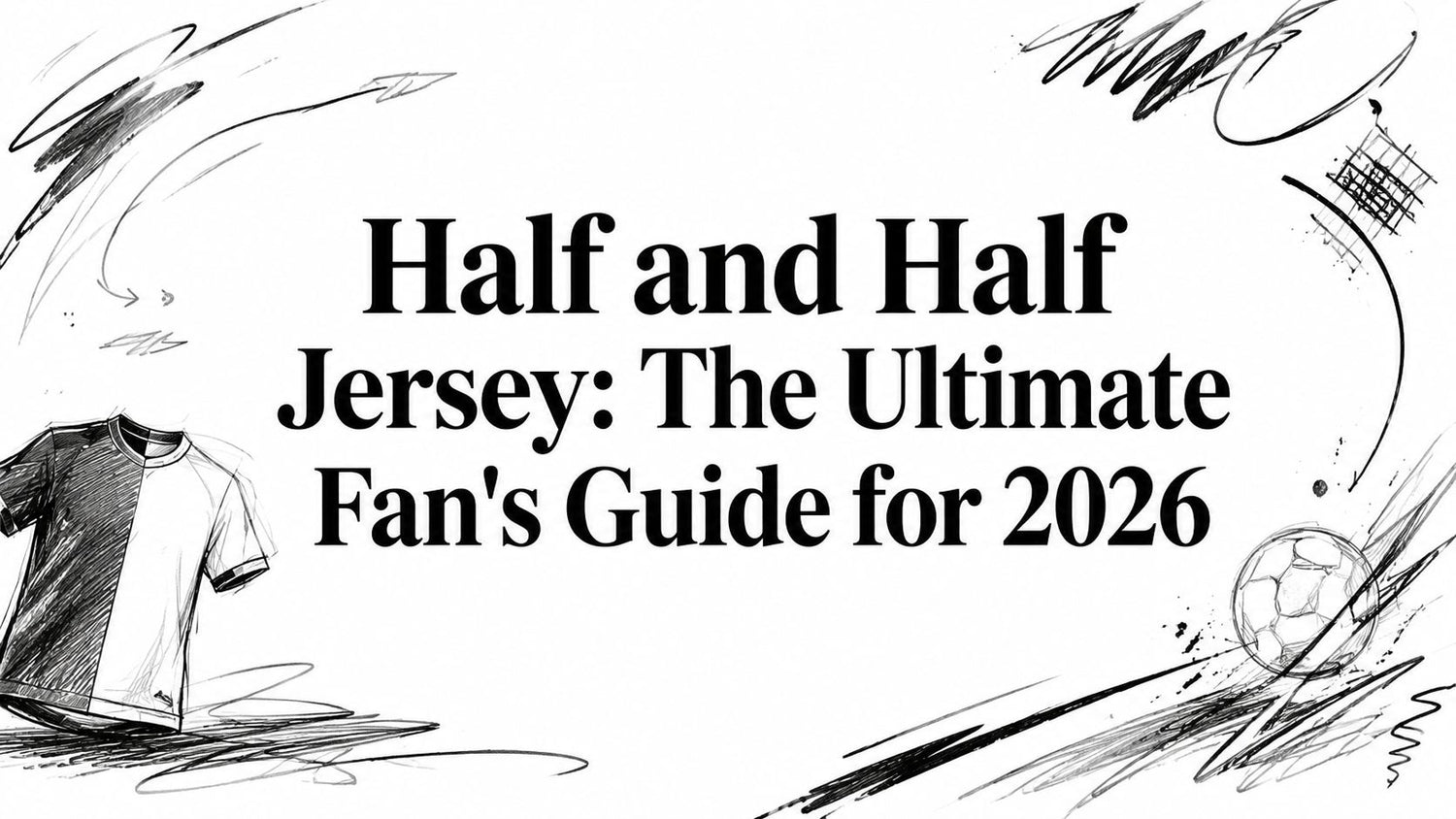
A half and half jersey is one shirt made from two different jerseys cut down the middle and sewn together. In most cases, the split runs vertically so one club, country, or design sits on the left side and the other sits on the right. It's a physical hybrid, not just a printed graphic.

That detail matters because buyers often assume these are factory-made in the same way as normal replica shirts. Usually, they aren't. The common version is a custom garment made by taking two real shirts apart and rebuilding them into one.
How the construction works
A decent maker doesn't just slice two jerseys and run a quick seam down the center. The cut has to be straight, the grain has to line up, and the front and back need to stay balanced. If those things are off, the shirt can pull sideways when worn.
The build also needs proper seam planning. A verified making note says the process requires a sewing allowance of at least one inch from the center cut to help stop the 100% polyester knit fabric from tearing under movement, especially in a wearable sports shirt rather than a wall display (how half-and-half jerseys are made).
Practical rule: If the center seam looks wavy on a flat table, it'll usually look worse on a body.
Why they aren't all the same
Some half-and-half shirts are fan-made for a specific memory. Think cup finals, mixed-family loyalties, or two youth teams with siblings on opposite sides. Others are collector pieces built from vintage shirts. And some are low-grade novelty items made fast, with little care for fit or durability.
A simple way to tell what you're looking at is to ask one question. Was this made to tell a story, or was it made just to exist? The best half and half jersey usually has a reason behind it, and that reason shows up in the quality of the work.
The Divisive History and Meaning of Split Jerseys
Half-and-half shirts get strong reactions because they sit right on the line between sentiment and sacrilege. For one fan, it's a perfect way to mark a one-off occasion. For another, it looks like a refusal to choose a side.
That's why these jerseys often get mocked in the same breath as split scarves. Purist supporters tend to see them as soft, touristy, or disconnected from how football loyalty usually works. If your club identity is a serious thing, merging two badges can feel wrong.
Why people actually buy them
The people who want these shirts usually aren't trying to make a fashion statement first. They're marking a personal connection. Verified market context points to niche but passionate buyer groups, including mixed-support households and gift buyers for weddings. O'Neills openly markets half-and-half county jerseys as personalized novelty gifts, and there have been real sightings such as a half-Mexico and half-USMNT jersey at MLS games, which shows the format is used to express dual identity rather than just internet irony (O'Neills half-and-half county jerseys).
A few common examples make the appeal easier to understand:
- Family rivalry: One parent supports one club, the other backs its rival.
- Special fixture memory: A fan wants one shirt to remember a particular match.
- Gift use: Someone wants a wedding, christening, or household gift with a football angle.
- Dual identity: National team and club, or two countries tied to one person's story.
Some shirts say, “I support everyone.” The better ones say, “This specific combination means something to me.”
Are they tacky
Sometimes, yes.
A half and half jersey looks tacky when the pairing feels random, the seam work is bad, or the wearer wants attention more than meaning. It works better when there's a genuine story behind it and the shirt is made cleanly enough to look intentional.
That's why these pieces divide opinion so sharply. They aren't neutral objects. They broadcast a story, and people will judge both the shirt and the story the second they see it.
Official vs Custom Made Jerseys
The biggest mistake buyers make is treating all split jerseys as one category, when they really fall into separate groups with very different standards.

What official usually means
An official half-and-half jersey is the rare version. It comes from a club, league, or brand rather than an individual maker. Collectors care about these because the release itself is the point. The shirt has provenance, packaging, and a clearer place in football memorabilia culture.
A custom-made half and half jersey is different. It's usually built by an independent tailor, shirt restorer, hobby maker, or custom apparel seller. That doesn't make it worse. In many cases it makes it more interesting. But you're buying craftsmanship, not factory status.
Here's the basic comparison:
| Type | Best for | Main risk |
|---|---|---|
| Official release | Collectors who want rarity and traceable origin | High price and limited choice |
| Custom made | Fans who want a personal combination | Inconsistent quality between makers |
What separates a strong custom from a weak one
Material quality matters more than many buyers realize. Verified fabric guidance says these garments typically rely on 100% polyester single jersey knit, which is half the thickness of rib fabric and can twist or warp if it isn't cut and sewn carefully (single jersey knit fabric properties).
That explains a lot of the bad half-and-half shirts you'll see online. The seam may hold, but the body hangs crooked because the maker didn't handle the base fabrics properly.
Check these details before you buy:
- Center seam alignment: Bad customs often show mismatched hems, drifting sponsor text, or a neckline that doesn't sit evenly.
- Fabric compatibility: Two jerseys can both be genuine and still behave differently when stitched together.
- Back panel consistency: Some makers focus on the front and leave the back looking awkward or off-center.
- Finish around badges and sponsors: Crooked joins through logos usually signal rushed work.
If you're thinking about adding names, numbers, or repairs after construction, it helps to understand transfer methods. A practical reference on how to use DTF transfers is useful because customizers often mix sewing work with post-build decoration, and poor application can ruin an otherwise solid shirt.
For younger players or families comparing custom shirt options more broadly, this guide on custom youth soccer uniforms is also helpful for understanding how fit, wear, and printing quality affect long-term satisfaction.
Buy the seam first, the idea second. A clever concept can't rescue a shirt that twists when you put it on.
A Buyer's Guide to Half and Half Shirts
Buying a half and half jersey is closer to commissioning a niche custom piece than ordering a standard replica. That's why the safest buyers act more like collectors than impulse shoppers.

Start with sellers who show their process. Marketplaces can be useful, but a polished product photo isn't enough. You want close shots of center seams, collars, hems, and backs. If a maker only shows one dramatic front-facing image, that's not a good sign.
The next thing to understand is cost. A proper custom usually involves two base shirts plus labor. So if the price looks suspiciously low, ask yourself what corners were cut. Cheap thread, poor matching, fake base jerseys, or rushed finishing are the usual answers.
Questions worth asking before you pay
Send a message before ordering. Serious makers should be comfortable answering clear questions.
- What base shirts are you using? Ask whether they're genuine shirts, fan replicas, or donor garments supplied by the customer.
- Can I see previous seam work? Request photos of finished collars, side profiles, and back panels.
- How do you handle sizing? Two shirts from different brands can fit very differently, even when the label says the same size.
- What happens if the alignment is off? Their answer will tell you a lot about standards and accountability.
- Is this meant for wearing or display? Some customs look better framed than worn.
Red flags that usually mean trouble
A few warning signs show up again and again:
- No back photos: Sellers know the back often reveals rushed work.
- Vague wording: “Inspired by,” “custom style,” or “similar to pictured” can hide major differences.
- No material discussion: Good makers usually know exactly what they're sewing.
- No return clarity: Custom work often has limits on returns, but the policy should still be plainly stated.
One more tip. If you're commissioning a gift, don't guess the recipient's tolerance for novelty. Plenty of football fans love unusual shirts in theory and would never wear one.
Rules Etiquette and Styling Your Jersey
The biggest misconception about a half and half jersey is that if you own it, you can wear it anywhere. That isn't always true.
Verified guidance on this topic points to a real blind spot in fan advice. Football authorities regulate team kits as equipment, so a split-color shirt could be rejected in an official setting if it conflicts with competition rules or creates a color clash with either side (discussion of split-shirt rule risk). Most casual content treats half-and-half tops as harmless fanwear, but once a shirt enters a controlled environment, standards change.
Where you can wear one
For casual use, you're usually fine. Streetwear, watch parties, five-a-side with friends, or framed display collections are the natural home for these shirts.
For organized or sensitive settings, use caution:
- Club grounds and stadiums: Some venues may object if the shirt is seen as disruptive or confusing.
- Official matches: If you're a player, coach, or part of a formal event, don't assume a split shirt will be accepted.
- Rivalry fixtures: Even if allowed, the social reaction may be harsher than you expect.
That's the etiquette side. A shirt that feels playful at a family gathering can look provocative in an away end.
Wear it where personal storytelling makes sense. Don't wear it where people expect a clear allegiance.
For outfit ideas that help unusual shirts feel more deliberate, this guide to styling football shirts is worth a look.
How to style it without overdoing it
A half-and-half shirt is already busy, so the rest of the outfit should calm things down.
- Keep the base neutral: Black, navy, grey, or denim works better than trying to match both halves.
- Let the shirt lead: Don't add loud sneakers, a bright cap, and statement outerwear on top.
- Choose the right occasion: A collector meet-up or casual pub screening suits it better than a formal fan event.
- Wash carefully: The center seam is the stress point, so turn it inside out and avoid rough treatment.
If you treat it as the single focal piece, it has a much better chance of looking intentional rather than messy.
The Perfect Gift and the Mystershirt Alternative
A half and half jersey can be a memorable gift, but it's also one of the easiest football-shirt purchases to get wrong. You need the right size, the right pairing, the right taste level, and a maker who can build the shirt properly. Miss on any one of those and the surprise falls flat.

That's why gift buyers should pause before ordering one blindly. A split shirt is personal in a very specific way. If the recipient doesn't like novelty wear, hates one of the clubs involved, or prefers clean authentic shirts, the gift can feel more awkward than thoughtful.
Why half-and-half shirts are risky gifts
They work best when the recipient has already hinted at the idea. If not, you're making several guesses at once.
A safer approach is to think about the occasion first. If you're shopping for a football-loving dad, partner, or friend and want something personal without locking yourself into a controversial shirt style, lists of personalized Father's Day gifts can help widen the options and stop you from forcing a football concept that doesn't quite fit.
A safer surprise for football shirt fans
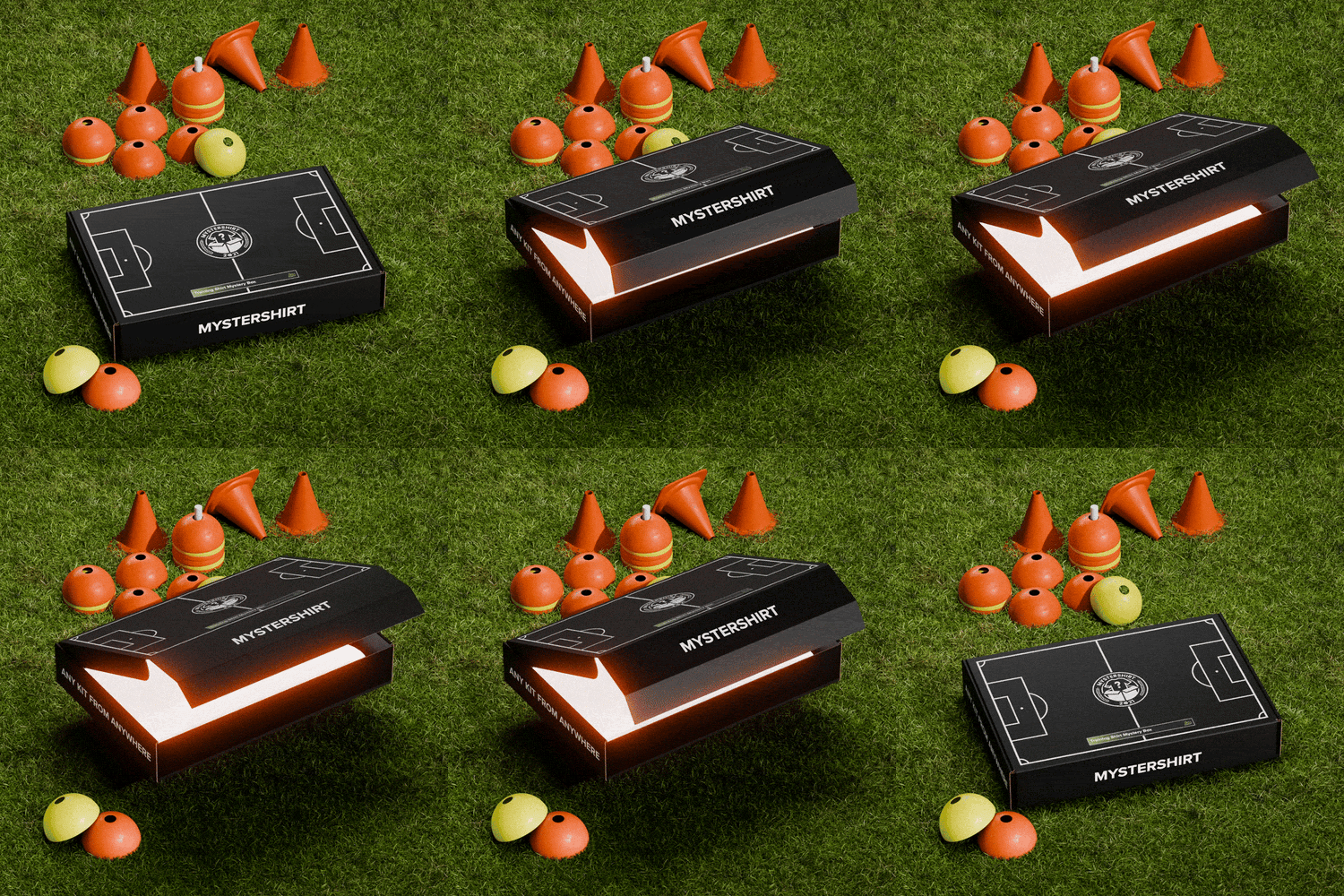
If the goal is to give someone the thrill of opening a shirt they'll wear, a mystery format often makes more sense than a split custom. Mystershirt offers 100% authentic, brand-new jerseys, lets buyers choose sizing, and allows them to exclude certain teams, leagues, or colors. According to the publisher information provided, the brand has 40,000+ shirts in stock, has sold 300,000+ jerseys, offers a 100-day money-back guarantee, and its boxes start from $33.32.
That changes the gift equation. Instead of guessing whether someone wants one very specific half-and-half concept, you're giving them the fun of surprise with guardrails that protect against obvious misses.
If you like the idea of football apparel as a gift but want something more wearable and flexible, a streetwear mystery box can scratch the same itch without the social baggage that split jerseys sometimes carry.
A half and half jersey is best when it tells a very specific story. If you don't know the story for sure, don't force one.
If you want the excitement of an unusual football shirt gift without gambling on a divisive split design, Mystershirt is a smarter option. You get authentic jerseys, clear sizing choices, the ability to avoid unwanted clubs or colors, and a surprise that still feels personal.