You're holding a tiny football shirt in a shop, or staring at one on a product page, and the obvious question arrives: is this a genuine replica, a proper kids' kit, or just a novelty top with a badge printed on it? The answer matters if you're buying a birthday gift, dressing a young player, or starting a collection that won't look cheap after a few months.
Mini football jerseys deserve more attention than a small corner of children's sportswear. They sit between apparel, supporter culture, gifting, and collecting. The right shirt can introduce a child to a club, give a casual fan a memorable piece of identity, or create a compact display item without the commitment of a full adult shirt. The wrong one can be poorly sized, uncomfortable, badly finished, or impossible to authenticate.
Table of Contents
- Why Mini Football Jerseys Deserve Their Own Conversation
- Replica, Novelty, and Kids' Cut Explained
- How to Get the Fit Right Without Trusting the Age Label
- What Mini Jerseys Are Actually Made Of
- Five Quick Checks to Confirm a Jersey Is Authentic
- Why Mini Jerseys Are an Underrated Entry Point for Collectors and Gifts
- Caring for and Displaying Mini Jerseys
- Common Questions Buyers Ask Before Clicking Buy
Why Mini Football Jerseys Deserve Their Own Conversation
Most buying guides treat mini football jerseys as ordinary kids' clothing. That misses the point. A parent may want a shirt that survives training, a gift buyer may want something visually striking and easy to wrap, while a collector may be testing a club or era before investing in a full-size shirt.
The market reflects that broader audience. The youth soccer jersey market was estimated at $2.8 billion in 2025 and is projected to reach $4.1 billion by 2034, with a projected 5.2% CAGR over that period, according to Marketintelo's youth soccer jersey market analysis. Replica jerseys held the largest share at 42.3%, while online retail accounted for 31.2% of revenue, up from 24.5% in 2019, according to the same source.

That participation base is substantial rather than niche. The same market source notes roughly 172 million youth players, with Asia Pacific representing 38.5% of revenue. Mini shirts therefore serve children who play, children who support a club through family influence, and adults who appreciate the visual language of football at a smaller scale.
Three buyers, one product category
The parent prioritizes comfort, washability, and a fit that allows movement. The gift buyer cares about club recognition, presentation, and whether the recipient can wear it immediately. The collector studies badge application, sponsor treatment, labels, season details, and whether the shirt belongs in a drawer, a frame, or a growing wall of memorabilia.
Those priorities overlap, but they aren't identical. A lightweight replica may be excellent for play and weak as a display piece. A novelty shirt may be fun for a party but offer no meaningful authenticity. A licensed mini shirt may be the strongest gift because it communicates real club identity without requiring the recipient to know much about collecting.
The key is to stop thinking of a mini jersey as merely an adult shirt made smaller. Scale changes fit, construction, badge proportions, comfort, and display value. Treat it as its own buying decision, and the usual mistakes become much easier to avoid.
Replica, Novelty, and Kids' Cut Explained
A mini football jersey can belong to one of three broad categories. Sellers don't always label them clearly, so you need to identify the category before judging quality or value.
An officially licensed replica is made to reproduce a club or national-team shirt for supporters. It normally carries the correct crest, sponsor treatment, manufacturer branding, and season design. It isn't the same as a match-issued player shirt, but it should represent the official visual identity.
A novelty shirt is designed for fun, parody, decoration, or general fandom. It may use club colors or football-inspired graphics without being licensed by the club or kit manufacturer. That doesn't automatically make it worthless. It means you should buy it as a novelty, not mistake it for official merchandise.
A kids' cut is the child-specific version of a full kit. It may look almost identical to the senior replica, but the proportions usually account for a shorter torso, different shoulder width, and a roomier body. Some are intended for matchday wear and play, while others are standard fan versions with a more relaxed construction.
| Type | Source | Authenticity | Best use |
|---|---|---|---|
| Official replica | Licensed club or manufacturer channel | Official supporter merchandise | Gifting, wearing, collecting |
| Novelty shirt | Independent or fan-made seller | Unlicensed or decorative | Parties, casual fun, display |
| Kids' cut | Official youth range or kit retailer | Official teamwear or replica | Young players, matchday, gifts |
Sneaker collectors have a useful vocabulary for this distinction. A general-release sneaker isn't a player-exclusive sample, and a promotional novelty colorway isn't the same thing as a retail release. Mini jerseys follow the same logic. A smaller size doesn't make a shirt less authentic, but a similar-looking design doesn't make it official.
What changes at the smaller scale
Manufacturers may simplify details on a small shirt because badges, sponsor marks, and trim have less fabric to occupy. That doesn't mean every simplification is suspicious. Look for overall consistency rather than demanding that every stitch match an adult version exactly.
For gifting, choose an official replica or kids' cut unless the recipient specifically enjoys novelty designs. For collecting, record the source, season, size, and licensing details. For play, prioritize construction and fit over the assumption that the most elaborate shirt is the strongest one.
How to Get the Fit Right Without Trusting the Age Label
Age labels are a rough shortcut, not a measurement system. Measure the child's chest and height, then compare both figures with the specific brand's chart. Don't buy a Junior XS because the child's age appears beside that label.
Existing sizing guides show why this matters. One guide maps Junior XS to 104–110 cm in height, while another uses the same height range for XS but assigns a different chest range, as described in Foot Supporter's children's football shirt sizing guide. The label looks familiar, but the garment may fit very differently.
Use a measurement-first routine
- Measure the chest. Wrap a flexible tape around the fullest part of the chest, keeping it level and comfortably snug. This is the most useful starting point for judging whether the shirt will cling, pull, or sit comfortably.
- Measure height and length. Height helps you compare the child with the chart, while garment length tells you whether the hem will sit like a football shirt rather than a cropped top. If the seller publishes finished-shirt measurements, compare them with a shirt the child already wears successfully.
- Compare both measurements. If chest points to one size and height points to another, treat the conflict as useful information. Check the cut description, return policy, and customer photos rather than choosing by age.
- Consider the intended look. A fitted shirt can look sharper on a collector's display or during a formal gift moment. A little extra room works better for training, layering, and a child who's growing quickly.
- Size up with a reason. Size up when the child sits between measurements, is in a growth spurt, or needs the shirt to last beyond a single season. Don't size up automatically if the shirt is already cut generously.
Practical rule: Buy for the child's current chest and height first, then add room only when the use case justifies it.
European and American youth sizing can also differ in shape. A European cut may feel slimmer through the body, while another market's kids' shirt may run shorter or wider under the same nominal label. When the shirt is a gift and measurements are unavailable, choose a seller with a clear exchange policy and avoid treating age as proof of fit.
The video below offers a visual companion for checking proportions before ordering.
What Mini Jerseys Are Actually Made Of
Most mini football jerseys use polyester-based knit fabric. Polyester is hydrophobic, meaning the fiber itself doesn't readily absorb water. Sweat therefore has to move through capillary spaces in the knit and across the fabric surface, with the final result shaped by the construction and finish rather than fiber composition alone, as explained in this textile research on polyester moisture management.
That distinction matters because “moisture-wicking polyester” isn't a complete performance specification. Knit geometry, yarn fineness, and finishing chemistry influence how quickly moisture spreads, how much air passes through, and whether the shirt clings against the skin.
Lighter fabric versus denser construction
A study of sports T-shirts found a 75D/100f single-jersey polyester fabric at 145 g/m² delivered the strongest overall balance of wicking, water absorbency, drying speed, and air resistance, according to the published textile performance study. For mini football jerseys, that finding supports a practical preference for lighter, more open knits when the shirt is intended for active wear.
Lighter constructions generally feel less clingy and allow better airflow. Denser knits can offer greater durability, a firmer hand, and better stability for printed graphics, but they may feel warmer and less flexible. There isn't one universally correct fabric. A collector may prefer structure and print sharpness, while a young player needs low weight and comfortable movement.
Buyers who want a broader explanation of soccer-shirt fabrics can also consult this guide to what soccer jerseys are made of. For children's clothing generally, a practical perfect fit for children's clothes resource can help you compare body measurements with garment dimensions.
Badges and surface details
Badge application often affects the wearing experience more than a product page's fabric slogan. A stitched crest usually adds texture and weight. A heat-pressed badge feels flatter and can be more comfortable against the body, but it needs careful washing. A plastic-feeling sticker, rough edge, or oversized crest should make you question the shirt's quality and proportions.
Check the sponsor print too. On a genuine-looking mini shirt, the sponsor should sit in proportion to the chest, follow the design's spacing, and feel integrated with the fabric. Poor miniatures often enlarge the badge or compress the sponsor in ways that make the whole shirt look like a cheap costume.
Five Quick Checks to Confirm a Jersey Is Authentic
You don't need specialist equipment to reject most questionable mini football jerseys. A quick visual and tactile inspection can expose obvious problems before you pay.
Start with the label
1. Inspect the neck label. Check typography, spacing, manufacturer details, registered trademark symbols, and size formatting. Official labels tend to look clean and consistent. Blurry text, uneven alignment, strange spelling, or a size mark that doesn't match the seller's description deserves caution.
2. Study the crest stitching. Look at the edge, thread tension, and shape. A club crest doesn't need to be hand-perfect, but it shouldn't have loose threads, visibly crooked borders, or a thick plastic surface that overwhelms the shirt.
3. Compare official logos. Check the manufacturer logo, club crest, competition patch, and sponsor lettering against trusted images from the same season. Sponsor font weight and letter spacing are especially revealing because counterfeiters often approximate the design rather than reproduce it accurately.
4. Feel the fabric and applications. The shirt should have a coherent hand. A thin body with a heavy, rigid badge may be poorly finished. Conversely, an official heat-pressed application should feel bonded to the fabric rather than like a loose sticker.
5. Review security details and seller evidence. Officially licensed shirts may include hologram or QR security tags, depending on the manufacturer and release. These features support authentication, but they aren't proof by themselves. Ask for clear photos of the labels, badge, sponsor, seams, and product packaging before buying from an unfamiliar seller.
The fastest counterfeit tell is often proportion. If the badge looks oversized, the sponsor seems cramped, or the seams don't line up with the design, stop treating the shirt as a bargain.
The most useful checks are always comparative. Match the shirt to reliable images from the same season, then inspect the seller's return terms. A shirt can be licensed and still poorly stored, worn, or altered. Authenticity tells you what it is, while condition tells you whether it's worth owning.
For a more detailed process covering labels, logos, stitching, and seller checks, use this guide on how to check if your football shirt is authentic.
Why Mini Jerseys Are an Underrated Entry Point for Collectors and Gifts
The usual collecting advice points beginners toward full-size vintage, player-issued, or signed shirts. Those pieces can be compelling, but they also demand more space, more money, and more confidence about condition and provenance. Mini football jerseys offer a lower-risk way to learn what kind of football history you want to collect.
A small shirt can represent a club, a tournament, a player, or a family connection without taking over a room. It also works exceptionally well as a gift because the object has immediate visual identity. You don't need to know the recipient's entire collecting philosophy to understand the appeal of a famous colorway, a historic crest, or a shirt connected to a shared matchday memory.
The nostalgia market creates useful spillover
The classic football shirt market remains active. The Guardian reported in 2025 that Brazilian shirts were top sellers on Depop and that demand for classic football shirts showed no sign of fading in its report on the boom in classic football shirts. That reporting focuses on full-size vintage pieces, but the underlying appeal is relevant to miniatures: people buy shirts for memory, identity, design, and storytelling, not only for match utility.
A 2019 study of replica football kits found that 63% of respondents had owned a child-sized replica shirt, while 92% had purchased at least one adult-sized replica shirt, as summarized in the football jerseys market study. The distinction shows that child-sized shirts have long belonged to football merchandise culture, even as adult replicas became more widespread through supporter and collector behavior.
Display and gift logic
Mini shirts work in a hallway frame, a child's bedroom, a shelf, or a small shadow box. They also make sense for a starter collection where the buyer wants several clubs or eras rather than one expensive centerpiece. Keep the collecting thesis clear. A random assortment can become clutter, while a theme such as national teams, local clubs, tournament shirts, or family favorites gives the display shape.
Customization can help a novelty shirt become a personal keepsake, although it shouldn't be confused with official licensing. Techniques that transform plain tees with embroidery can inspire names, dates, or decorative additions, but alterations may reduce resale appeal.
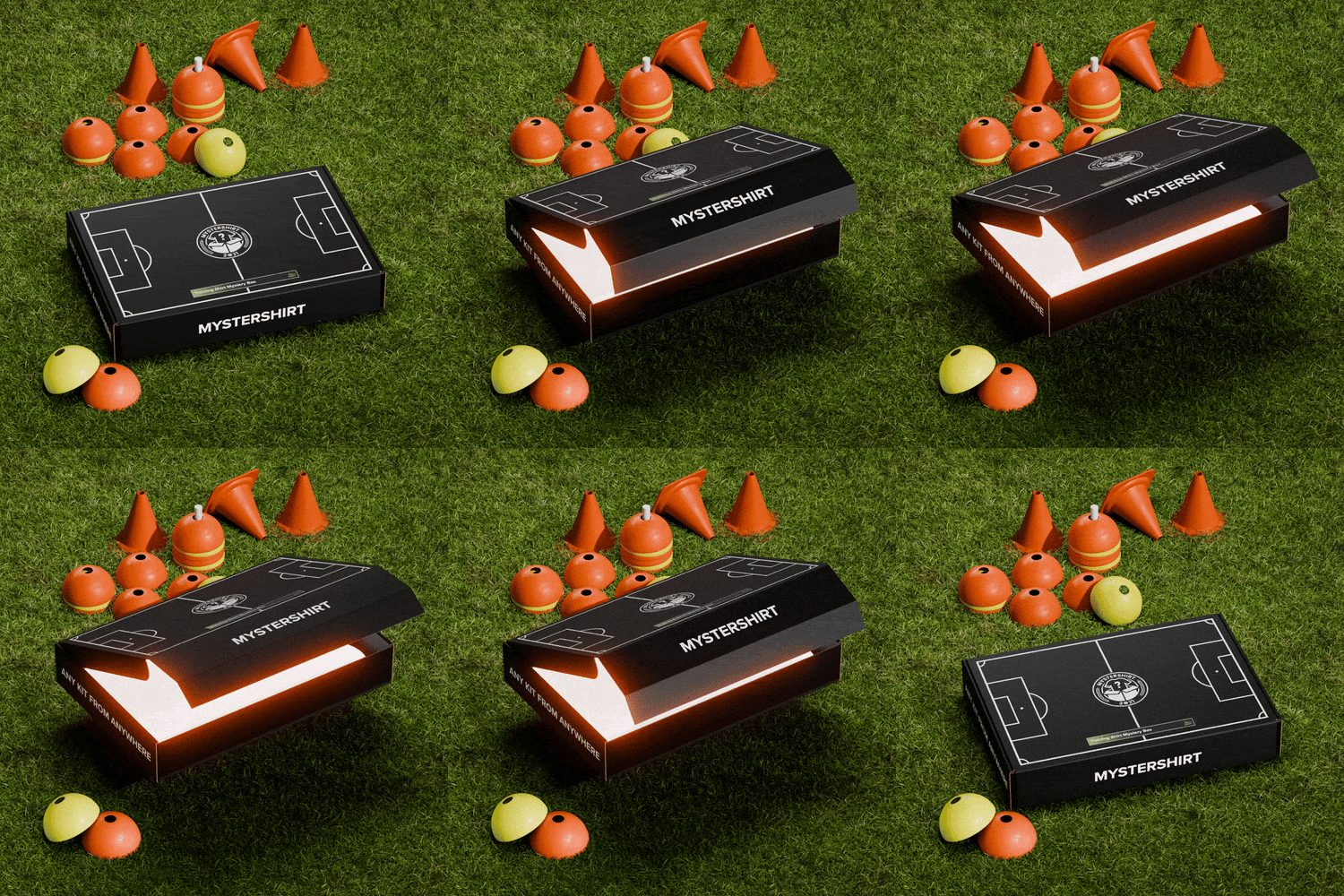
Mystery boxes can also suit collectors who value variety over exact selection. Mystershirt offers children's sizes through its Kids Soccer Jersey Mystery Box, alongside broader football-shirt boxes with size options from children's sizes to 5XL, as described in the publisher's product information. Treat that format as an unboxing and discovery purchase, not a guaranteed route to a specific club or season.
Caring for and Displaying Mini Jerseys
Mini jerseys usually have two jobs. They get worn after training or on matchday, then they may spend years folded in a drawer or mounted on a wall. Care should protect both the fabric and the sponsor details.
For shirts that get worn
Turn the shirt inside out and wash it in cold water. Skip fabric softener because it can coat polyester fibers and interfere with the surface behavior that helps moisture move through the knit. Don't scrub heat-pressed badges or sponsor marks aggressively.
Air-dry the shirt away from direct sunlight. A dryer's heat can stress prints and adhesives, while strong sunlight can fade colors over time. Hang the shirt from the shoulders only when the fabric is still light with moisture, or lay it flat if the knit feels delicate.
For shirts that get displayed
A shadow box is the most flexible choice if you want room for shorts, socks, a ticket, or a small note. A magnetic hanger rail keeps the shirt visible without piercing the fabric, while a mannequin-style mini display gives a stronger three-dimensional effect but needs more shelf depth.
Avoid pressing the shirt tightly against glass. Leave enough room for the fabric to sit naturally, and keep the display away from damp rooms and harsh window light. For a step-by-step approach to mounting football shirts, use this guide on how to frame a shirt.
Common Questions Buyers Ask Before Clicking Buy
Are mini football jerseys expensive?
Price depends on whether the shirt is an official replica, a novelty design, a vintage item, or a signed piece. Don't compare a licensed kids' replica with an unlicensed fan shirt as if they belong to the same market. Compare construction, provenance, licensing, condition, and return terms first.
Do mini jerseys hold resale value?
Some do, but resale is more selective than with sought-after adult shirts. A clear club connection, desirable season, strong condition, official labeling, and documented authenticity help. Most mini jerseys should be bought because you or the recipient wants them, not because resale is guaranteed.
What should I do between sizes?
Use chest and height together. Size up when the child is growing quickly or needs room for a longer wearing period, but check whether the brand already uses a generous cut. For a display piece, choose the size that gives the intended silhouette rather than buying excess fabric.
How do I explain a kit-builder version to a child?
Tell them a fan-version replica is made for supporters, while a kit-builder or kids' match version is designed to resemble the team's playing equipment. Both can show the same colors and badge, but the cut, fabric, and finishing may differ.
Before paying, confirm four things:
- Category: Know whether it's licensed, novelty, or a kids' cut.
- Measurements: Compare chest and height with the seller's chart.
- Construction: Inspect fabric, badge, sponsor, seams, and labels.
- Purpose: Decide whether the shirt is for play, gifting, collecting, or display.
Mystershirt offers authentic football-shirt mystery boxes in children's sizes, including Kids Soccer Jersey Mystery Boxes, for buyers who want the surprise of unboxing rather than selecting one exact design. Visit Mystershirt to explore kids' options, retro selections, sharing boxes, and sizes extending from children's fits to 5XL.