You're staring at two tabs again, one shirt looks clean, the other looks “official,” and both listings are trying to convince you they're the one. That's the trap with a jersey Champions League search, too many nearly identical photos, too many vague descriptions, and not enough straight talk about badges, fit, and authenticity. If you want the shirt you'll wear, not the one you'll regret, you need to judge the garment, not the hype.
Table of Contents
- What a Champions League Jersey Is
- Authentic vs Replica vs Fan Jersey
- How Sizing and Fit Really Work
- Should You Buy a Jersey With or Without the Champions League Badge
- How Mystershirt Mystery Boxes Work
- Where to Safely Buy Champions League Jerseys
- Care, Storage and Spotting Fakes
- Choosing the Right Champions League Jersey for You
What a Champions League Jersey Is
The fastest way to waste money is to treat every European shirt like the same product with a different badge. A true Champions League jersey is tied to the competition itself, so the shirt carries tournament-specific styling, sleeve detailing, and product tags that mark it as part of the European stage rather than a generic home or away release.

Read the shirt as a product, not a souvenir
The shirt's value starts with the competition's own history. The UEFA Champions League began as the European Cup in 1955/56, relanded under its current name in 1992/93, and only 24 clubs from 10 nations have lifted the trophy since the beginning, with Real Madrid on 15 titles and 9 in the Champions League era according to UEFA's winners list. UEFA's winners list explains why tournament shirts carry more weight than ordinary club merch.
Practical rule: if the listing does not show the sleeve patch, crest detail, and tag information clearly, treat it as incomplete until you can verify it.
Inspect three things first. The official UEFA sleeve patch tells you the shirt is competition-specific, the club crest and sponsor placement show whether the template matches a real release, and the fabric and tag details reveal whether you are looking at a retail-grade jersey or a cheap copy. Collectors use that shortcut because forgers can copy a logo faster than they can copy the whole construction.
The shirt itself tells you more than the listing does. Clean stitching, consistent panel lines, and a collar that sits properly are the marks of a shirt worth buying, while sloppy printing and weak finishing usually mean a shortcut somewhere in the production.
If you want a shirt for a trip, buy one that fits the way you dress. A sharp Champions League jersey worn with the right layer works far better than a collectible that stays in the bag, and if you are planning a football weekend you can even browse football-friendly hostels to match the shirt to the trip.
For collectors who care about the resale angle, this close look at adidas football shirt value is worth a read, because the best buys are the shirts with clear identity, clean construction, and enough demand to stay interesting after the season ends.
Authentic vs Replica vs Fan Jersey
Buyers throw all three together, then wonder why one shirt feels sharp, one feels loose, and one looks like a bad compromise. Don't do that. Authentic, replica, and fan shirt are not interchangeable labels, and the right choice depends on whether you want match-day performance, shelf appeal, or a cheap stand-in.
What you're actually paying for
Official and licensed Champions League jerseys commonly use 100% recycled polyester with features like AEROREADY moisture management, ribbed crew necks, and woven crests to support sweat transport, shape retention, and durability during intense wear, which is exactly the sort of construction that separates a real retail product from a flimsy imitation. FC Bayern's official store listing shows the kind of technical language you should expect from a genuine licensed shirt.
That technical language matters more than packaging. A shirt that's meant for actual use should feel consistent in the seams, hold its shape after wear, and show clean finishing around the collar and crest. A shirt that's only chasing the look can still be fine for casual wear, but it should be priced and judged as a different class of product.
Buy for the job: if you want to wear it often, go for the licensed shirt. If you want it for display, inspection details matter more than comfort. If you want the cheapest possible option, accept that you're giving up the things that make a Champions League shirt feel like one.
For collectors who care about long-term value, an internal guide like adidas football shirt is useful as a broader reference point, because the brand and construction story are part of the shirt's identity, not just the club badge.
A clean way to think about it is this. Authentic/player-issue shirts prioritize performance and fit, replica shirts are the safer retail choice for most fans, and unofficial fan shirts are only for buyers who care more about cost than construction. If the listing doesn't clearly say which tier you're buying, walk away.
For fan engagement around shirts, stadium trips, and merch culture, interactive fan experiences from PSW Events can be a useful extra reference if you're building a match-day routine around the kit, not just the shirt itself.
How Sizing and Fit Really Work
Letter sizing is the laziest part of a jersey listing, and it's also where most returns start. S, M, L, XL, XXL look tidy on a product page, but actual fit changes with cut, intended use, and template, so the same size letter can wear very differently from one Champions League shirt to another.
Use measurements, not ego
One official-style tracksuit listing maps adult chest sizes from 86–89 cm in S up to 106–109 cm in XL/XXL ranges depending on line, while a retro Champions League jersey uses a different profile with chest measurements like 39 in in S, 41 in in M, and 46 in in XXL. That listing is a good reminder that the fit chart is part of the product, not fine print.
| Size | Modern Performance (cm) | Retro Fit (in) | Player Issue Fit |
|---|---|---|---|
| S | 86–89 | 39 | Snug athletic cut |
| M | Varies by line | 41 | Close fit |
| L | Varies by line | Varies by line | Trim silhouette |
| XL | 106–109 | Varies by line | Tight if oversized look is not intended |
| XXL | 106–109 ranges depending on line | 46 | Best checked against body chest, not label |
The practical takeaway is blunt. Retro, authentic, and player-style jerseys are not interchangeable in fit. A retro shirt can feel boxier or more relaxed, while a player-style shirt can feel closer to the body and less forgiving through the chest and shoulders.
Sizing rule: measure a shirt you already like, compare chest width, and ignore the fantasy that your usual letter size will save you.
If you're unsure, the guide on do football jerseys run big or small is worth a quick look before you check out, because the safest purchase is the one that matches a real garment measurement, not a guess. A sharp-looking Champions League shirt is useless if you hate how it sits on your frame.
Should You Buy a Jersey With or Without the Champions League Badge
This is the gift-buyer question that keeps popping up and rarely gets answered properly. The badge changes the look, the perceived authenticity, and sometimes the resale feel, so you should choose it on purpose, not because a listing photo happened to include it.

Make the badge decision deliberately
A recent 2025 Reddit thread framed the exact dilemma, “Jersey with champions league badge or without? It's a gift,” which is proof that the market wants a simple answer more than fan debate. That's the gap here, buyers aren't confused about the club, they're confused about the badge and what it signals.
If the shirt is for official match-day wear, the Champions League badge matters. If it's for casual use, a young fan, or a gift where comfort and simplicity matter more than exact competition detailing, the badge is optional. The key is not to chase badge placement blindly, it's to match the shirt to the use case.
A good checklist is short.
- Choose the badge if you want the shirt to read as a European competition piece.
- Skip the badge if you want a cleaner everyday shirt.
- Inspect the listing photo for sleeve placement and match-style detailing before you pay.
The badge can also affect how the shirt photographs in a collection, which matters more than many might admit. A clean, badged shirt looks more “complete” on a hanger or in a display case, while a badge-free shirt can feel better for daily wear because it looks less busy.
How Mystershirt Mystery Boxes Work
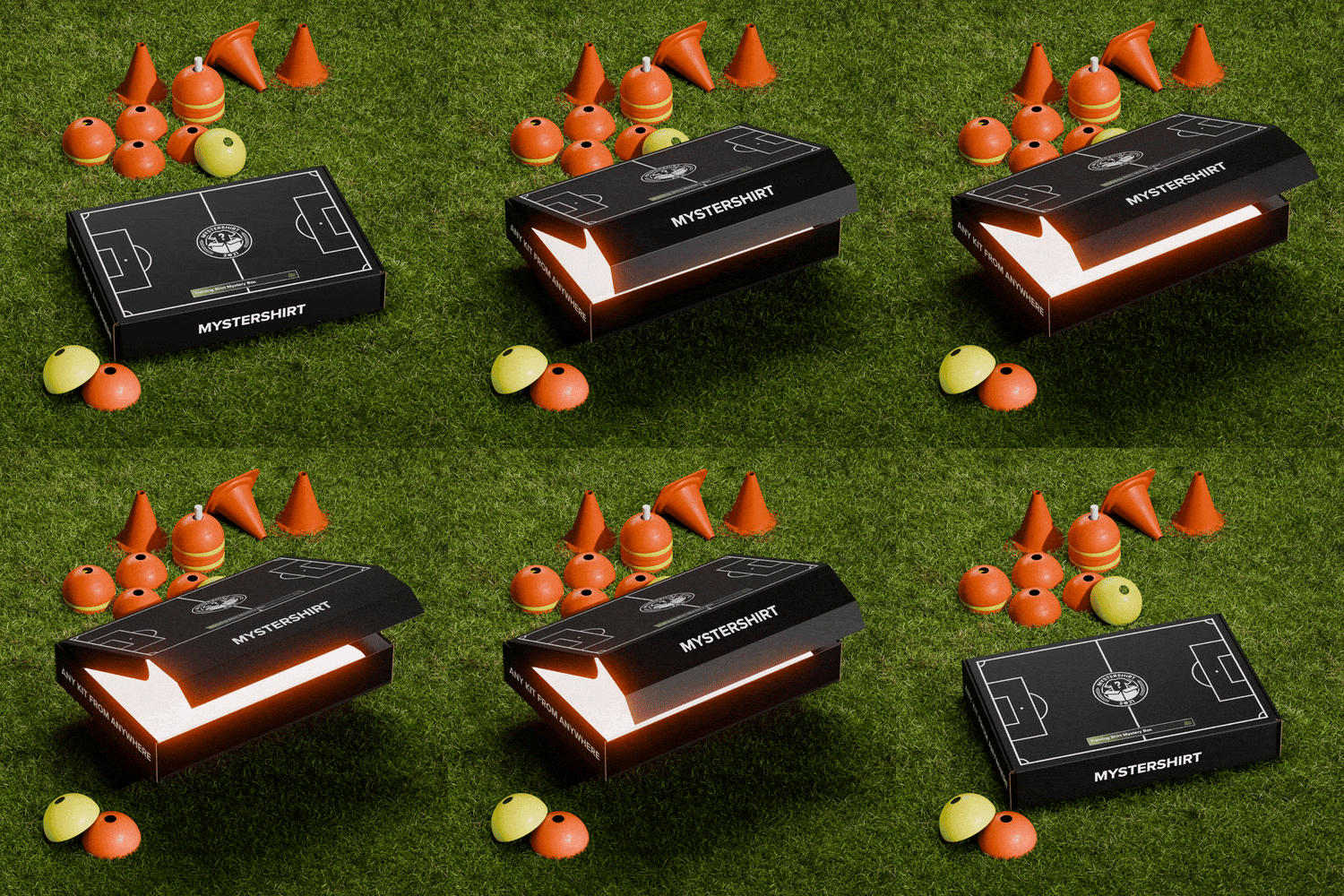
A surprise box sounds gimmicky until you strip away the marketing and look at the mechanics. The useful version is simple, you pick a box type, set your size, tell the seller what to avoid, and receive an authentic shirt with the risk capped by a guarantee.

The parts that make it less of a gamble
A Mystershirt mystery box can be configured as Premium, Retro, Kids, or Sharing Box, with sizes ranging from children to 5XL, and you can list clubs, leagues, or colours to avoid. The company says the shirts are 100% authentic and delivered with labels, and that matters because the whole idea only works if the surprise is about the shirt identity, not about authenticity risk.
The other piece that makes the model usable is the 100-day money-back guarantee. That takes the edge off the unknowns, especially for gift buyers who want the unwrap moment without the headache of gambling on a random marketplace listing. Mystershirt also says shipping is worldwide, with 1 to 4 days express in Europe and 1 to 30 days globally, which is the kind of delivery window you need to know before you buy, not after.
For first-time buyers, an internal walkthrough like tips for first-time buyers helps because the smart move is to treat the box like a controlled surprise, not a blind leap.
A practical way to use the format is straightforward.
- Solo collectors use Premium or Retro when they want a stronger shot at a shirt they'll keep.
- Parents use Kids boxes when they want authentic shirts without the endless listing hunt.
- Friends or teammates split a Sharing Box when the fun is in the reveal.
- Gift shoppers use the box when the unboxing moment matters as much as the shirt itself.
What you should expect on arrival is not mystery for mystery's sake. You should expect a sealed, wearable shirt, a label-backed product, and enough buyer control to avoid the obvious misses. That's a much better deal than scrolling through 200 listings and hoping the photos are honest.
Where to Safely Buy Champions League Jerseys
The safest place to buy depends on what you're trying to get done. If you need a specific shirt on a specific day, go to the official club store. If you want a broad pool of choices and can inspect seller quality carefully, marketplaces can work. If you want authenticity with less guesswork, a verified surprise-box seller can be the cleaner route.

Pick the channel that matches your intent
Official club stores are the low-drama choice. The downside is obvious, you usually pay for certainty and limited selection. Big marketplaces can be fine, but the authenticity risk varies by seller, so you're the quality-control department whether you want that job or not.
Verified mystery-box sellers sit in a useful middle lane when the seller backs authenticity and a return policy. That's why the surprise-box model makes sense for buyers who care about genuine shirts but don't need one exact listing. It replaces endless browsing with a tighter decision structure.
| Buying channel | Authenticity risk | Selection | Best for |
|---|---|---|---|
| Official club store | Low | Narrower | Exact shirt, exact date |
| Big marketplace | Medium | Wide | Bargain hunters who can inspect carefully |
| Verified mystery-box seller | Low if reputable | Surprise-based | Gifts, collectors, and easy authenticity control |
Design backlash is another reason to judge the channel, not just the logo. Borussia Dortmund changed its Champions League shirt in 2021 after fan backlash to a badgeless design, which shows that even official suppliers can make a product fans reject on aesthetic grounds. That example is a reminder that “official” doesn't automatically mean “wanted.”
Care, Storage and Spotting Fakes
A good shirt dies fast if you wash it like gym shorts. Treat the crest, sleeve patch, and sponsor details as printed or applied surfaces that need protection, then the shirt will stay collectible instead of turning into a faded disappointment after a few wears.
Keep it wearable, then check it on arrival
The care routine is basic. Wash cold, inside out, skip fabric softener, hang-dry away from direct sun, fold instead of hang if you want to preserve shoulder shape, and store it in a breathable garment bag if it's part of a collection. That's the difference between a shirt that stays sharp and one that peels, warps, or stretches.
When a jersey arrives, spend about a minute checking the obvious tells.
- Badge alignment: crooked patches are a red flag.
- Colour accuracy: off-tone crests and sponsor prints are suspect.
- Thread finish: loose stitching usually means cheap construction.
- Tag quality: missing or sloppy labels don't belong on a serious licensed shirt.
- Packaging match: the box or bag should make sense for the product and region.
If the shirt looks rushed before you even wash it, don't assume it will age gracefully.
Parents and gift buyers should be especially strict here, because a shirt that's going to be worn often needs to survive repeated washing without losing its shape. The safest collection habit is simple, inspect first, wash second, and store it like a garment you want to keep.
Choosing the Right Champions League Jersey for You
Start with the shirt you want to own. If you care about a specific club, season, and exact detailing, buy through the official route or from a seller that clearly proves authenticity. If you want a gift that feels fun without turning into a long search through questionable listings, a guarantee-backed mystery box is the cleaner choice.
The tournament gives the shirt part of its value, but the shirt itself still has to hold up. The Champions League has a long winners list, and clubs like Real Madrid have built a trophy case that keeps their shirts in demand year after year. That history is why a proper jersey feels like collectible gear, not just another top in the drawer. For a quick reference on the competition's past winners, see That history.
The practical rule is simple. Check authenticity guarantees first. Ignore letter sizing alone. Buy the shirt you'll wear. Follow those three steps and you stop shopping like a punter chasing a listing photo and start buying like a collector who knows what will age well.
If you want the surprise without the risk, Mystershirt is built around authentic football shirts, size choices, and controlled preferences instead of pure blind luck. Go to Mystershirt and pick the box that fits how you collect, gift, or wear a Champions League jersey.