You're probably in one of two situations right now. Your child has asked for the shirt their favorite club wears, or you're trying to buy a gift online and every listing looks almost the same. The photos look polished, the words “authentic” appear everywhere, and the price swings from “maybe that's reasonable” to “that can't be right.”
That confusion is normal. Kids' football shirts sit at an awkward crossroads of sports gear, fan merchandise, and collectible apparel. A parent might care most about comfort and washability. A child might care only that it looks like the one worn on match day. A grandparent buying a birthday gift might just want something genuine that won't disappoint when the package is opened.
That's why authentic youth football jerseys deserve a calmer, more practical approach than the usual “spot the fake” checklist. You're not only deciding whether a shirt is real. You're also deciding whether the fit suits a growing child, whether the fabric will hold up through school, training, and laundry, and whether paying more for an authentic version makes sense for how the shirt will be used.
For some families, the right choice is a slim, match-style shirt. For others, a roomier replica is smarter. And for collectors or football-loving kids who enjoy the surprise side of the hobby, even add-ons and display extras can become part of the fun. If your child likes decorating a gear bag, bedroom, or family car around their football obsession, something like a Custom Sticker Shop banner can sit alongside the jersey as part of that wider match-day identity.
Table of Contents
- Introduction to Authentic Youth Football Jerseys
- What Makes a Youth Football Jersey Truly Authentic
- How to Verify Authenticity With Tags Stitching and Badges
- Materials Weight and Durability That Matter for Kids
- Finding the Right Size and Fit for Growing Players
- Where to Buy Safely and How to Care for Jerseys
- Your Next Steps to Confidently Choose Authentic Youth Football Jerseys
Introduction to Authentic Youth Football Jerseys
Parents often use the word “authentic” to mean “not fake,” but with football shirts it usually means more than that. An authentic youth jersey is typically the official, licensed version made to match the design language, materials, and construction standards set for the club or national team product line. That doesn't automatically mean it's the best choice for every child. It does mean you should know what you're paying for.
Why parents care about authenticity
A genuine youth football shirt usually matters in three ways.
- Comfort during wear: Kids move a lot. They run, stop, twist, sweat, and throw shirts into laundry baskets without ceremony.
- Confidence in what arrived: If a child has been waiting all week for a team shirt, you don't want to open the package and find a crooked badge or scratchy fabric.
- Long-term value: Some shirts stay in use as hand-me-downs, keepsakes, or small collector pieces.
One reason authenticity has become such a big topic is the size of the market itself. One industry report estimated the global football jerseys market at $16.8 billion in 2025, with a projection of $27.4 billion by 2033, and estimated that authentic jerseys account for about 35.6% of the market, or roughly $6.0 billion in 2025. The same report estimated that counterfeits and unauthorized products make up about 15% to 22% of jerseys sold globally, implying annual revenue losses exceeding $2.8 billion (market overview for football jerseys).
Practical rule: For parents, “authentic” should mean two things at once. Official origin and dependable product quality.
What usually trips buyers up
The hard part is that youth buying decisions aren't only about authenticity. They're about trade-offs. A slim shirt can be official and still feel too tight over a base layer. A bargain can be legitimate clearance, or it can be a warning sign. A surprise jersey box can be exciting, but only if the seller clearly states authenticity, sizing, and return terms.
That's where a step-by-step workflow helps more than a generic red-flag list.
What Makes a Youth Football Jersey Truly Authentic
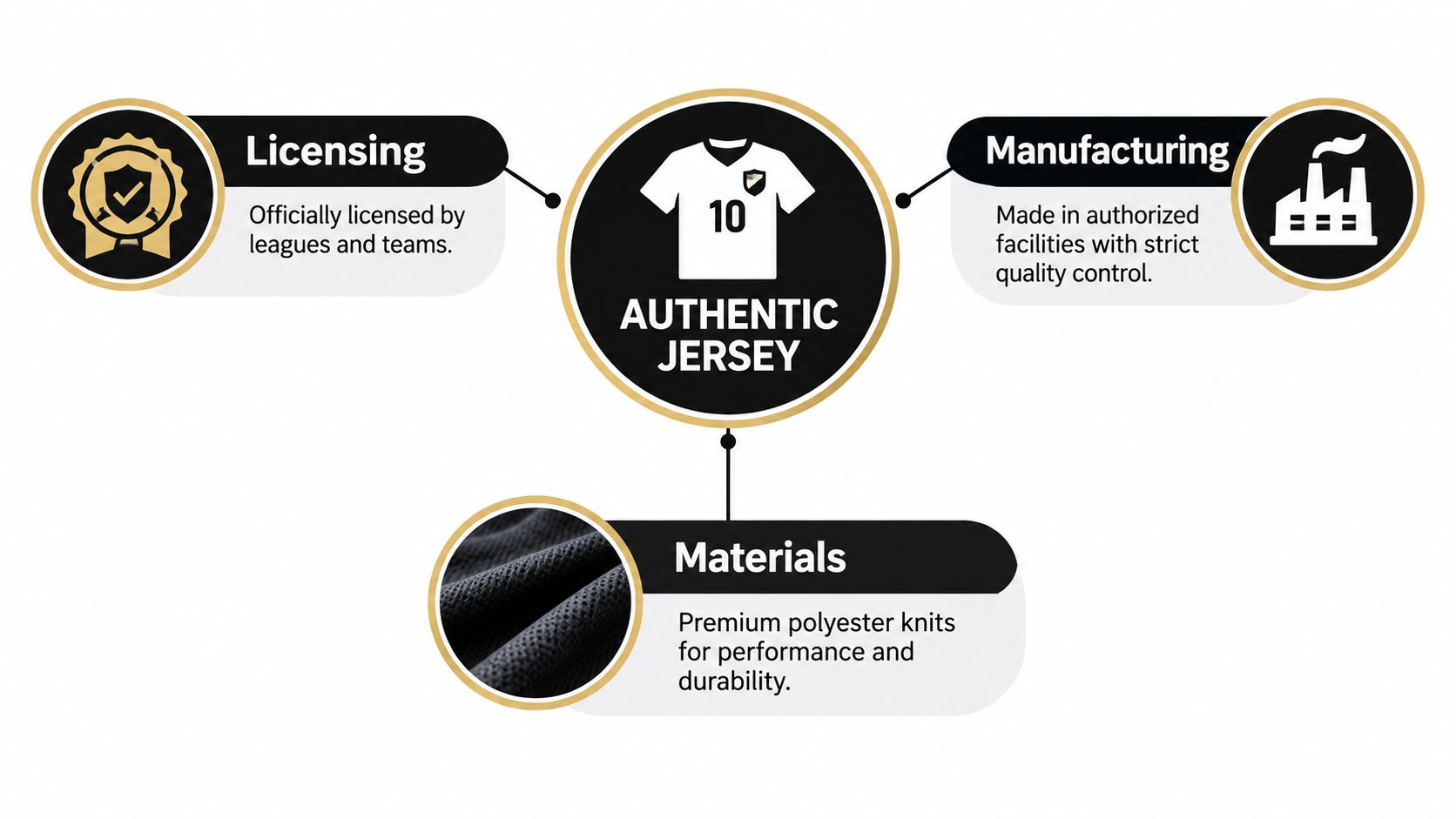
Think of an authentic jersey like a school uniform supplied by the approved manufacturer. It isn't just the colors that matter. The badge placement, fabric type, trim, and construction all follow a known standard. A counterfeit may copy the look from a distance, but it often breaks that standard once you inspect the details.
Licensing is the first layer
An authentic youth football jersey is officially licensed. That means the club, league, or national team has approved the product line and its branding. If a shirt uses a club crest, competition marks, and sponsor placement, those details should line up with the official release rather than a rough imitation.
Licensing also explains why official shirts command trust. You're paying for a product that fits within a controlled chain of design, manufacturing, and retail distribution. That doesn't guarantee perfection, but it gives you a reliable origin story.
Manufacturing is the second layer
Real authenticity shows up in consistency. Authorized production tends to produce repeatable details such as clean seams, stable print placement, and trim choices that match the known release. Counterfeits often get the broad strokes right but miss the fine points. The neckline shape might be slightly off. The sponsor may sit too high. The crest embroidery may look thick or fuzzy instead of crisp.
A useful mental test is this: if a shirt looks like a photocopy of something rather than the thing itself, keep digging.
Materials are the third layer
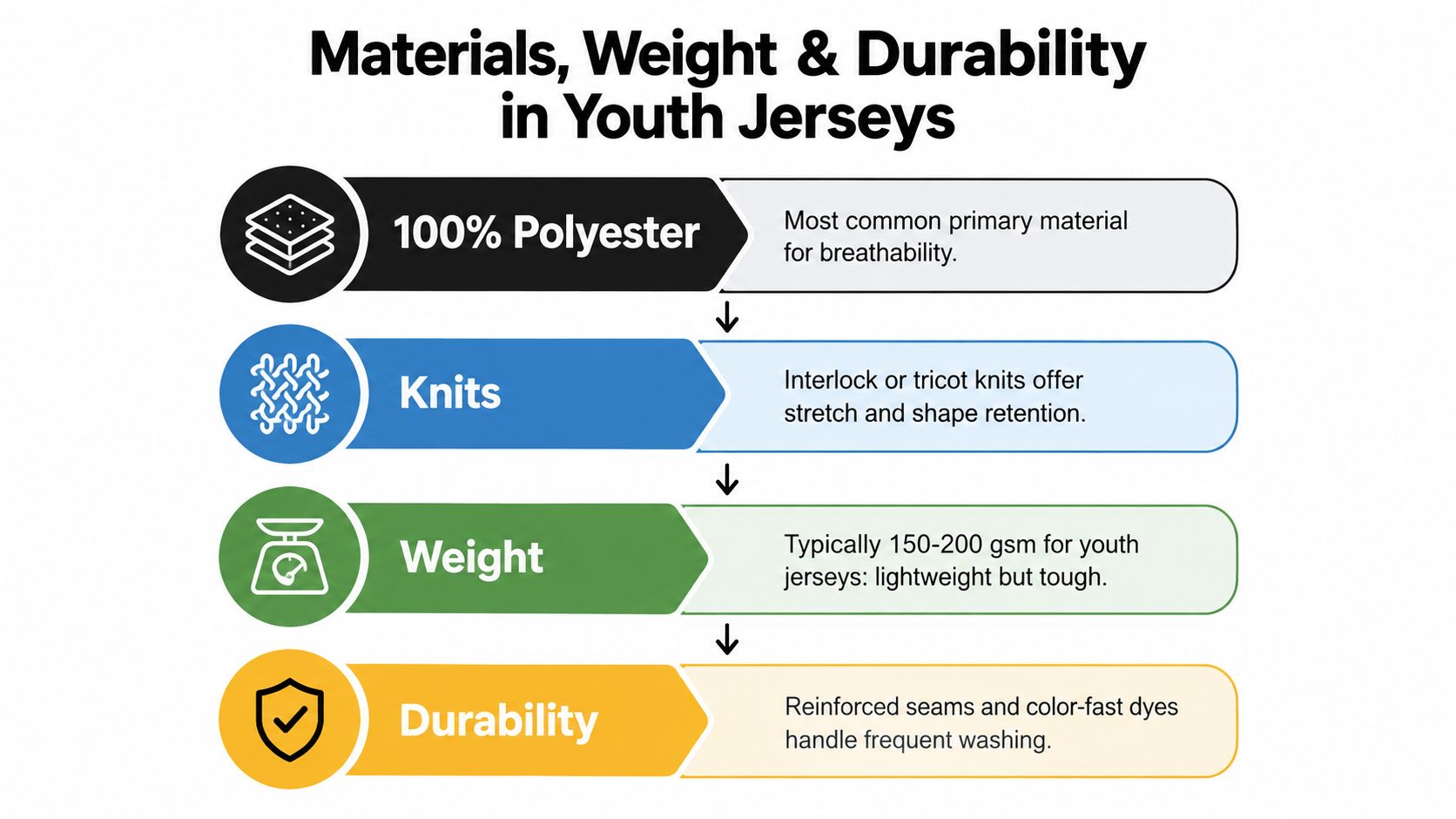
The fabric matters more than many parents expect. Authentic youth football jerseys are typically made from 100% polyester or polyester-dominant performance knits, and major brands commonly use moisture-management finishes such as dryCELL or AEROREADY to help pull sweat off the skin and reduce cling during play (example of youth football jersey material specification).
That choice isn't random. Polyester works well here because it dries faster than cotton-style fabrics, holds shape better during movement, and tends to retain color well through repeated washing. For a child wearing the shirt to training, in the garden, or under a hoodie after school, those practical differences are often more noticeable than marketing language.
History also helps prove what's real
Football shirts are unusually easy to document because so many designs are archived. The Football Kit Archive states that its database contains 447,670 kits from 28,295 teams across 3,158 leagues, produced by 5,010 brands and contributed by 2,992 users (historical kit archive scale). That matters because authenticity checks often depend on era-specific details such as crest style, sponsor position, manufacturer marks, and fabric changes.
A shirt doesn't have to be old to require provenance. Even modern youth jerseys can be checked against documented release details.
For parents, the takeaway is simple. Authenticity isn't one magic sticker or one low-risk seller claim. It's the combination of official licensing, controlled manufacturing, and the right materials, all matching a design record you can verify.
How to Verify Authenticity With Tags Stitching and Badges
When a jersey arrives, don't start with the price you paid. Start with the shirt in your hands. A parent-friendly verification workflow works better than a one-line rule like “cheap means fake,” because real clearance deals do exist. The stronger signal is a pattern of problems.
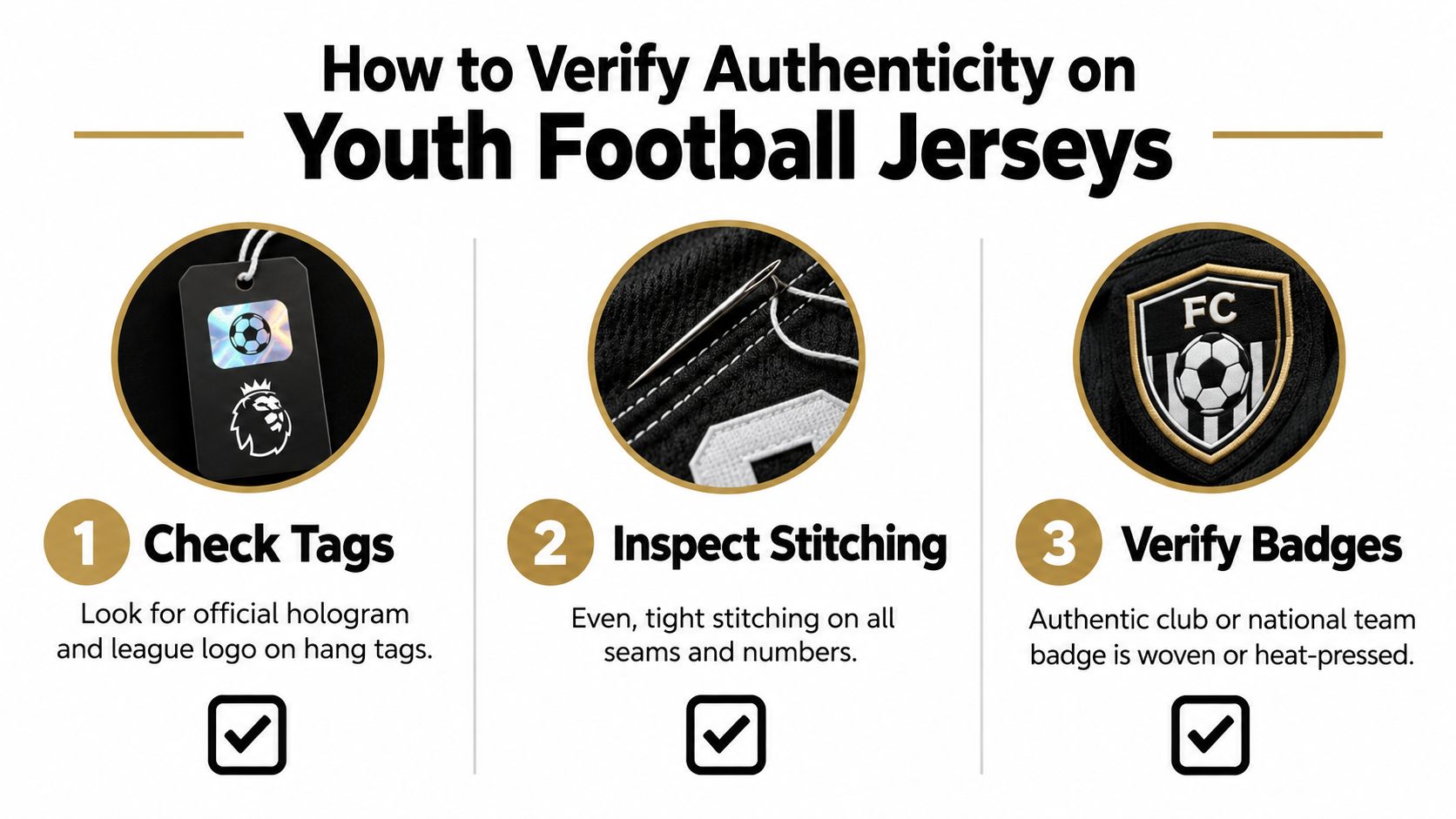
Use a three-part home check
Start with these checks in order:
-
Tags and product labeling
Look for official-looking hang tags, consistent branding, and product information that doesn't feel generic. You're checking for coherence. Brand, size, competition marks, and style cues should all belong together. -
Stitching and finish quality
Turn the shirt inside out. Seams should look even, secure, and neatly trimmed. Loose threads don't always prove a fake, but messy construction across multiple areas should make you cautious. -
Badge and graphic accuracy
Inspect the crest, sponsor, and any competition or sleeve badges. Focus on shape, alignment, edge quality, and placement. If the crest looks puffy, poorly cut, or oddly positioned, that's a stronger warning than a small packaging flaw.
A useful walkthrough on this topic is how to check if your football shirt is authentic, which shows the kind of details collectors often compare.
Price is a clue, not a verdict
Independent research and enforcement reporting note that counterfeit football goods are often priced 30% to 85% below genuine items, and UK authorities have continued seizing large volumes of fake football kits in market enforcement actions during 2025 to 2026 (UK counterfeit goods research and enforcement context). That gives parents a smarter rule: deep discounts deserve scrutiny, but price alone doesn't settle the question.
If the discount is steep, the seller has weak reviews, and the shirt lacks reliable authenticity markers, treat those signals together.
Here's the decision pattern many parents find useful:
| Signal | Lower concern | Higher concern |
|---|---|---|
| Price | Seasonal sale or old-season clearance | Extreme markdown with vague explanation |
| Seller identity | Established shop with clear policies | Hard-to-trace seller or sparse contact details |
| Product photos | Multiple close-ups of real item details | Only stock images or heavily edited shots |
| Arrival condition | Consistent labels and finishing | Missing tags, odd packaging, mismatched details |
Check the shirt against known release details
Many buyers stop too early. They inspect the shirt but never compare it to what that season's youth version should look like. Search official release photos, club shop imagery, or documented shirt archives. Focus on things counterfeiters often miss:
- Crest style: Woven, embroidered, or heat-applied should match the release.
- Sponsor placement: Height and spacing matter.
- Neck and cuff trim: Small color breaks often give copies away.
- Material panels: Vent zones and side inserts should match the intended design.
For a visual primer before you inspect your own shirt, this video can help you know what to look for.
Materials Weight and Durability That Matter for Kids
A youth football jersey can be authentic and still be the wrong choice for how your child will wear it. That's why fabric and construction deserve their own look. Think of this less like checking a logo and more like choosing between race shoes and school trainers. Both are real products. They're just built for different kinds of use.
Why lightweight polyester is standard
Industry guidance commonly places soccer jerseys in the 120 to 170 GSM range, with 140 to 160 GSM often treated as a sweet spot for airflow, durability, and print quality. Some technical guidance also recommends moisture-management fabrics with an Overall Moisture Management Capacity score of 0.6 or higher plus open-knitted ventilation zones for faster sweat dispersion (technical guide to jersey material and weight).
For parents, GSM is just fabric weight per square meter. You don't need to memorize it. You only need to know what it means in your hand: a youth match-style jersey should feel light, flexible, and quick-drying, not thick and heavy like a training top or cheap fashion tee.
Authentic and replica shirts feel different
The biggest practical difference is often this:
- Authentic youth jersey: lighter feel, more performance-oriented knit, closer body fit
- Replica youth jersey: usually more forgiving for daily wear, layering, and repeated casual use
That doesn't make replicas inferior. It makes them different. If your child wears the shirt for school, the sofa, the park, and five weekly washes, a slightly sturdier everyday feel may be more useful than the lightest match-style build.
Fabric quality shows up after wash day. Good shirts keep their shape, color, and graphic edges instead of twisting, sagging, or feeling crunchy.
Small details affect durability
Parents often focus on the chest logo, but wear usually shows up elsewhere first.
- Side panels: Stretch and twisting happen here.
- Heat-applied graphics: These can crack if the fabric or care routine is poor.
- Seam finish: Rough inside seams can irritate younger kids.
If your child cares about sleeve details and competition styling, a guide on buy champion league badge art can help you understand why badge style and placement matter to collectors as much as the front crest does.
Finding the Right Size and Fit for Growing Players
Many parents get stuck. A shirt can be genuine, beautifully made, and still end up living in a drawer because the cut feels too close or too short. Youth sizing gets even trickier because authentic player-style shirts often run slimmer than fan replicas.
Start with how the shirt will be used
Ask one question first: Will this be worn mainly for playing, mainly for casual wear, or both?
If the answer is “mostly playing,” a closer fit may be fine, especially for a child who likes the same look they see on the pitch. If the answer is “mostly everyday wear,” many kids prefer more room through the chest and sleeves.
Current sizing guidance consistently notes that authentic or player-version jerseys run slimmer than replicas, and that children between sizes often do better sizing up for comfort or a full-season fit (youth jersey size chart guide).
Measure at home before ordering
You don't need a tailor's setup. A soft measuring tape and one shirt your child already likes will do.
-
Measure the chest
Wrap the tape around the fullest part of the chest without pulling tight. -
Measure shirt length
Lay a favorite tee flat and measure from the top shoulder area down to the hem. -
Think about layering
If your child wears a base layer or thermal top underneath, leave room for that.
A general size chart guide for online shopping can help if you're moving between different regional size systems and brand charts.
Authentic vs Replica Fit Decision Matrix for Youth
| Feature | Authentic Youth Jersey | Replica Youth Jersey |
|---|---|---|
| Overall cut | Slimmer and more athletic | Roomier and more forgiving |
| Best for | Match-style feel and lighter wear | Daily use, school, and casual comfort |
| Layering | Less ideal over base layers unless sized up | Easier to wear over another top |
| Growth room | Can feel short-lived if child grows quickly | Usually gives more flexibility |
| Fabric feel | Lighter and more performance-focused | Often feels more relaxed for routine wear |
| Parent value question | Better if the child wants the closest official feel | Better if practicality matters most |
When to size up
Sizing up makes sense in a few common situations:
- Between sizes: Go up if your child dislikes clingy shirts.
- Buying early in the season: Growth can catch up fast.
- Planning for layering: Cold-weather wear changes fit.
- Gift buying: A little extra room is safer than a shirt that arrives already snug.
For many kids, the “best fit” isn't the most technical one. It's the shirt they'll happily wear all season.
Where to Buy Safely and How to Care for Jerseys
Buying safely and caring properly are really the same decision stretched over time. The seller determines what arrives. Your care routine determines how long it still looks good.
What a safer buying option looks like
A trustworthy seller usually gives you enough information to make a calm decision. Look for:
- Clear authenticity language: Not vague buzzwords, but direct statements about what the shirt is.
- Visible labels or product photos: You want more than a stock image.
- Return and refund terms: Especially important for youth sizing.
- Delivery clarity: Estimated shipping windows and contact details should be easy to find.
Mystery boxes can also work for kids if the seller lets you filter dislikes, choose a children's size, and clearly states authenticity. One example is buy football jerseys online, which discusses online buying factors that matter when you can't inspect the shirt in person first.
Caring for polyester performance shirts
A good youth jersey doesn't need delicate museum treatment, but it does need better care than being thrown in with muddy kits and heavy zips.
- Wash inside out: This helps protect crests, namesets, and sleeve graphics.
- Use a gentle cycle: Less friction means less edge lifting on prints.
- Skip high heat: Heat is hard on synthetic performance fabrics and applied graphics.
- Air dry when possible: It helps maintain shape and finish.
- Avoid harsh ironing directly on prints: If ironing is needed at all, protect the decorated areas.
Why care matters for value
Even if your child isn't a collector, proper care preserves options. A shirt that keeps its color, shape, and badge condition is easier to pass down, save, or resell. That matters more with youth shirts than people expect, because kids often form strong memories around one favorite season or one favorite player.
A carefully washed jersey still feels like part of the story. A badly dried one often turns into sleepwear.
Your Next Steps to Confidently Choose Authentic Youth Football Jerseys
Parents usually feel overwhelmed because they try to solve everything at once. A simpler approach works better. First, decide what the shirt is for. Match-style wear, everyday use, a gift, a collectible, or a fun surprise. Then judge the product against that purpose.
Authentic youth football jerseys make the most sense when official origin, lighter performance fabric, and collectable appeal matter to your child or your family. Replicas often make more sense when comfort, easier fit, and day-to-day practicality matter more. Neither choice is automatically right. The right one is the shirt that gets worn, enjoyed, and trusted.
Keep your buying workflow simple:
- Check the seller before the shirt
- Check the shirt before believing the price
- Check the fit before assuming the size chart tells the whole story
- Check the care label before the first wash
That's the parent version of buying smart. You're not trying to become a shirt archivist overnight. You're building a reliable habit. Look for authentic markers working together, choose the fit that suits a growing child, and buy from sellers who make the process easy to verify and easy to fix if something goes wrong.
When you do that, the purchase feels a lot less like a gamble. It feels like what it should be. A shirt your child is excited to wear, and one you feel good about buying.
If you want a more playful way to buy authentic football shirts for kids, Mystershirt offers mystery soccer jersey boxes in children's sizes with authentic shirts and labels included. It's a useful option for parents, gift buyers, and young collectors who want the surprise factor without giving up authenticity.