The grass is wet, the wind has found its way through the training ground, and a young midfielder is tugging at the cuffs of a shirt that was never designed for movement. On the next pitch, a goalkeeper is deciding whether to wear a thick sweatshirt, a short-sleeve jersey over a base layer, or a proper long-sleeve top. Parents face the same decision every season: which long sleeve shirt for soccer will keep a player comfortable without causing overheating, bunching, or restricted movement?
Long sleeves aren't just winter add-ons. The right shirt can serve as a breathable base layer, a goalkeeper jersey, or a lightweight training top for changing conditions. The best choice depends on the player's role, the fabric structure, and the way the shirt fits when the arms are working.
Table of Contents
- What Long Sleeve Soccer Shirts Are Actually For
- How the Fabrics Work and Why It Matters
- Warmth, Sweat, and the Physics of Playing in Long Sleeves
- Three Ways Players Actually Use Long Sleeves on the Pitch
- Fit, Sizing, and Layering Without Restriction
- Real Scenarios for Players, Goalkeepers, and Parents
- Buying Smart and Caring for the Shirts You Buy
What Long Sleeve Soccer Shirts Are Actually For
For most of football history, long sleeves were the default match-shirt style rather than a specialist option. The shift toward short sleeves began in the mid-1970s, with England's 1970 World Cup kit using short-sleeved Airtex shirts while many clubs still wore long sleeves. Even Umbro's "Real" template remained long-sleeved in the 1960s, which shows how the style was embedded in the European game. Classic Football Shirts traces the history of long-sleeve jerseys.
Today, players usually choose long sleeves for one of three jobs:
- As a base layer: A close-fitting thermal or compression shirt sits under a short-sleeve team jersey in cool or wet conditions. It adds an extra layer without the bulk of a sweatshirt. If you're unsure how this type of garment differs from an ordinary undershirt, this explanation of what a compression thermal shirt does gives useful background.
- As a goalkeeper jersey: Long sleeves cover the forearms during dives and contact with grass. The cut also needs to leave room for goalkeeper gloves and any padding.
- As a standalone training top: A lightweight long-sleeve shirt works well during warm-ups, recovery sessions, and changeable spring or autumn weather.
These categories aren't interchangeable. A match jersey is part of a team's playing kit and may need to meet club or competition requirements. A training top usually prioritizes comfort, ventilation, and easy layering. A compression base layer sits close to the skin, so its job is moisture management and freedom of movement rather than team identity.
Coach's rule: Buy the sleeve for the job it must perform, not merely because the weather looks cold at the start of training.
A thick long-sleeve fan jersey may feel comfortable on the sideline but become restrictive during repeated sprints. A smooth base layer may feel too light when standing still but work perfectly under a match shirt. The sections ahead focus on the decisions that separate these options, starting with the fabric, then warmth, role, fit, and care.
How the Fabrics Work and Why It Matters
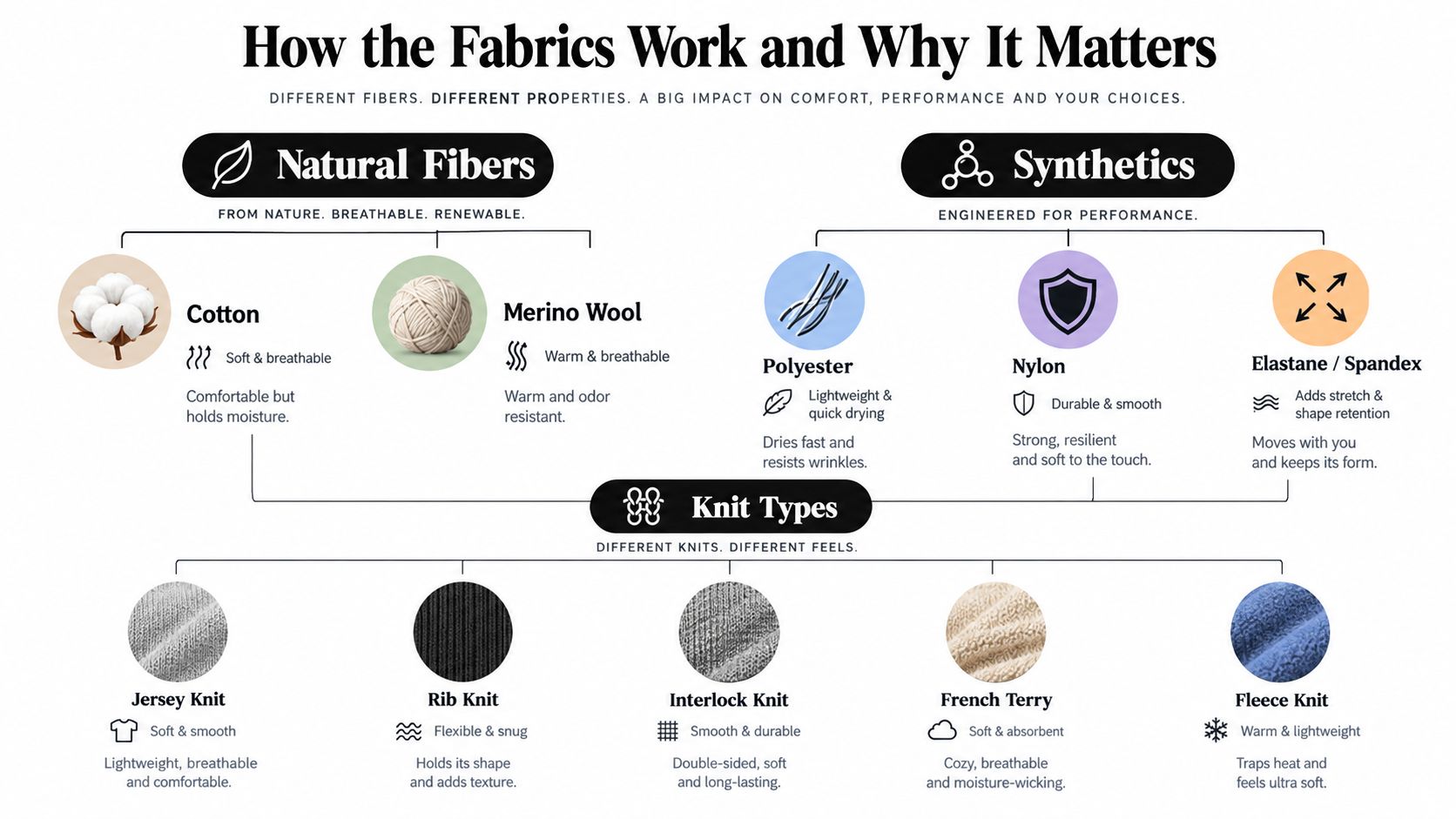
Start with the fiber, then look at the knit. Those two details tell you more about a shirt's behavior than a vague label such as “performance fabric.”
Natural fibers include cotton and merino wool. Cotton feels soft and familiar, but it can hold moisture against the skin. Merino wool can provide warmth and odor resistance, though some players prefer the smoother feel and faster drying behavior of synthetic sportswear.
Synthetic fibers are common in football clothing because they can be engineered for specific movement and moisture needs:
- Polyester is lightweight and designed to dry quickly.
- Nylon feels smooth and offers useful durability.
- Elastane or spandex adds stretch and helps the shirt recover its shape.
Technical apparel guidance favors polyester and nylon over cotton for high-sweat soccer use. A polyester-spandex blend around 85 to 90 percent polyester and 10 to 15 percent spandex is presented as a practical balance between moisture control, stretch, and mobility in this moisture-wicking football shirt guide.
Knit structure changes the experience
Two shirts can use polyester yet feel completely different. A tight interlock knit creates a smooth, stable surface that suits a compression base layer. A looser flat-back mesh allows more air to move through a training top. A brushed inner face feels warmer because its raised fibers hold a thin layer of air close to the body.
Think of the difference between a microfiber towel and a cotton T-shirt. The microfiber surface is built to move moisture across a larger area, while the cotton shirt can become heavy and damp after absorbing sweat. The knit determines how that fiber behaves during play. Research summarized in this review of long-sleeve soccer jerseys and fabric structure links larger knit sizes and open warp-knit structures with lower skin temperature, lower microclimate humidity, and improved thermal comfort in polyester clothing.
Stretch is equally practical. A small amount of elastane lets the fabric follow the shoulders during a throw-in, goalkeeper reach, or tackle. Flatlock seams and mesh panels can reduce rubbing and improve ventilation. For a deeper explanation of common jersey materials, see what soccer jerseys are made of.
A good long-sleeve shirt should feel warm on a cold forearm, dry after a sprint, and flexible when you reach above your head.
This is why a player shouldn't judge a shirt by softness alone. Check whether the fabric feels breathable, whether the shoulders stretch, and whether the inner face matches the conditions in which the player will use it.
Warmth, Sweat, and the Physics of Playing in Long Sleeves
Warmth comes from managing air and moisture. A shirt can hold a thin layer of warmer air near the skin, while its fabric moves liquid sweat away from the body so that it can evaporate at the outer surface. Players notice the result as a dry forearm, less clammy fabric during a stoppage, and less chill after the warm-up ends.
Cotton struggles when sweat output rises because it absorbs moisture and can remain wet. Polyester, nylon, and merino can be more suitable for active use because their structures help move or manage moisture differently. The exact performance still depends on the knit, garment construction, fit, and conditions.
What to scan on a product page
Product descriptions often reveal the useful details if you know what to look for:
- Fabric weight: A heavier material generally provides more coverage and warmth, while a lighter one usually suits intense training and layering.
- Inner face: Brushed fabric feels warmer. A smooth inner face often feels less insulated and easier to layer.
- Ventilation zones: Mesh under the arms, across the back, or along the sides can help release heat.
- Stretch content: Elastane or spandex can make a close-fitting shirt easier to move in.
- Seam construction: Flatlock seams may reduce irritation at the shoulders, sides, and underarms.
The practical mistake is overdressing during the first ten minutes. A player arrives cold, pulls on the thickest top available, then spends the rest of the session carrying unnecessary heat and damp fabric. A technical long sleeve should help the body move from warm-up to match intensity without becoming a soaked layer by halftime.
| Fabric | Warmth | Moisture Wicking | Feel When Wet | Typical Use |
|---|---|---|---|---|
| Cotton | Comfortable at rest, limited insulation when damp | Low for intense play | Heavy and clammy | Casual wear or low-intensity use |
| Merino wool | Naturally warm | Helps manage moisture | Can remain comfortable, but dries more slowly than many synthetics | Cool training and layered wear |
| Polyester | Depends on knit and weight | High when engineered for sportswear | Usually lighter and quicker to dry | Match layers and training tops |
| Nylon | Moderate, depending on construction | Useful in technical blends | Smooth, with good durability | Training and hybrid sportswear |
| Polyester-spandex blend | Adjustable through weight and knit | Strong moisture control with stretch | Flexible and less restrictive | Close-fitting base layers |
Buying signal: If the shirt feels thick but has no ventilation or moisture-management details, don't assume it will perform well during hard play.
Three Ways Players Actually Use Long Sleeves on the Pitch
A long sleeve shirt earns its place when the sleeve solves a specific problem. The same player may use different versions for a cold match, goalkeeper training, and a mild morning session over a short-sleeve jersey.
Cold-weather match play
For a player moving continuously in cool weather, choose a lightweight or medium technical fabric that sits close to the body without compressing the shoulders. The sleeve should cover the wrist but shouldn't spill over the hand, especially when the player needs clean ball control or a comfortable grip.
A heavy sweatshirt provides more warmth while standing still, but it can hold sweat and interfere with movement. A technical shirt offers less bulk and works better when the player is alternating between high-effort runs and quiet periods.
Goalkeeper use
A goalkeeper needs coverage where the arms meet the ground. Look for durable fabric, a secure cuff, and enough room around the shoulders to reach overhead or extend sideways. The shirt should work with gloves and padding rather than pushing fabric into the palm or bunching beneath the elbow.
Long sleeves can reduce direct skin exposure to grass, but they aren't a replacement for goalkeeper protection. If impact is a concern, choose a purpose-built goalkeeper jersey with appropriate padding.
Mid-season layering
In changeable weather, a thin long sleeve can sit under a short-sleeve jersey or over a close-fitting base layer. The goal is flexibility. The player can adjust the outer layer as conditions change without starting with a bulky top.
| Use Case | Fabric Weight | Length & Cuff | Best For |
|---|---|---|---|
| Cold-weather match | Lightweight to medium technical knit | Wrist-length sleeve with secure cuff | Outfield players who need coverage without bulk |
| Goalkeeper use | Durable technical fabric, possibly padded | Full arm coverage and glove-compatible cuff | Keepers training or playing on grass and turf |
| Mid-season layering | Lightweight, breathable knit | Close sleeve that won't bunch under a jersey | Players facing shifting temperatures and wind |
The key trade-off is simple. Nothing gives maximum airflow but no arm coverage. A heavy sweatshirt gives warmth but can restrict movement. A technical long sleeve sits between those options, provided its weight and cut match the job.
Fit, Sizing, and Layering Without Restriction
Fit a long sleeve soccer shirt with the arms moving, not with the player standing still. A shirt can look correct across the chest yet pull sharply across the shoulders during a throw-in or ride up the forearm when the player reaches for a cross.
Check the size in sequence
Begin with the brand's measurements for chest, sleeve length, and torso. Compare those measurements with the player's body rather than relying only on the age printed on a youth label. A growth allowance can be sensible for children, but excessive room creates long cuffs, shoulder bunching, and fabric that catches on gloves.
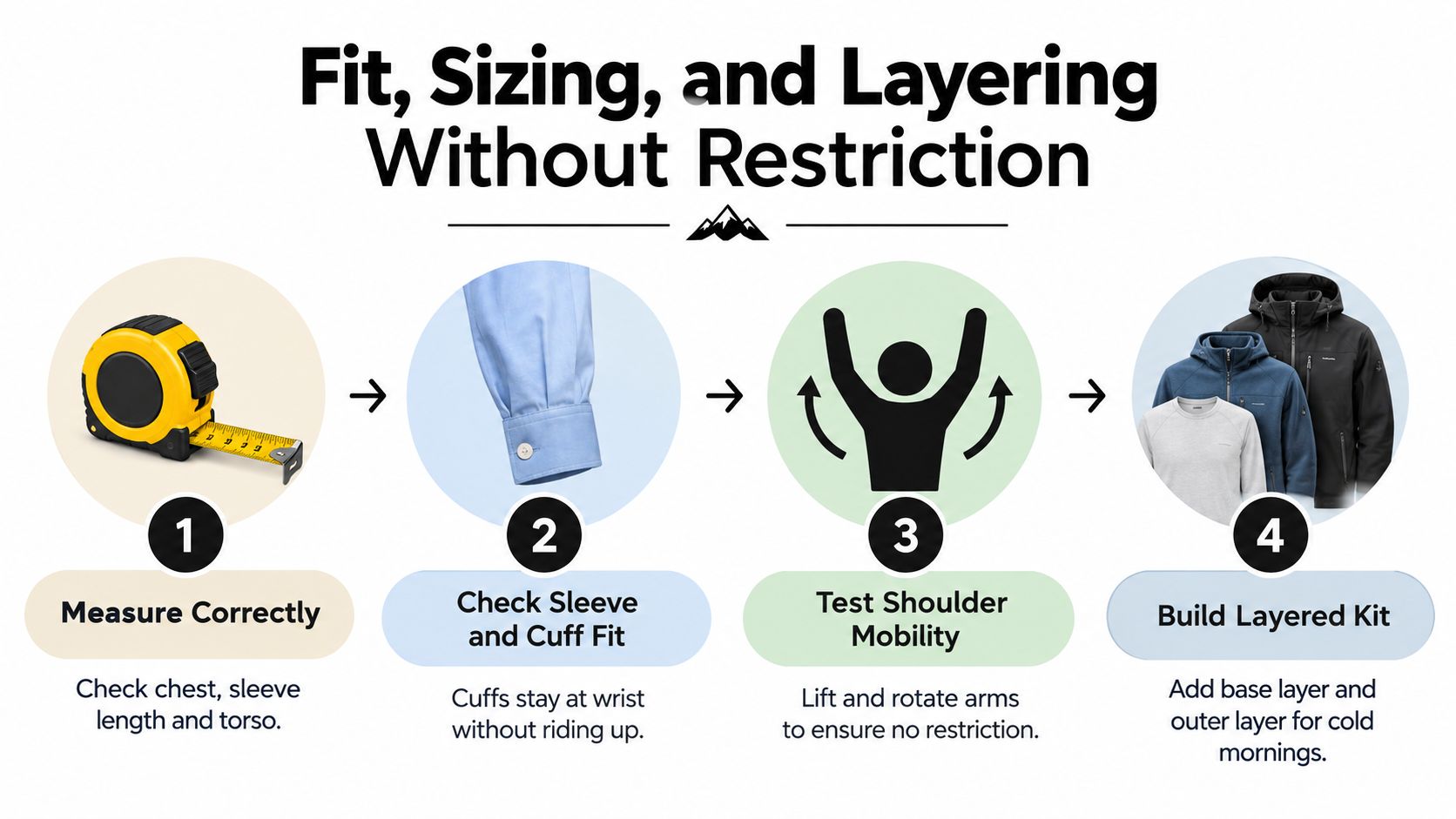
Use this home fitting sequence:
- Check the sleeve end. With the arms extended, the sleeve should finish near the wrist bone. It shouldn't cover the palm or expose several inches of forearm.
- Bend the elbows. The cuff should stay in position without cutting into the wrist.
- Reach overhead. Look for bunching beneath the armpit and pulling across the upper back.
- Rotate the shoulders. Make a throwing motion and a goalkeeper reach. If the shirt changes position dramatically, the cut isn't working.
Layer deliberately
A compression base layer should sit smoothly against the skin. The match jersey goes over it without dragging the base layer upward. If the long sleeve itself is the outer layer, leave enough space for movement but avoid a loose body that flaps during running.
For a goalkeeper wearing padding, test the complete setup. The shirt may need additional room across the chest and shoulders, but sizing up too far can leave cuffs interfering with gloves. Understanding how garment designers account for movement and extra room can help, especially with this practical guide to ease in sewing.
A product's stated cut also matters. Before ordering, compare the garment measurements with this guide to authentic soccer jersey sizing, particularly if the player plans to wear another layer underneath.
Home test: Have the player raise both arms, rotate the shoulders, bend the elbows, and jog in place. If the shirt restricts any of those movements indoors, it won't improve during a match.
Real Scenarios for Players, Goalkeepers, and Parents
A useful buying decision becomes easier when you attach it to a real player rather than a generic weather forecast.
The youth goalkeeper on a wet autumn pitch
The goalkeeper arrives for a breezy match with damp grass and frequent dives ahead. A purpose-built long-sleeve keeper top makes more sense than a sweatshirt because it provides arm coverage without a loose hem getting in the way. Choose a durable technical fabric, a cuff that ends at the wrist, and enough shoulder room for gloves and padding.
The parent should test the complete kit at home. If the sleeve rides over the glove cuff, the player may keep pulling at it instead of concentrating on positioning and handling.
The center midfielder in early spring
A midfielder alternates between short bursts and quieter moments while tracking the game. A close-fitting thermal base layer beneath the team jersey can keep the arms covered without adding a bulky outer garment. Polyester or a polyester-stretch blend is a sensible starting point when sweat management and shoulder movement matter.
The shirt should lie flat under the jersey. Any bunching beneath the armpits becomes noticeable during repeated arm swings, throw-ins, and challenges.
The parent outfitting two children
A family preparing for changeable training weather doesn't need several heavy tops for every possible condition. Start with one lightweight technical long sleeve that works under a jersey and during warm-ups, then add a role-specific goalkeeper shirt only if one child regularly plays in goal.
Leave modest growth room through the torso, not by accepting sleeves that cover the hands. A shirt that fits the shoulders now and remains usable with a thin base layer often serves the season better than an oversized garment that restricts movement.
Buying Smart and Caring for the Shirts You Buy
Before checkout, name the shirt's job. “Long sleeve” describes the shape, not the performance. A cold-weather base layer, a goalkeeper jersey, and a standalone training top need different combinations of fabric weight, stretch, coverage, and ventilation.
Use this filter:
- Confirm the role: Decide whether the shirt is for cold matches, goalkeeper protection, layering, or training.
- Match fabric to conditions: Choose breathable lightweight construction for hard sessions and a warmer inner face for cooler use.
- Verify movement: Test the sleeve reach, elbow bend, shoulder rotation, and cuff position.
- Check construction: Look for ventilation panels, comfortable seams, a stable neck, and cuffs that won't interfere with gloves.
- Compare total value: Balance fit, durability, care requirements, and the player's likely growth.
Common buying errors are easy to spot. Cotton-heavy shirts can become uncomfortable during high-sweat sessions. Sleeves that are too long can overlap goalkeeper gloves. A shirt that already feels thick may still need a breathable base layer underneath, but adding layers without checking shoulder room can create restriction.
Care that preserves performance
Follow the garment label first. In general, technical shirts benefit from gentle washing, limited heat, and avoiding fabric softener, which can interfere with moisture-management finishes. Hang drying or low-heat drying is usually kinder to stretch fibers, cuffs, seams, and printed details than aggressive heat.
Turn the shirt inside out before washing and inspect the seams and cuffs regularly. For a more detailed approach to laundering football clothing, use this guide on how to wash a football jersey.
Parents can make the final choice in this order: identify the child's position and typical conditions, choose one versatile technical layer, check the full range of motion, then decide whether extra durability or padding justifies a specialist shirt. Mystershirt also offers authentic football shirts through mystery boxes, with children's sizes through 5XL and the option to list clubs, competitions, or colors to avoid, so it can be considered when a player or fan wants an authentic shirt without selecting a single club in advance.
If you're choosing a football shirt for a player, collector, or gift, visit Mystershirt to explore authentic mystery soccer jersey boxes across youth and senior sizes. Use the role, fit, and layering checks from this guide before selecting a shirt for matchday, training, or everyday football wear.