You're on the hook for team gifts again, and the deadline is already breathing down your neck. The Slack thread is full of vague suggestions, half the team is remote, a few people are in the office, and somebody has already said, “Let's just do gift cards.” That's usually the moment a decent idea turns into a generic one.
The fix is simple: stop shopping first and decide what job the gift has to do. A good team gift idea matches the team setup, the occasion, and the logistics, or it becomes clutter with a shipping label. The corporate gifting market is now treated like a real retention and relationship tool, not a throwaway expense, with the sector valued at $956.93 billion in 2026 and $886.56 billion in 2025, implying a 7.9% CAGR; reporting also says 61% of companies include gifting in HR or marketing strategies, 80% say it improves relationships, and 75% of employees report higher job satisfaction after receiving a meaningful gift from an employer (corporate gift statistics for 2026). That's the context. Now the job is to choose something that lands.
Table of Contents
- Defining the Goal and Budget Before You Browse
- Choosing the Right Gift Type for Your Team
- Matching Gifts to Your Team's Setup
- Sizing, Quantities, and Personalization Logistics
- Treating the Gift as Recognition, Not a Transaction
- Ordering Timeline and Presentation Tips
- A Quick Checklist Before You Hit Order
Defining the Goal and Budget Before You Browse
The fastest way to waste money on team gift ideas is to open a catalog before you decide what the gift is supposed to accomplish. A manager in a hurry usually says, “We need something nice,” and that's exactly how you end up with a random box of snacks, a logo mug, or a t-shirt nobody asked for.
Start with the outcome, not the item. If the goal is a milestone, the gift should feel commemorative. If it's a new hire welcome, the gift should reduce awkwardness and make the person feel included. If it's a seasonal thank-you, the gift can be lighter and broader. If it's just appreciation, the safest move is something useful, personal, and easy to distribute.
Match the budget to the moment
A $10 gift can work when you're thanking a large group and the gesture matters more than the object. A $40 spend starts to make sense when you need the gift to feel intentional, personalized, or durable. Anything above that should have a clear reason attached to it, or it starts feeling like a procurement mistake instead of recognition.
Practical rule: if you can't explain the reason for the spend in one sentence, the budget is too fuzzy.
Shipping, customization, and replacement stock matter more than expected. A gift that looks cheap because the box arrived crushed or the name was printed wrong will damage the moment. If you're coordinating a smaller order and want a simple browse point after you've defined the brief, the OnlineGifts.us USA gift store can help you compare options without pretending every team has the same needs.
| Goal | Small team (5–10) | Mid team (10–30) | Large group (30+) |
|---|---|---|---|
| Milestone | Higher-touch personalized item | Shared item with a note | One consistent format with light personalization |
| New hire welcome | Practical starter kit | Standardized welcome bundle | Simple, repeatable welcome package |
| Seasonal thank-you | Slightly nicer personal gift | Broad gift everyone can use | Low-friction gift with fast fulfillment |
| General appreciation | Useful small gesture | Balanced gift with a clear message | Simple, distributed at scale |
A good one-page brief is enough. Write the goal, the group size, the spend ceiling, and the one thing that would make the gift feel off. Then browse with discipline instead of optimism.
Choosing the Right Gift Type for Your Team
Most gift guides throw every option into one pile, then act surprised when the result feels off. Team gift ideas work better when you sort by gift type first, because each category solves a different problem, and some options create more work than value.

Experience gifts, apparel, personalized items, and boxes
Experience gifts work when the goal is shared memory rather than another object on a shelf. A virtual tasting, a cooking class, or a team activity can fit a launch, a season wrap, or a milestone, but they fall apart fast if calendars do not line up. Keep participation optional and do not build the whole gift around the people who can show up in person.
Apparel builds identity fast, but only if the sizing is handled properly and the design feels like the team. A shirt that screams “culture” in oversized lettering is not culture, it is a closet problem. Apparel makes the most sense for sports crews, school groups, or office teams that already want to wear the same thing.
Personalized items are the safest choice when the gift needs to feel chosen, not grabbed off a shelf. Engraved bottles, embroidered bags, and printed desk items land better than generic swag because the customization makes the item feel owned. If you want to compare personalization-heavy options, browse personalized promotional gifts with a narrow brief instead of asking for “something nice.”
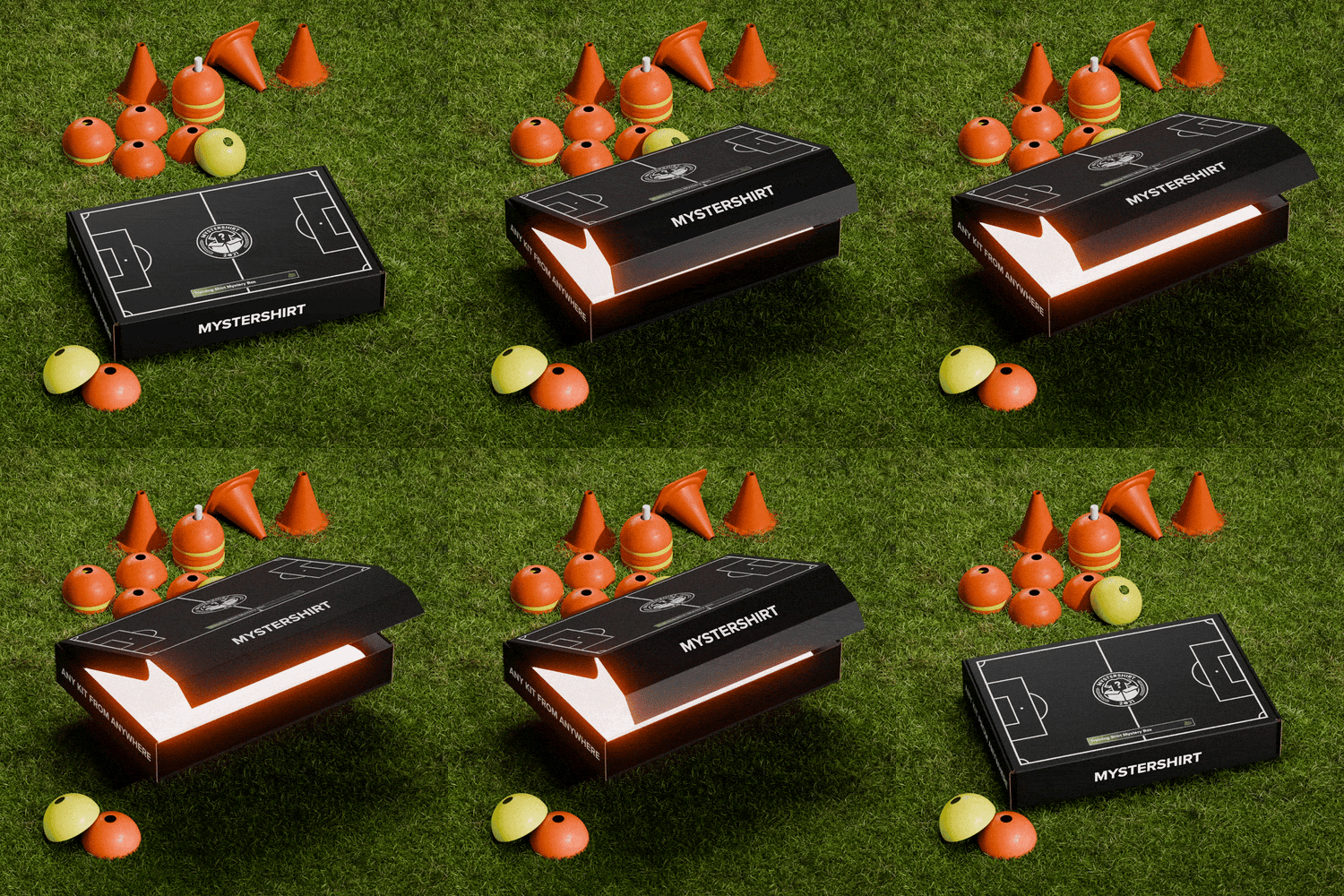
Mystery or sharing boxes work when the reveal is part of the fun. They fit fandom groups, sports teams, and friend crews because people enjoy opening them together and reacting to what is inside. For football-focused groups, this guide to gifts for a football team shows how a shared-interest box works when the group already has a clear theme.
| Gift type | Best for | Watch out for |
|---|---|---|
| Experience gifts | Shared moments, celebrations | Calendar conflicts, uneven participation |
| Apparel | Identity, sports, school groups | Sizing mistakes, weak design, limited sizing runs |
| Personalized items | Recognition, milestone gifts | Lead time, minimum orders, spelling errors |
| Mystery or sharing boxes | Surprise, fandom, group reveals | Taste mismatch, less control over the exact item |
Shortlist the category that matches the team
If the team is close-knit and the occasion is emotional, start with personalization. If the team wants a shared moment, start with an experience. If the group likes visible affiliation, apparel works. If you want energy, surprise, and low decision fatigue, use a mystery box.
One category is usually wrong from the start. If you cannot picture how the gift will feel when opened, worn, or used, skip it.
Matching Gifts to Your Team's Setup
The same gift can feel thoughtful in one team and awkward in another. That's the part most generic lists miss. A co-located office can handle a lunch reveal or a desk drop. A hybrid team can't always do that without creating a fairness problem.

Hybrid and fully remote teams need equal treatment
For hybrid teams, the gift has to survive distance. If the in-office people get a catered lunch and remote people get an afterthought, you've just announced who's visible and who isn't. Send the same item, same note, same timing, and same reveal experience, even if the reveal happens in a video call.
Fully remote teams need gifts that don't depend on location. A digital experience, a gift-of-choice format, or a shipping-friendly item with predictable delivery is usually safer than anything fragile or bulky. If you're shipping across borders, keep the package simple and don't assume everyone can receive the same food, alcohol, or event credit.
Remote gifting works when nobody has to explain why their version was smaller.
Co-located, sports, and school groups each need a different filter
In-office teams can handle more presentation. A locker-room style reveal, a desk drop, or a shared unboxing moment can work because the group is physically together. Sports teams are also one of the few settings where a matching item feels natural instead of forced, especially when the design reflects the squad instead of the company.
School groups are different again. Parents care about budget, appropriateness, and whether the item will be used. Keep it modest, practical, and easy to distribute. A school gift should never create pressure for families to spend more just to keep up.
The quickest way to choose correctly is to ask, “Can every person participate in the same way?” If the answer is no, the gift needs another format.
Sizing, Quantities, and Personalization Logistics
Good intentions can falter if you overlook the details. Sizing, quantities, and personalization are not admin details, they're the entire project. If you mess up the logistics, the gift stops being a gift and becomes a cleanup ticket.
Collect data without making people hate the process
Do not spam the team chat with a giant size request and hope for the best. Ask once, make the form short, and explain why the information matters. If someone doesn't respond, use a default only if the item is flexible enough to tolerate it. Apparel is not flexible, so silence is a problem, not a signal.
Keep a small buffer for the sizes people usually underreport or overclaim. For group apparel, a conservative over-order on common sizes is smarter than pretending every person is perfectly predictable. One unopened extra shirt is cheaper than a missing size and a frantic reorder.
Personalization has to be clean, not clever
Names, nicknames, and special characters can make a gift feel great when they're right and embarrassing when they're wrong. Check spelling twice. If you're dealing with non-Latin scripts or uncommon characters, confirm whether the supplier can print them accurately before you approve the order.
The same applies to branded or sports-style items. Limited-run marketing SKUs look attractive online, then fall apart when you try to source a full spread of sizes. If the product line can't support your whole group, it's a trap.
The size chart on this football jersey guide is a good reminder that fit should be confirmed before the order is locked, not after delivery starts. That's true for team orders in general, not just shirts.
| Check | Done? |
|---|---|
| Sizes collected from every recipient | |
| One fallback plan for non-responders | |
| Personalization spelling confirmed | |
| Address list cleaned and deduped | |
| Packaging can survive transit |
Keep the ops sheet boring. The more exotic the personalization, the more disciplined the workflow needs to be.
Treating the Gift as Recognition, Not a Transaction
A gift with no context gets filed under “random stuff” and forgotten fast. A gift tied to a real moment gets remembered, talked about, and usually kept. That is why strong team gift ideas read like recognition, not a purchase order dressed up with tissue paper.
The old corporate gifting stats were already pointed enough, so the practical takeaway is simple. Gifting shows up in HR and marketing because it works best as a relationship move, not a box-checking exercise. A meaningful gift also lands harder when the recipient can connect it to a real achievement, a tough stretch, or a team win. The object matters, but the message around it matters more.
Make the gift legible
State the reason plainly. Say what happened, why it mattered, and why this item fits the moment. A short note from a manager beats a polished card that could have been sent to anyone, because specific recognition is what people remember.
Keep the language tight. If the gift marks a project launch, a hard-fought client save, or a strong quarter for a hybrid crew, name that context directly. If you need more structure for that kind of recognition, appreciation activities for hybrid teams gives you ways to pair the item with a better moment instead of dropping it into inbox noise.
Follow-up still matters. A quick reply thread, a simple check-in, or one clear question about whether the gift landed gives you useful feedback without turning the gesture into paperwork. That matters even more for teams spread across locations, because remote people can miss the informal cues that make a gift feel deliberate.
The right follow-up also protects the message. If a recipient had size issues, shipping trouble, or a missing name, you learn fast and fix it before the gift becomes a reminder of bad ops instead of good recognition. That is where a plain, human process beats fancy packaging every time.
A generic gift without context is a line item. A gift tied to a real moment becomes a memory. The difference is the whole point, and it is exactly what the surprise gift playbook gets right about the reveal.
Ordering Timeline and Presentation Tips
The gift should already be in motion before the team starts asking about it. If you wait until the last week, you're not managing a gift program, you're managing delays.

Work backward from delivery
At 8+ weeks out, lock the concept, the recipient list, and the budget. That gives you time to compare suppliers, confirm stock, and request proofs if personalization is involved. At 4 weeks out, finalize the order and verify every spelling, size, and address.
At 2 weeks out, confirm shipping cutoffs, watch for exceptions, and line up the presentation. If the gift needs a card, a reveal plan, or a coordinated delivery for multiple locations, this is when that gets locked. At 1 week out, receive the items, inspect them, and store them discreetly so no one accidentally spoils the surprise.
The surprise gift playbook is a useful reminder that the reveal matters almost as much as the item itself. A plain box can still feel strong if the moment is handled well.
Presentation is not decoration, it's control
Boxing matters when the reveal is part of the experience. A handwritten note matters more than the packaging when the gift is personal or low-key. For scattered teams, keep the reveal consistent so nobody feels like they got the budget version.
Don't forget customs forms for international shipments, spare stock for damaged items, and a backup contact if the delivery is signed for at the wrong desk. That's not overkill. That's what prevents the awkward message that starts with “Mine arrived broken.”
A Quick Checklist Before You Hit Order
If the answer to any of these is no, fix it before you buy. Every failed gift comes from skipping one of these steps.

| Check | Done? |
|---|---|
| Goal defined | |
| Team surveyed | |
| Budget set | |
| Vendor vetted | |
| Gift chosen | |
| Timeline confirmed | |
| Presentation planned |
Keep the checklist blunt
- Goal defined: If you can't say whether this is appreciation, celebration, onboarding, or seasonal thanks, stop.
- Team surveyed: If the gift depends on taste, size, or participation, get the data first.
- Budget set: If the spend ceiling is fuzzy, the order will drift.
- Vendor vetted: If the supplier can't handle the quantity, timing, or customization, move on.
- Gift chosen: If you're still comparing six unrelated categories, you haven't picked yet.
- Timeline confirmed: If the delivery date is not realistic, the gift will arrive as a late apology.
- Presentation planned: If nobody knows how the gift will be handed over, the reveal will feel flat.
That checklist is the whole job. Clear goal, clean data, tight logistics, and a gift that fits the team instead of forcing the team to fit the gift.
Mystershirt sells mystery football shirt boxes, sharing options, and authentic jerseys that work well when the group shares a football interest and you want the gift to feel like an unboxing moment instead of generic merch. If you're putting together a team or group gift and want a surprise format with size choices, club exclusions, and worldwide shipping, visit Mystershirt and see whether one of their group-friendly options fits your order.