The counterfeit football shirt market around the Premier League is estimated at £180 million a year, with about 16.2 million fake shirts sold annually at an average of £11. Legitimate shirts average £76.50, so counterfeit versions are sold about 86% cheaper, and there are more than 1.5 fake shirts in circulation for every authentic shirt sold. Corsearch's market analysis explains why your search for authentic football jerseys cheap can feel distorted from the start. The bargain baseline you see online is often counterfeit pricing, not genuine market value.
Real deals exist, but they come from timing, overstock, bundles, and careful buying. They don't come from assuming every suspiciously cheap listing is a hidden bargain.
Table of Contents
- Why Authentic Football Jerseys Cost More Than You Think
- How to Verify Authenticity Before You Buy
- Best Channels to Find Genuine Jerseys at Lower Prices
- Why Mystery Boxes and Bundles Deliver Real Value
- Timing Your Purchase and Stacking Discounts
- Red Flags and Scams to Avoid Completely
Why Authentic Football Jerseys Cost More Than You Think
The legitimate Premier League shirt market recorded £489 million in shirt revenue during the 2022/2023 season. Counterfeit sales were estimated at approximately £246 million in annual lost sales for clubs and kit makers. Corsearch's analysis also estimated counterfeit sales at more than a third of the legitimate market, showing why anonymous marketplace prices create a misleading benchmark. The full breakdown from Corsearch puts the gap into context.

The price difference starts with licensed football shirts. An authentic shirt includes the club's commercial agreement, brand participation, approved manufacturing, distribution, retailer overhead, and after-sale support. A counterfeit seller copies the appearance while avoiding those costs, so the two prices do not represent equivalent products.
Set a realistic bargain threshold
A £15 shirt may appear to solve an “authentic football jerseys cheap” search, but the number proves nothing by itself. Ask where the shirt came from, which season and version it represents, whether the photographs show the actual item, and what buyer protection applies.
Legitimate discounts usually come from a clear event: a retailer clearing old stock, a collector selling a duplicate, or a mystery-box service moving past-season inventory in volume. Bundles can also reduce the effective cost when every included shirt is described accurately. Endless listings for “official” shirts in every club, size, and colour at the same implausibly low price deserve far more scrutiny.
Mystery boxes work because they change the economics of the purchase. The seller clears varied inventory, while the buyer accepts less control over the exact club or design in exchange for access to lower-priced stock. Treat that trade-off fairly. Check the service's authenticity policy, item condition rules, sizing process, and return terms before paying.
Vintage pricing can be sharper still. Independent resale guidance places authentic vintage football shirts from the 1990s commonly in the £100 to £400 range, with rarer examples above £400. Classic Football Shirts' authentication guidance makes the practical point clearly: a very cheap vintage listing requires investigation, not instant celebration.
Collector's rule: Compare a deal with a genuine shirt from the same season, version, condition, and size. The cheapest shirt on the internet is the wrong benchmark.
Choose the version that matches your use. Fan or stadium shirts suit everyday supporters, while player or match versions have a closer fit and performance-focused construction. A cheaper authentic fan version is often the smarter purchase for casual wear.
For a matchday trip, plan the stadium city before buying a shirt as a souvenir. The St Christopher's Inns travel blog football guide can help organise football-focused stops across Europe. For the cost side, this guide to why soccer jerseys are so expensive explains why official pricing remains higher than counterfeit listings.
How to Verify Authenticity Before You Buy
Don't authenticate a shirt with one detail. Counterfeiters have become good at copying the visible features that once fooled casual buyers, including tags and product codes. A genuine-looking code proves only that someone copied a code. It doesn't prove that the shirt matches the correct season, colourway, model, or construction.
Use a layered workflow instead.
Start with the internal product code
Ask for a sharp photograph of the internal label and locate the product code. Then search that code alongside the club, season, colourway, and manufacturer. Compare the result with official product imagery, archived retailer pages, and trusted collector references.
The reverse check matters. A code can exist in a manufacturer's catalogue and still be attached to the wrong shirt. Confirm that the exact shirt shown in the listing matches the code's design, sponsor treatment, collar, trim, and release context.
Compare the shirt against reliable imagery
Look at the seller's photos beside official images from the relevant season. Don't focus only on the crest. Check the panel layout, fabric texture, sponsor placement, collar shape, sleeve finish, and whether the shirt is a fan or player edition.
A listing that uses only stock photographs gives you nothing to inspect. Ask for photos of the actual item, including the inside label, wash-care label, crest, sponsor, hem, and any manufacturer authentication features.

Inspect physical construction
Stitching should look deliberate and consistent. Uneven spacing, loose threads, crooked seams, poorly cut panels, or a crest that sits noticeably out of alignment should lower your confidence. A sewn crest isn't automatically proof of authenticity, because construction varies by shirt type and manufacturer, but sloppy work is still a warning.
Care labels deserve equal attention. Check their formatting, spelling, spacing, fabric information, country details, and attachment. A label that looks too glossy, poorly printed, or inconsistent with the season's known examples is a reason to pause.
The SoccerWares fake shirt guide is a useful visual reference for comparing these details. You can also use this football shirt authenticity checklist when checking marketplace listings or mystery-box arrivals.
Check the seller, not just the jersey
Review the seller's history for repeated stock photographs, identical descriptions, sudden waves of unrelated club shirts, and reviews that mention different products from the one advertised. A return address that doesn't match the business location, vague shipping terms, or pressure to pay outside the platform all weaken the deal.
Use protected payment methods and save the listing before buying. If the shirt arrives and differs from the photographs, that record gives you a stronger basis for a return or dispute.
Best Channels to Find Genuine Jerseys at Lower Prices
The best channel depends on what you value. Official clearance gives you certainty and control over the exact shirt. Resale gives you variety and the possibility of a rare find. Mystery boxes trade control for lower cost per shirt and a more entertaining purchase.
| Channel | Typical Savings | Authenticity Guarantee | Best For |
|---|---|---|---|
| Official club clearance | Meaningful reductions on older stock | Strong, when bought directly | Buyers who want a specific club and size |
| Authorised retailer sale | Competitive seasonal pricing | Strong, if the retailer is authorised | Shoppers comparing several clubs |
| Established resale platform | Varies by condition and rarity | Depends on platform checks and seller evidence | Collectors seeking older or unusual shirts |
| Mystery box service | Lower cost through surprise and overstock | Look for an explicit authenticity promise and returns | Buyers prioritising value and discovery |
| Group or sharing bundle | Lower individual cost when divided | Depends on the provider | Friends, families, and teammates |
Official club stores are the safest place to start when a new season has pushed older designs out of the spotlight. Authorised retailers can be even more useful because they often carry several clubs and manufacturers, making it easier to compare fit, size availability, and remaining stock.
Resale marketplaces require more judgement. They can uncover a shirt that disappeared from retail years ago, but condition, customisation, missing labels, and seller knowledge vary widely. Buy the seller as much as the shirt. A detailed description and clear close-up photographs matter more than a polished shop banner.
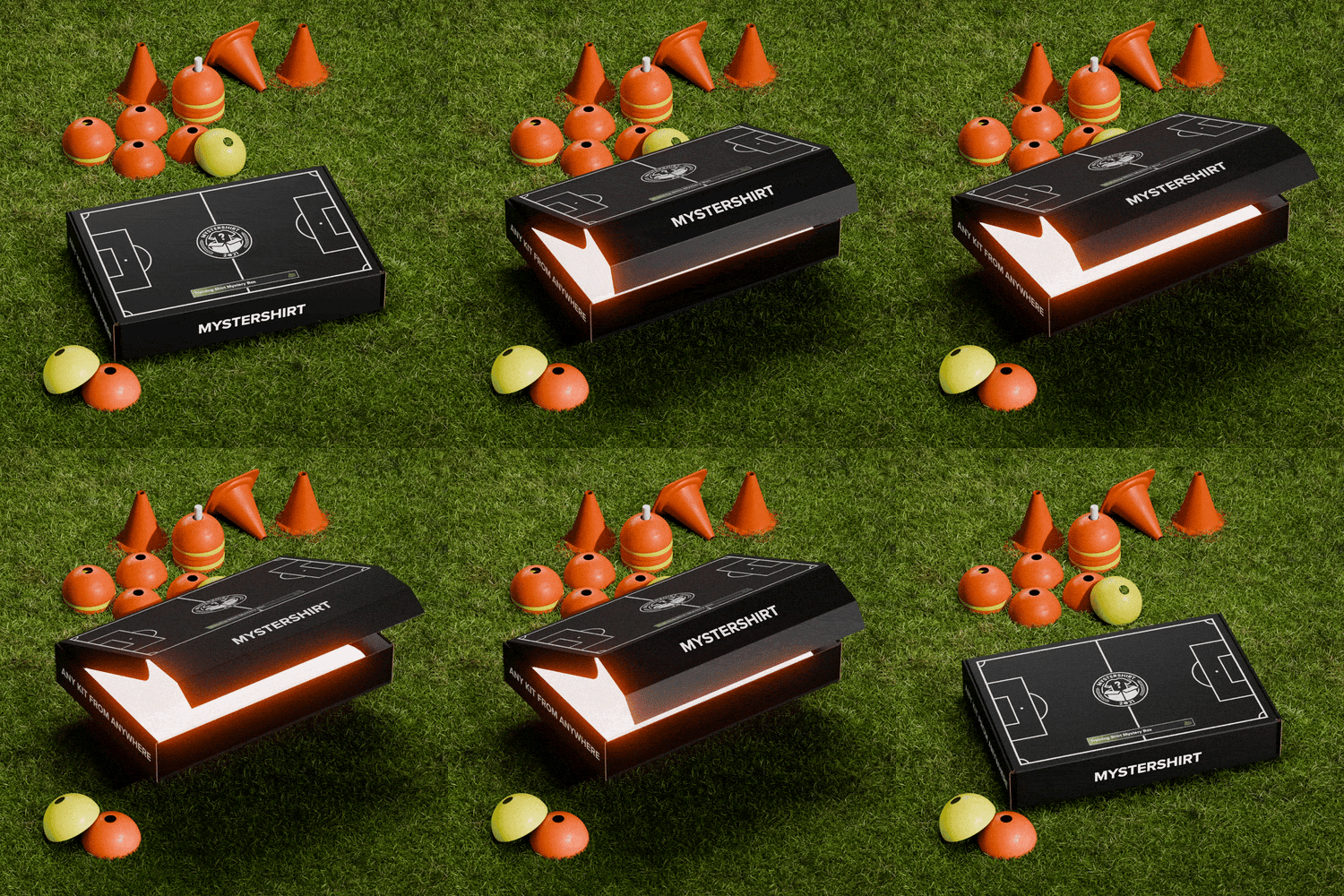
Mystery boxes make sense for shoppers who care about receiving a genuine shirt more than choosing a particular crest. Mystershirt offers boxes built around categories such as Premium, Retro, Kids, and sharing options, with size selection ranging from children to 5XL, club and colour exclusions, labels included, and a 100-day money-back guarantee. It lists a starting price of $33.32, more than 40,000 shirts in stock, and more than 300,000 jerseys sold, based on the publisher information supplied for this article.
Don't treat every mystery-box provider as interchangeable. Check whether authenticity is stated clearly, whether returns are practical, whether shipping terms are visible, and whether customer reviews describe the actual contents rather than only the unboxing excitement.
Why Mystery Boxes and Bundles Deliver Real Value
Mystery boxes work because they solve an inventory problem. Retailers and specialist sellers accumulate legitimate shirts from past seasons, less popular clubs, unusual sizes, and leftover categories. Selling each shirt as a carefully marketed individual item takes time and ties up stock. A box lets the seller move that inventory while giving the buyer a lower entry price.
That doesn't mean every box is good value. The provider must disclose enough for you to judge the risk. A genuine box should define the product category, explain whether shirts are authentic, state the available sizes, describe exclusions, and publish a usable return policy.

Choose the box for your buying behaviour
A Premium box suits someone who wants a modern official shirt and doesn't need to dictate the club. A Retro box is better for collectors who enjoy older designs, while a Kids box works when the recipient's size is the main priority. Special bundles and signed items appeal to buyers who want the unboxing to feel like a collecting event rather than a straightforward retail purchase.
Use exclusions intelligently. List clubs, leagues, and colours you won't wear, but don't remove so many possibilities that the provider has no sensible stock to work with. The point is to reduce disappointment, not recreate a fully selected retail order.
Bundles make more sense with other fans
A Sharing Box is especially practical for friends, teammates, families, or supporters travelling together. Several people can divide the cost and accept that each person won't control every detail. That arrangement turns uncertainty into part of the value, particularly when the group has different club preferences.
The football jersey mystery box guide is useful for thinking through box types and expectations before ordering. My view is simple: mystery boxes are a smart route to authentic football jerseys cheap when you want a genuine shirt, have flexible club preferences, and value cost per item. They're the wrong choice if you need one exact player name set, one exact season, or a guaranteed home shirt.
Timing Your Purchase and Stacking Discounts
Discount hunting is often a timing problem disguised as a price problem. The strongest opportunity usually appears when a retailer needs to clear a previous season's stock, not when the shirt is at peak demand after a launch or major result.
Track the exact product across official club stores, authorised retailers, outlet pages, and established resale channels. Save photographs and product details so you can recognise the same shirt when the price changes. A low price without a clear product match isn't a deal.
Use a simple buying calendar
- After a new kit arrives: Previous-season shirts may become easier to find at reduced prices, especially in common sizes.
- Near the end of a campaign: Retailers may clear remaining stock, but popular sizes can disappear quickly.
- During major retail sale periods: Compare the final delivered price, not just the advertised reduction.
- Before a gift date or match trip: Buy early enough to allow for processing, returns, and size exchanges.
A discount code becomes more useful when paired with a legitimate clearance price, free-shipping threshold, loyalty credit, or group order. Don't let an instalment option persuade you to spend more than planned. Klarna and Shop Pay can spread payments where available, but payment flexibility doesn't improve authenticity or value by itself.
Practical rule: Stack discounts only after you've confirmed the shirt, seller, delivery cost, and return terms.
Group buying can lower the effective cost when several people want shirts at the same time. Sharing options are designed for that use, but calculate the delivered total before dividing it. International buyers should also check the provider's delivery estimate, customs responsibility, and return procedure before ordering close to a birthday or matchday.

Use the video below as a visual supplement to your buying process, then apply the same discipline to the listing and seller rather than shopping on impulse.
Red Flags and Scams to Avoid Completely
Price isn't proof of fraud. A legitimate clearance shirt can be heavily reduced, while a fake can be listed at a premium. The reliable warning signs appear in the seller's behaviour, evidence, and willingness to let you inspect the product.
Treat a listing priced around 60% below expected market value as a screening trigger, not an automatic verdict. Independent vintage-shirt guidance uses unusually deep discounts as a reason to investigate seller history, return details, and packaging evidence.
Walk away when the story doesn't hold together
Be cautious if the seller:
- Uses stolen product photography: Ask for a current photograph with a handwritten note or another specific detail. Refusal matters.
- Lists endless “new” stock: A private seller with a constant supply of many clubs, seasons, and sizes needs a credible business explanation.
- Avoids protected payments: Don't transfer money privately because the seller promises a lower price.
- Provides fake certificates: A printed authentication card has no value if the shirt's code, labels, and construction don't match.
- Changes the item after purchase: Bait-and-switch sellers may send a different colourway, size, or lower-grade shirt than the listing showed.
Packaging can reveal carelessness, but it isn't authentication by itself. A genuine shirt can arrive in plain packaging, and a counterfeit can be wrapped professionally. Use packaging as supporting evidence alongside the product code, exact-season comparison, stitching, crest alignment, and care label.
Check the return address before paying. If it is missing, inconsistent, or impossible to verify, the risk rises. Reviews should also be read for patterns, not just star ratings. Look for comments about authenticity, accuracy of photographs, communication, refunds, and whether the delivered shirt matched the listing.
The best cheap purchase is the one you can explain after it arrives. If you can't verify the item, protect the payment, or return the shirt, leave it behind. There will always be another jersey.
Mystershirt offers authentic football shirt mystery boxes from $33.32, with options for Premium, Retro, Kids, and group-friendly Sharing Boxes, plus size selection, exclusions, labels, and a 100-day money-back guarantee. If you want the economics of overstock without gambling on counterfeit listings, visit Mystershirt and choose the box that matches how you collect.