You've found the shirt: the right colors, the familiar crest, perhaps even a name and number that means something to you. Then the doubts arrive. Is it an authentic player version or a replica? Is the seller trustworthy? Will the badge survive washing, and will the jersey still look right years from now?
A favorite team jersey carries more than a club identity. It can mark a first match, a family tradition, a memorable season, or the player who made you fall in love with football. Buying well means protecting both sides of that value, the emotional connection and the physical garment.
Table of Contents
- Understanding Why Authenticity Matters for Your Collection
- Comparing Authentic Player Jerseys to Replica Fan Versions
- Verifying Jersey Authenticity Through Inspection Checkpoints
- Evaluating Purchase Channels for Value and Reliability
- Building a Jersey Care Routine for Long-Term Preservation
- Planning Your Jersey Purchase Strategy
- Starting Your Favorite Team Jersey Journey
Understanding Why Authenticity Matters for Your Collection
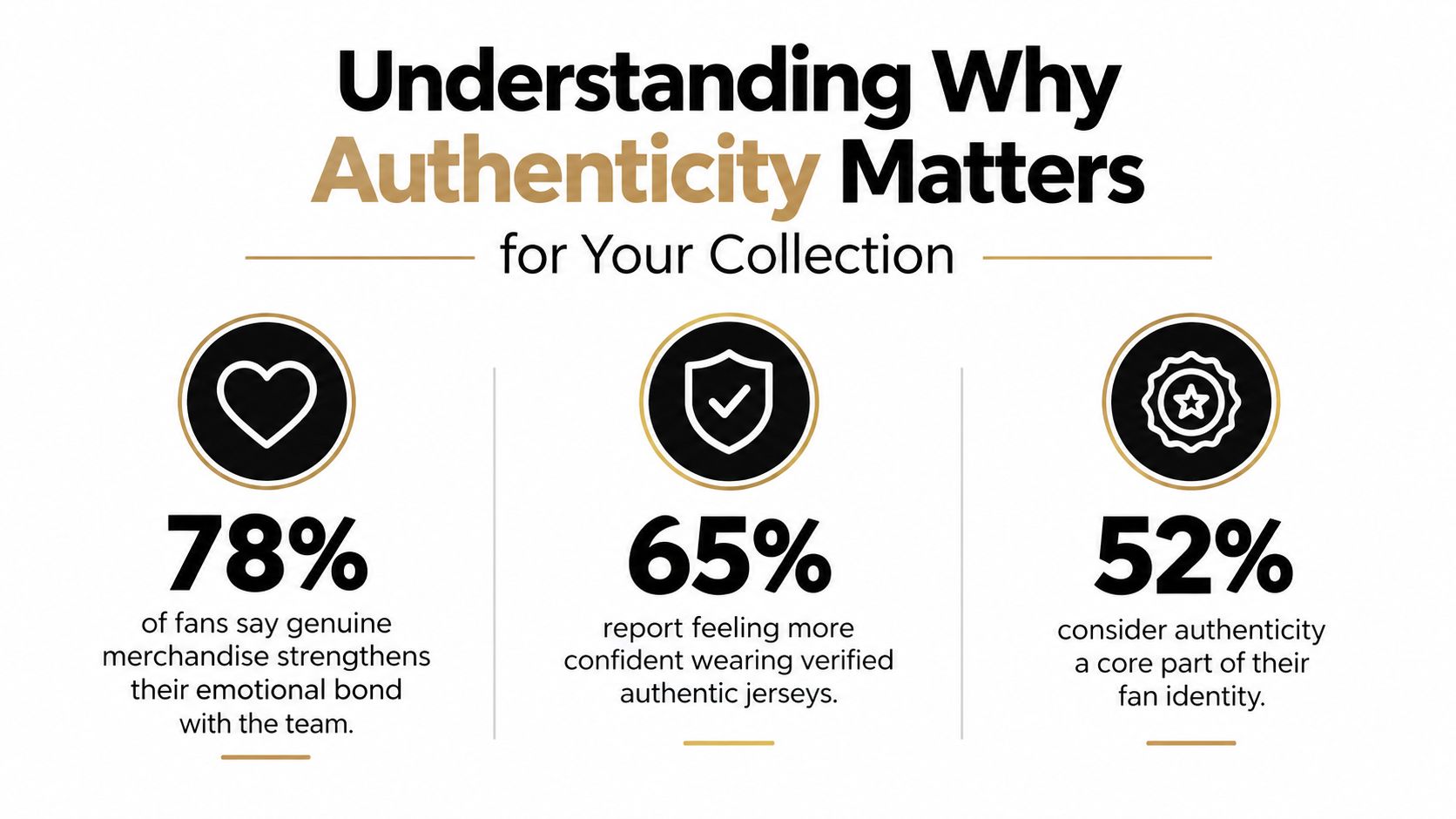
A genuine shirt feels different because it connects your personal memory to the club's real visual history. A fan might wear a current-season jersey to matches, keep a retro shirt framed, and save a special edition for occasions when the story matters more than everyday practicality. A counterfeit can copy the colors and crest, but it rarely carries the same confidence, construction quality, or dependable provenance.
Club colors also have deeper roots than many buyers realize. A Cambridge University study reported by Business Research Insights found that 53 clubs selected colors between 1890 and 1910 that remain in use today. The study also found that almost 82% of clubs had retained their primary colors since 1929, rising to 90% by the start of World War II. The modern favorite team jersey therefore belongs to a long-running identity system, not a short-lived fashion cycle.
More shirts, more decisions
Jersey design has become more varied while club colors have remained remarkably stable. The same research records 116 jerseys in 1965–1983 and 291 in 2001–2019, while the average number of jerseys per club rose from 7.25 to 12.75. More frequent releases give fans more ways to express loyalty, but they also make it harder to judge which version deserves a place in a collection.
The commercial scale adds another layer. A Zion Market Research report projects the global football shirts market from USD 13.46 billion in 2024 to USD 22.78 billion by 2034, with roughly 6.8% annual growth from 2025 to 2034. A separate estimate places the market at USD 11.74 billion in 2026, so buyers are navigating a substantial apparel category with active resale and counterfeit markets, not a small specialist niche.
Collector's rule: authenticity matters most when the shirt carries a story you'll want to preserve, not merely a logo you want to display.
Comparing Authentic Player Jerseys to Replica Fan Versions
Authentic and replica shirts serve different purposes. The authentic, or player, version is built around match performance. It usually has a slim athletic fit, lightweight performance fabric, and heat-pressed badges that reduce weight and bulk. Nike VaporKnit and Adidas HeatReady are examples of the type of technical fabric used in these versions.
A replica, often called a fan version, is designed for regular supporters. It generally uses standard polyester, offers a more relaxed fit, and commonly has embroidered badges. That construction often feels more practical for repeated casual wear, especially if you want to layer the shirt over another garment or wear it throughout a full match-day routine.
Choose the construction, not just the label
The main trade-off is performance versus everyday resilience. Technical fabrics manage moisture and allow greater breathability, but a lighter on-pitch shirt may require gentler washing. A replica's standard polyester and roomier cut usually make it easier to maintain and more forgiving during ordinary use.
Fabric weight also deserves attention. A buying guide from All About Football identifies mid-weight polyester around 180–220 GSM as a useful balance for shape retention. Very light fabric can sag more easily after wear, while heavier construction may feel less breathable.
Look closely at the seams. Flatlock or overlock stitching, reinforced collar and sleeve stress points, and smoothly applied badges reduce common problems such as seam tearing, peeling, and edge lift. These details matter more over time than a superficial difference in finish.
| Feature | Authentic player version | Replica fan version |
|---|---|---|
| Fit | Slim, athletic cut | Relaxed, regular fit |
| Fabric | Lightweight performance material | Standard polyester |
| Badge | Usually heat-pressed | Usually embroidered |
| Best use | Active wear, technical feel | Match days and everyday use |
| Care | Often needs gentler laundering | Usually more forgiving |
Don't assume the most expensive-looking shirt will last longest. Authentic versions prioritize low weight and breathability, while replicas often make the better choice for a supporter who wants to wear the same favorite team jersey frequently.
Verifying Jersey Authenticity Through Inspection Checkpoints
A seller's description is only the starting point. When you're buying outside official retail, inspect the garment itself and collect enough evidence to make a calm decision before paying.
Follow the evidence in order
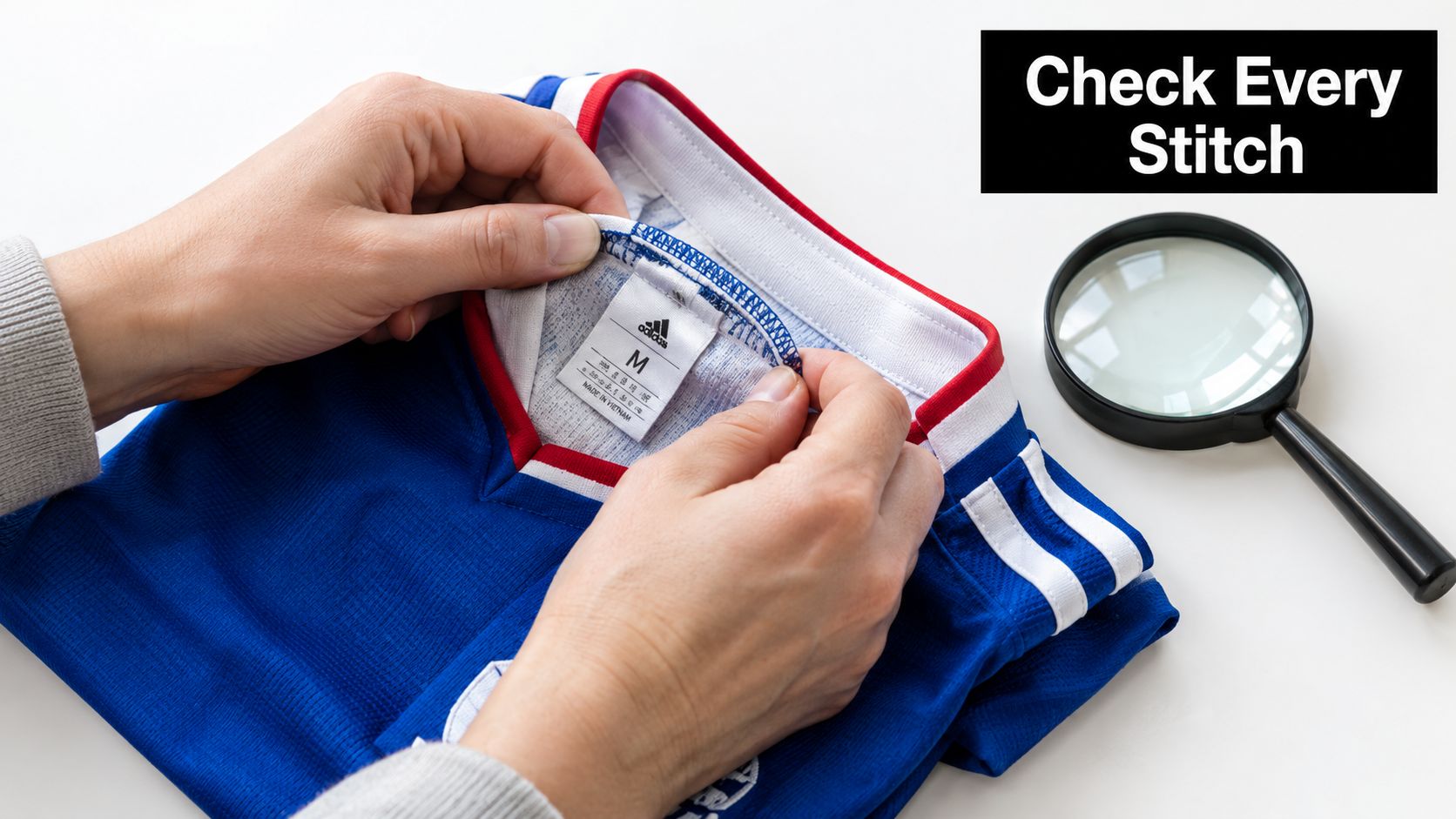
Start with the neck tag. Check for official licensing information and fabric composition. Then locate the product code and compare it with reference images or the manufacturer's product information. A code that's missing, inconsistent, or impossible to read deserves an explanation before you proceed.
Examine the crest, sponsor mark, lettering, and number. Authentic versions should show accurate fonts, clean alignment, and badge application appropriate to that shirt type. Loose stitching, distorted lettering, rough edges, or a design that doesn't match known references are stronger warnings than a minor fold or storage mark.
Seller behavior matters just as much. Independent reviews, clear photographs, a stated return policy, and direct answers about provenance all help establish trust. Blurry tag photos, vague wording, missing security labels, and prices far below the normal market level are common red flags. A 2026 trading standards warning cited by All About Football's authentication guide highlights these checks as practical safeguards.
An investigation reported by The New York Times found that 52% of surveyed participants had knowingly bought a fake shirt, and more than 80% of those buyers said they would do it again. That finding underlines why buyers shouldn't treat counterfeits as a rare edge case.
For a visual review of tags, badges, and product details, use this football shirt authenticity checklist. The same inspection mindset also helps with vintage apparel, including the construction details discussed in this vintage golf t-shirts guide.
Here's a useful video reference for comparing visible construction details:
Evaluating Purchase Channels for Value and Reliability
A current favorite team jersey is easiest to verify through an official club store. You get a specific shirt, consistent sizing information, and a clear record of where it came from. Authorized retailers widen the choice and may reduce the price during sales, but check whether the listing describes an authentic player version or a replica fan version. That distinction affects both the buying experience and how the shirt may hold value later.
Secondary marketplaces are useful for discontinued, signed, and retro shirts. They may be the only practical route to a scarce jersey, but the buyer must do more verification. Ask for sharp photographs of the neck tag, product code, badges, wash labels, and any repairs. Compare those details with known examples, then read the return terms before judging the asking price. A low price has little value if an unverified shirt cannot be returned.
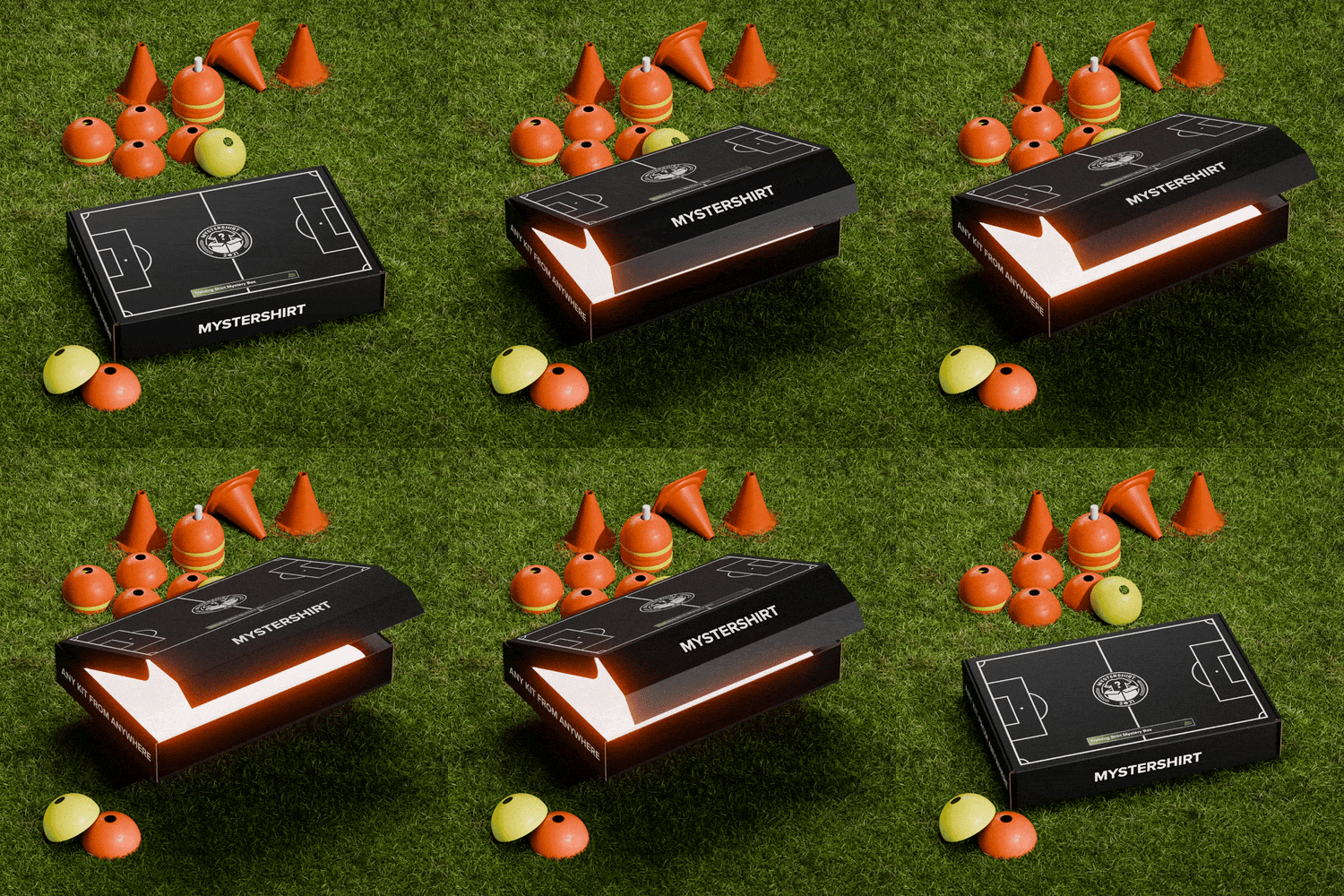
Mystery boxes serve a different purpose. You trade control over the club and design for the enjoyment of discovery, although some services allow exclusions for clubs, competitions, or colors. This format can suit a developing collection or a gift. It is a poor match for anyone seeking a particular player, season, or shirt tied to a defining memory.
Mystershirt offers mystery soccer jersey boxes starting from $33.32 with a 100-day money-back guarantee and worldwide shipping. The guarantee is the relevant safeguard when you cannot choose the exact club. Confirm that the return terms fit your location and priorities before ordering, especially if long-term collectability matters more than the surprise of opening an unknown shirt.
Building a Jersey Care Routine for Long-Term Preservation
A good care routine starts before the first wash. Check the garment label, identify whether the shirt is a lightweight authentic version or a sturdier replica, and avoid assuming that every polyester jersey can be handled identically.
Turn the shirt inside out and use cool water with a mild detergent. Hand washing is the safer default for delicate performance fabrics, especially when the shirt has heat-transferred badges, sponsor marks, or namesets. Replica shirts may tolerate routine machine washing better, but a gentle cycle and a laundry bag still reduce unnecessary friction.
Never tumble-dry a valuable shirt on high heat or place it directly against a radiator. Heat can stress printed details and affect the shape of lightweight fabric. Press water out carefully instead of twisting the garment, then dry it away from direct sunlight to protect the colors.
Treat marks before they settle
Sweat and grass marks need prompt attention. Rinse the area with cool water, work in a small amount of mild detergent, and avoid aggressive scrubbing across a badge or printed number. Bleach and harsh stain removers can alter colors or damage the finish even when the fabric itself appears sturdy.
For long-term storage, fold rare or delicate shirts with clean tissue paper rather than leaving them on a narrow hanger. If you do hang a shirt for display, use a broad, padded hanger that supports the shoulders without stretching the collar.
The football jersey washing guide offers a useful reference for turning these principles into a repeatable routine. Rotate frequently worn shirts with display or collectible pieces, and record important details such as the season, source, and condition. That record helps you avoid treating a scarce retro shirt like an ordinary training top.
Planning Your Jersey Purchase Strategy
Start with the purpose. If you need a shirt for regular match days, prioritize a comfortable replica, durable seams, and easy care. If the shirt marks a significant player, season, or family memory, spend more time verifying provenance and protecting the garment after purchase.
A current-season shirt delivers immediate relevance, but a retro version may offer stronger emotional character and scarcity. Recent coverage describes vintage resale as larger than before, while another report recorded a 510% increase in eBay search interest around the World Cup cycle in Golden Goal's coverage. That kind of event-driven attention can make popular shirts harder to find, although no trend guarantees future resale value.
Match the channel to the decision
Use this simple sequence:
- Define the essential criteria. Decide whether you need a specific club, season, player, color, or size.
- Choose the shirt type. Select authentic for technical construction and collecting, or replica for relaxed everyday wear.
- Set an evidence standard. Require tag, product code, badge, and seller information before buying secondhand.
- Plan the care. Buy suitable detergent and storage materials at the same time.
- Record the purchase. Keep receipts, photographs, and condition notes for valuable pieces.
Fans building a broader collection can also compare approaches in this soccer jersey collection guide. If you're buying performance apparel beyond football, a practical MTB jersey guide for NZ buyers offers useful context on fit and active use.
Starting Your Favorite Team Jersey Journey
The best purchase is rarely the shirt with the loudest marketing. It's the one that fits the reason you're buying it. A supporter who wants to wear club colors every weekend may be happier with a well-made replica, while a collector preserving a defining season may accept the extra care and cost of an authentic player version.
Take photographs when the shirt arrives, especially of the tags, product code, badge, and nameset. Compare the evidence before removing labels or washing the garment. If something feels inconsistent, pause and use the return policy rather than trying to rationalize a suspicious bargain.
The history of club colors gives a favorite team jersey unusual staying power. The Cambridge research cited earlier shows that many clubs have carried their primary colors across generations, while modern releases give fans more versions to choose from. Your job is to choose the garment that matches your story, verify what you're paying for, and care for it as an object you may want to keep.
Whether you buy through an official retailer, a reputable secondary seller, or a mystery box, the core standard stays the same. The shirt should be identifiable, accurately described, well constructed, and meaningful to you.
If you want to add an authentic surprise to your collection, visit Mystershirt and explore its mystery soccer jersey boxes, including Premium, Retro, Kids, and group-friendly options. Choose your size, review the available preferences and guarantee, and turn the next addition to your favorite team jersey collection into an experience as well as a purchase.