You're probably in the same spot most football shirt buyers hit sooner or later. One tab has a retro away shirt that looks like a steal. Another has a mystery box that sounds fun. A third has a “player issue” listing with photos that somehow avoid every detail you want to inspect.
The excitement is real. So is the hesitation.
A shirt can be cheap and still be a bad buy. It can also cost a bit more and end up being far better value for money because it arrives authentic, fits properly, ships when promised, and gives you a way out if it's not right. That matters even more with surprise purchases, where part of the deal is trust.
Table of Contents
- The Search for the Perfect Shirt and the Fear of a Bad Buy
- What Is True Value for Money in Football Shirts
- Your Practical Value for Money Checklist
- Evaluating Scenarios with Mystery Soccer Jersey Boxes
- How to Maximize Value and Avoid Red Flags
- Conclusion Investing in Your Passion with Confidence
The Search for the Perfect Shirt and the Fear of a Bad Buy
Most collectors know the feeling. You find a shirt you like, maybe from a season you remember clearly, maybe from a club you'd never usually buy but the design is too good to ignore. Then the doubts start. Is it fake? Is the sponsor cracked? Will the sizing be miles off? If it's a mystery box, will you end up with a shirt you'd never wear?
That's where people often make the wrong calculation. They focus on the listed price and ignore everything around it.
For football shirts, especially online, the question isn't “Is this cheap?” It's “What am I getting for my money, and how much risk am I carrying?” A low price without confidence behind it often becomes an expensive mistake. A shirt that needs returning, replacing, or arguing over with a seller stops being a bargain very quickly.
One detail from outside football buying says a lot about this. Only 18% of value discussions mention post-purchase support or return policies, according to Franklin Templeton's broader analysis of how people define value. That gap matters even more for surprise-based products, where peace of mind is part of the product itself.
Practical rule: If a seller makes the buying part easy but the problem-solving part vague, the value for money usually isn't there.
I've found that serious buyers eventually develop the same habit. They stop treating price as the full story. They look at authenticity proof, photos, return terms, delivery reliability, and how the seller handles uncertainty. That's just smart buying.
If you want a broader business view on why pricing alone rarely explains customer value, Market Edge B2B pricing analysis is useful because it frames pricing as one part of a wider decision, not the whole decision. That applies to football shirts more than many people realise.
Why fear shows up so often
The fear isn't irrational. Football shirts combine several risks in one purchase:
- Authenticity risk because replicas and fakes can look convincing in weak photos.
- Fit risk because brands and eras size differently.
- Condition risk because print wear, pulls, and fading don't always show clearly.
- Taste risk because a mystery shirt can be interesting or completely wrong for you.
That's why true value for money has to include confidence. Without it, you're not buying a shirt. You're buying a gamble.
What Is True Value for Money in Football Shirts
Value for money is easiest to understand when you stop thinking like a bargain hunter and start thinking like a collector. A collector doesn't just ask what something costs. A collector asks whether the shirt earns its place in the wardrobe, the frame, or the collection.
A useful way to judge that comes from the 3Es framework used in value for money work globally: Economy, Efficiency, and Effectiveness. In that framework, economy is the cost paid for the required quality, efficiency is what you get relative to what you spend, and effectiveness is whether the purchase achieves what you wanted it to achieve, as outlined by Better Evaluation's guide to value for money.

Economy means more than paying less
Economy is the easiest part to see. It's the sticker price, shipping fee, and any customs pain that may follow. But even here, the right question isn't “What's the cheapest shirt?” It's “What's the lowest cost for the level of quality and trust I need?”
If you're buying a modern training top to wear casually, your quality threshold may be lower. If you're buying a rare retro shirt, your threshold should be much higher. The same goes for blank shirts versus namesets, fan versions versus player-spec details, and common releases versus niche clubs.
Material quality matters too. Anyone comparing blanks or customs can learn a lot from guides on high quality shirts for custom designs, because fabric weight, finish, and print compatibility all affect how worthwhile a shirt feels over time.
Efficiency is what the shirt gives back
Efficiency is where shirt buying gets interesting. Two shirts at the same price can offer completely different value.
One might be authentic, clean, wearable, and versatile. The other might be authentic too, but badly cracked, oddly sized, and impossible to style. On paper they cost the same. In practice they don't.
For surprise boxes, efficiency often comes from the package around the shirt:
- Authenticity assurance
- Choice inputs such as size and avoid lists
- Decent shipping expectations
- A return or money-back route if something's off
That's why some buyers also look at shirts through a longer lens, especially if they collect selectively. This piece on whether football shirts are a good investment is useful for that mindset because it pushes you to think about demand, scarcity, and long-term appeal rather than impulse alone.
Effectiveness is personal
This part gets ignored most often. Effectiveness asks whether the purchase did its job for you.
Maybe you wanted a conversation piece. Maybe you wanted a gift that feels thoughtful without having to pick one exact club shirt. Maybe you wanted a nostalgic hit from a specific era. If the shirt lands that result, the purchase worked. If it doesn't, even a technically good deal can miss.
Good value for money in football shirts sits at the point where cost, confidence, and enjoyment all line up.
That's the standard I'd use for any listing, any resale platform, and especially any mystery box.
Your Practical Value for Money Checklist
When you're staring at a product page and trying to decide quickly, theory helps less than a checklist. Use this one like a pre-buy scan. If too many answers come back vague, move on.

Authenticity
Check what proof the seller gives. Not what they imply.
- Look for product details: Are there clear photos of tags, labels, or close-up construction?
- Check the wording: Does the seller plainly say the shirt is authentic, or do they hide behind soft language?
- Test the safety net: If the shirt turns out wrong, what happens next?
If authenticity matters to you, a vague listing is already a weak listing.
Price and rarity
Cheap common shirts can be fine. Expensive rare shirts can also be fine. What matters is whether the price matches the shirt category.
Ask yourself:
- Would this still feel fair if the novelty wears off in a week?
- Is the shirt common enough that I could wait for a better example?
- Am I paying for genuine rarity or just seller optimism?
Mystery boxes shift this calculation because you're often buying discovery as well as product.
Condition
Condition can ruin value for money faster than almost anything else.
Check for:
- Print wear: Namesets and sponsors often age badly.
- Fabric issues: Pulls, bobbling, fading, and marks.
- Collar and cuff shape: Stretch and warping show hard use.
- Storage signs: Musty smell risk, yellowing, or cracking from poor storage.
A shirt can be authentic and still be poor value if the wear is worse than the listing suggests.
Sizing and fit
A shirt that never gets worn rarely feels like good value.
- Compare by era: Older shirts often fit differently from current ones.
- Check brand variation: Nike, adidas, Puma, Kappa, Umbro, and smaller makers don't size the same.
- Think about use: Display fit and wear fit aren't always the same.
For mystery purchases, the seller should at least let you set your size clearly.
Shipping and delivery
A shirt doesn't start providing value when you click buy. It starts when it arrives as expected.
Look for:
- Estimated delivery windows
- Tracking clarity
- Packaging standards
- Any obvious hidden shipping surprises
Fast dispatch won't rescue a bad shirt, but poor delivery can sour a good one.
Guarantees and returns
Here, risk gets separated from value.
Ask three blunt questions:
- Can I return it?
- How long do I have?
- Is the policy easy to understand without legal decoding?
When those answers are clear, you're buying with control. When they're murky, you're accepting unnecessary risk.
Evaluating Scenarios with Mystery Soccer Jersey Boxes
Mystery boxes only make sense when they fit the buyer. I've seen people call them poor value because they expected a hand-picked grail, and I've seen others love them because they wanted surprise, authenticity, and a shirt they wouldn't have chosen themselves.
The better way to judge them is by scenario.
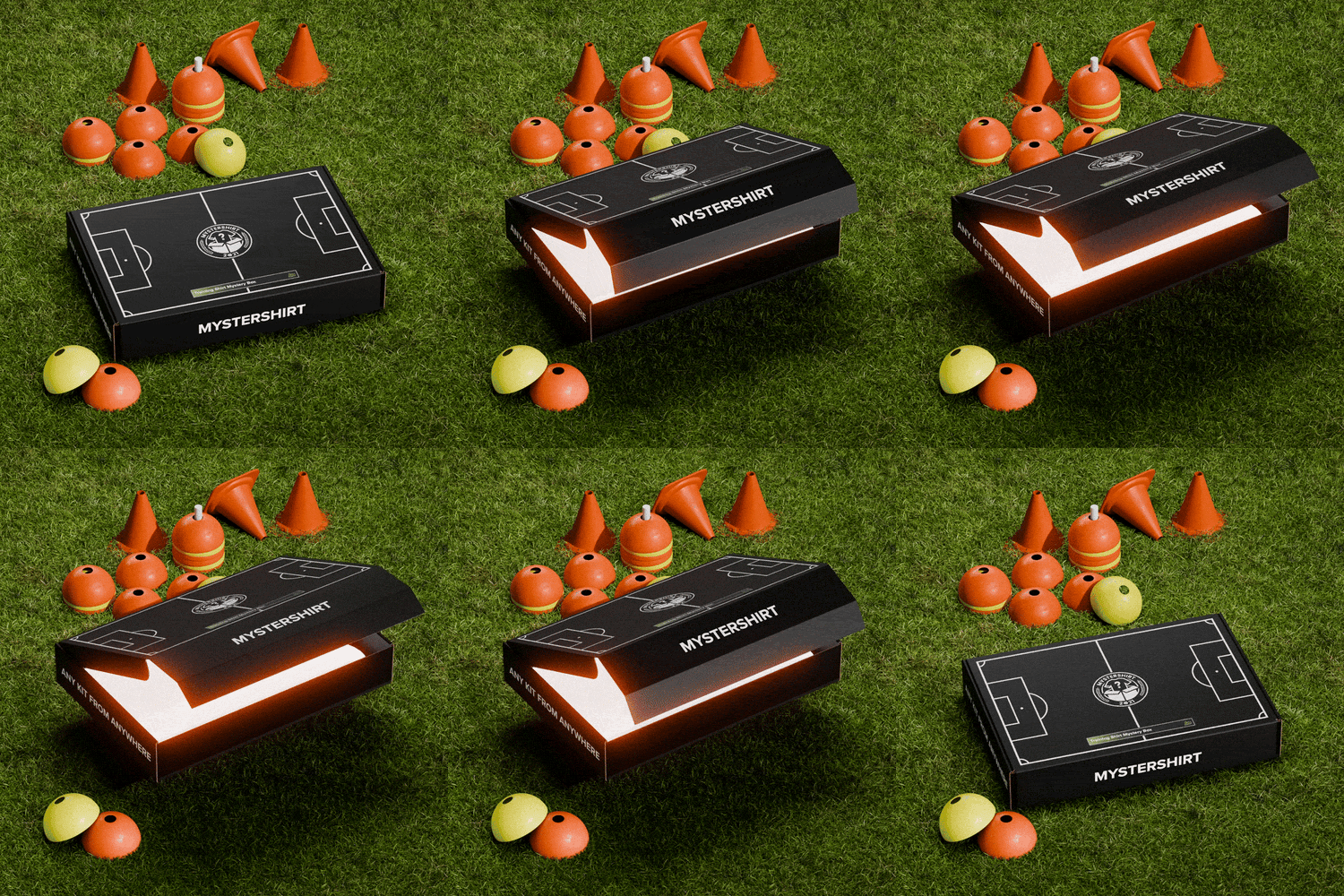
Choosing Your Mystershirt Box
| Box Type | Best For | Primary Value Driver | Key Features |
|---|---|---|---|
| Premium | Collectors who want something current or standout | Higher perceived shirt quality and stronger unboxing appeal | Modern club or national team focus, size selection, avoid list options |
| Retro | Buyers chasing nostalgia or design character | Era-specific charm and collectability | Older shirt styles, stronger emotional pull, display potential |
| Kids | Parents and gift buyers | Lower risk around authenticity and age-appropriate gifting | Child sizing, simple present option, surprise factor |
| Sharing Boxes | Friends, teammates, or group gifts | Shared cost and shared experience | Group-friendly format, social unboxing, easier split value |
The collector
A collector usually values three things above all else: authenticity, distinctiveness, and story. For that buyer, a mystery box works when the surprise still sits inside sensible boundaries.
A Premium box can make sense if the collector enjoys newer shirts but doesn't want to scroll resale listings for hours. A Retro box can make even more sense if the buyer likes forgotten sponsors, odd templates, and clubs outside the usual big-five conversation.
The value question is simple. Will the shirt feel interesting enough to keep, wear, or display?
If yes, the box can be good value for money because it replaces endless searching with curated surprise. If no, then a direct purchase was probably the better route.
The parent
Parents buy differently. They want less drama.
That means value comes less from rarity and more from certainty. Is the shirt authentic? Is the size process straightforward? Is there enough support if the child opens it and the fit is wrong or the club doesn't land well?
For this buyer, the mystery part should feel fun, not risky. A kids-focused option earns value when it removes obvious mistakes and keeps the experience giftable.
The casual fan
Casual fans often make the best mystery box buyers because they don't need every shirt to be a grail. They just want something good, wearable, and a bit different.
Avoid lists matter a lot in this context. If a buyer can rule out rival clubs, disliked colours, or leagues they have no interest in, the floor of the purchase rises. The shirt doesn't need to be perfect. It just needs to avoid being dead on arrival.
A practical way to think about it is this:
- If you enjoy discovery, mystery adds value
- If you need strict control, mystery removes value
- If you're buying as a gift, guardrails matter more than rarity
One example in this category is Mystershirt's mystery jersey and sports gear review context, which shows how surprise formats are judged less on one exact shirt and more on the whole buying experience, from selection inputs to what arrives at the door.
Mystery boxes are strongest when the buyer wants a good surprise, not a guaranteed specific outcome.
That's the standard I'd apply before calling any box good or bad value.
How to Maximize Value and Avoid Red Flags
The smartest buyers do two things at once. They increase upside where they can, and they cut avoidable risk wherever they see it.

Smart habits that improve value
One of the most underrated ways to improve value for money is buying with other people in mind, not just for yourself. Community finance research notes that underserved communities benefit from models that democratize access through shared purchases, a useful lens for group shirt buys and sharing formats that most consumer guides ignore, as discussed by the New York Fed's conversation on serving underserved markets.
That idea translates well to football shirts.
- Split the risk with friends: Sharing formats can make surprise buying feel lighter because the experience and cost are distributed.
- Read the returns policy before checkout: Not after.
- Use payment tools carefully: If you already use cashback platforms, earning real cash back on shopping can reduce overall cost, but it shouldn't distract you from checking authenticity and return terms first.
- Set clear avoid preferences: Rival clubs, hated colours, duplicate leagues. Give the seller useful boundaries.
If you're checking authenticity on any shirt, new or old, a practical reference is how to check if your football shirt is authentic. It helps sharpen your eye before you rely on seller claims alone.
Red flags that kill value
Some warning signs show up again and again.
- Prices that make no sense: If a supposedly special shirt is far below what feels credible, assume there's a reason.
- Weak photos: One front shot tells you almost nothing.
- No clear guarantee: If the seller avoids commitment, you carry the downside.
- Messy product descriptions: Errors, contradictions, and missing details usually mean poor process.
- No real buying controls: For mystery products, zero input on size or preferences is a problem.
I'd add one more. Don't confuse excitement with value. The surprise element can make buyers more forgiving than they should be. That's fine when the seller has built trust into the experience. It's not fine when trust is missing and the mystery is doing all the work.
Conclusion Investing in Your Passion with Confidence
Good value for money in football shirts has never been just about paying less. It's about getting the right mix of authenticity, condition, fit, rarity, delivery reliability, and support if things go wrong.
That's even more important with mystery boxes. You're not only buying fabric and badges. You're buying a process. The process needs to be trustworthy for the shirt to feel worthwhile.
The buyers who do this well usually follow the same pattern. They slow down before buying. They inspect the details that matter. They give real weight to guarantees and return terms. And they accept that a slightly higher upfront cost from a reliable seller can be better value than a bargain that creates hassle the moment it lands.
Football shirt collecting should be fun. It can also be sharp, disciplined, and informed. Those things aren't opposites.
If you judge purchases by total value instead of sticker price, you'll make fewer bad buys, enjoy the good ones more, and build a collection that feels intentional rather than accidental.
If you want a surprise-based option that keeps value for money tied to authenticity, sizing choice, avoid preferences, and a clear money-back policy, take a look at Mystershirt. It's a practical route for fans who like the thrill of the box but still want real buying safeguards.