Authentic player-grade soccer jerseys typically cost $120 to $180 new at retail, with $150 a common benchmark. Replica fan shirts usually sit around $90 to $110, while vintage and match-worn pieces can reach hundreds or even thousands.
You've probably seen the confusion firsthand. One online listing calls a shirt “authentic” at a premium price, another uses the same word for a much cheaper official top, and a third offers a vintage jersey for more than the current-season version. The labels look similar, but the products and their histories can be very different.
The simplest way to understand how much authentic soccer jerseys cost is to treat the market as a tiered system. New player editions occupy one level, official fan versions another, and rare vintage or match-worn shirts sit in a collector market of their own. Mystery boxes add another twist by changing how fans access genuine shirts and traditional retail markups.
Table of Contents
- Introduction What You Will Actually Pay for an Authentic Jersey
- Understanding What Authentic Really Means for Soccer Jerseys
- Key Factors That Drive Authentic Jersey Prices Up or Down
- Typical Price Brackets for Authentic Soccer Jerseys Today
- Why Retro and Rare Authentic Jerseys Cost More Over Time
- Smart Ways to Buy Authentic Jerseys and Save Money
- Final Takeaways for Getting Authentic Value With Confidence
Introduction What You Will Actually Pay for an Authentic Jersey
A current player-authentic jersey from a major brand commonly lands near $150 in the U.S. market. A 2026 retail example lists adidas authentic jerseys at $150.00, while Foot Locker lists some authentic soccer jerseys in the $65 to $70 range, showing why the word “authentic” by itself doesn't tell you the final price. The retailer, team, season, and construction level all matter. NBC News' 2026 jersey shopping guide documents that spread.
Suppose you're shopping for a club shirt before a big match. You find one at $100, another at $150, and a retro version at several hundred dollars. It's natural to ask whether the most expensive option is automatically the most genuine. It isn't. You may be comparing a replica fan shirt, a current player edition, and a rare older garment that has collector value beyond its original purpose.
The first price distinction
A player-authentic jersey is designed to mirror professional matchwear. It generally uses a lighter performance fabric, heat-applied badges, ventilation features, and a closer athletic cut. A replica, also called a fan version, copies the club design but prioritizes everyday comfort and normally costs less.
Verified market guidance places authentic player versions around $120 to $180, while replica or fan versions commonly fall around $90 to $110. This 2026 jersey buying guide explains that the premium relates to construction, not a more official badge.
Practical rule: Before judging the price, identify the product tier, the seller, and whether the shirt is new, retro, rare, or match-worn.
The rest of the price story becomes clearer once you stop treating “authentic” as one fixed category. A new shirt bought from an official retail channel is priced like performance apparel. A vintage shirt is priced like a collectible. A match-worn shirt is valued for its connection to a particular player and event.
Understanding What Authentic Really Means for Soccer Jerseys
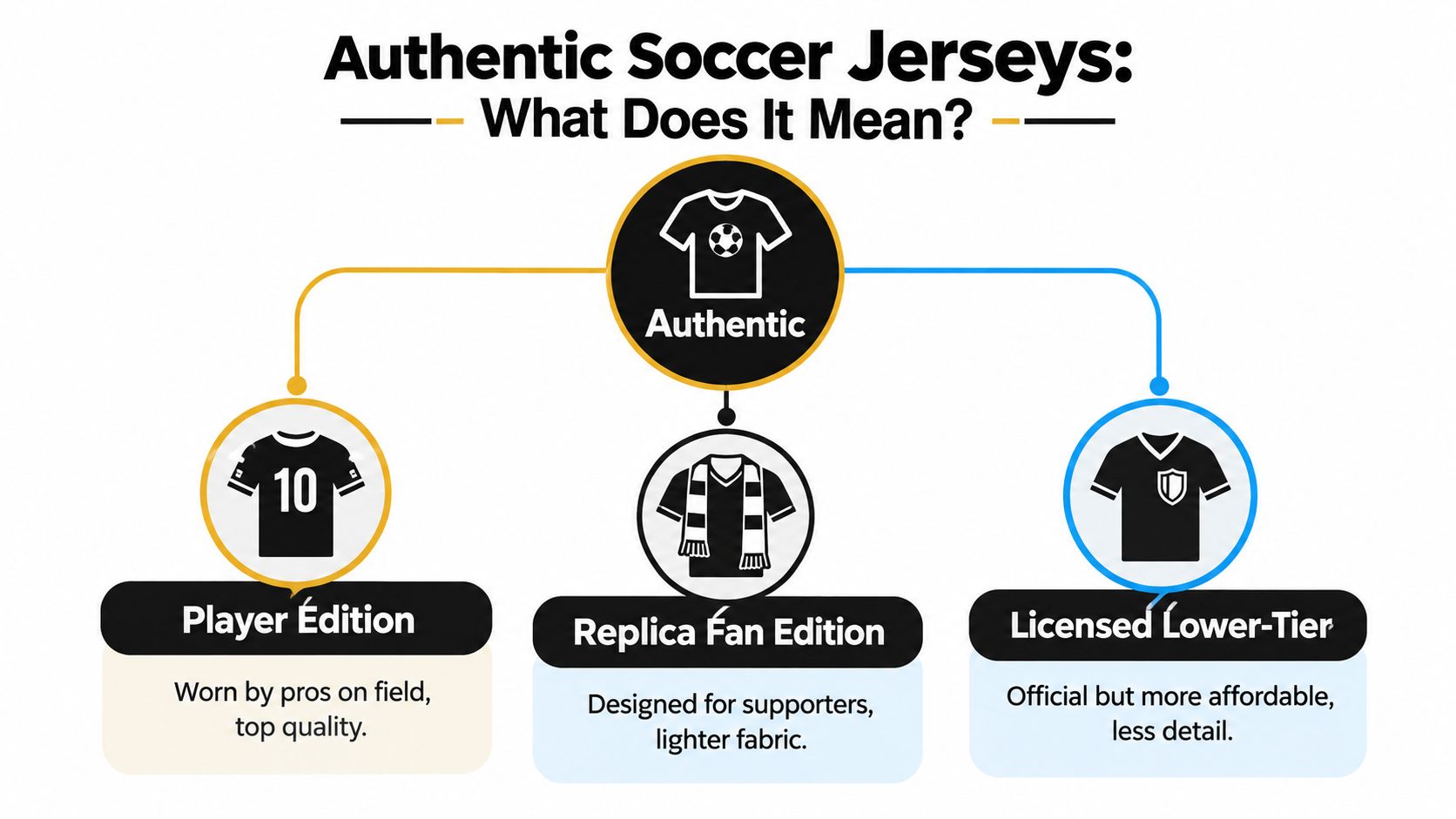
Think of soccer jerseys the way you'd think about running shoes. A performance running shoe and a lifestyle sneaker may share a brand logo and similar colors, but they're built for different jobs. Authentic player jerseys are the performance version. Replicas are the supporter-friendly version, and officially licensed lower-tier tops occupy a more affordable part of the same broad product family.
Three labels worth separating
Player edition: This is the closest retail equivalent to what professionals wear. The cut is usually more athletic, the material is lighter, and details such as badges may be heat-pressed rather than stitched. These choices reduce weight and support movement, but they can also make the shirt feel less relaxed for everyday use.
Replica fan edition: This remains an official product, not a counterfeit. It normally offers a roomier cut and more practical construction for supporters who'll wear the shirt to matches, gatherings, or ordinary outings.
Licensed lower-tier shirt: Some retailers use “authentic” broadly when describing official licensed merchandise. A lower-priced official top can carry the correct club branding without matching the highest player-grade specification.
How to read a product page
Look beyond the headline. Search the description for terms such as player edition, match version, performance fabric, heat-applied crest, or athletic fit. Then check the size guide, because an authentic cut may feel noticeably closer to the body than a replica in the same nominal size.
Design also affects expectations. If you're exploring different visual directions before choosing a shirt, you can browse soccer jersey design to compare how color, graphics, and badge placement shape the overall look. For a practical authenticity check, use this guide to checking whether a football shirt is authentic before paying a premium.
The key question is not, “Is this authentic?” Ask, “Authentic in which sense?” Is it player-grade, officially licensed fanwear, or a collectible whose value comes from age and scarcity? That one distinction prevents many expensive misunderstandings.
Key Factors That Drive Authentic Jersey Prices Up or Down
Two shirts can show the same crest and sponsor while carrying very different prices. The difference usually comes from a combination of licensing, construction, availability, and seller economics. Treat each listing as a small investigation rather than assuming the price reflects quality on its own.
The main price levers
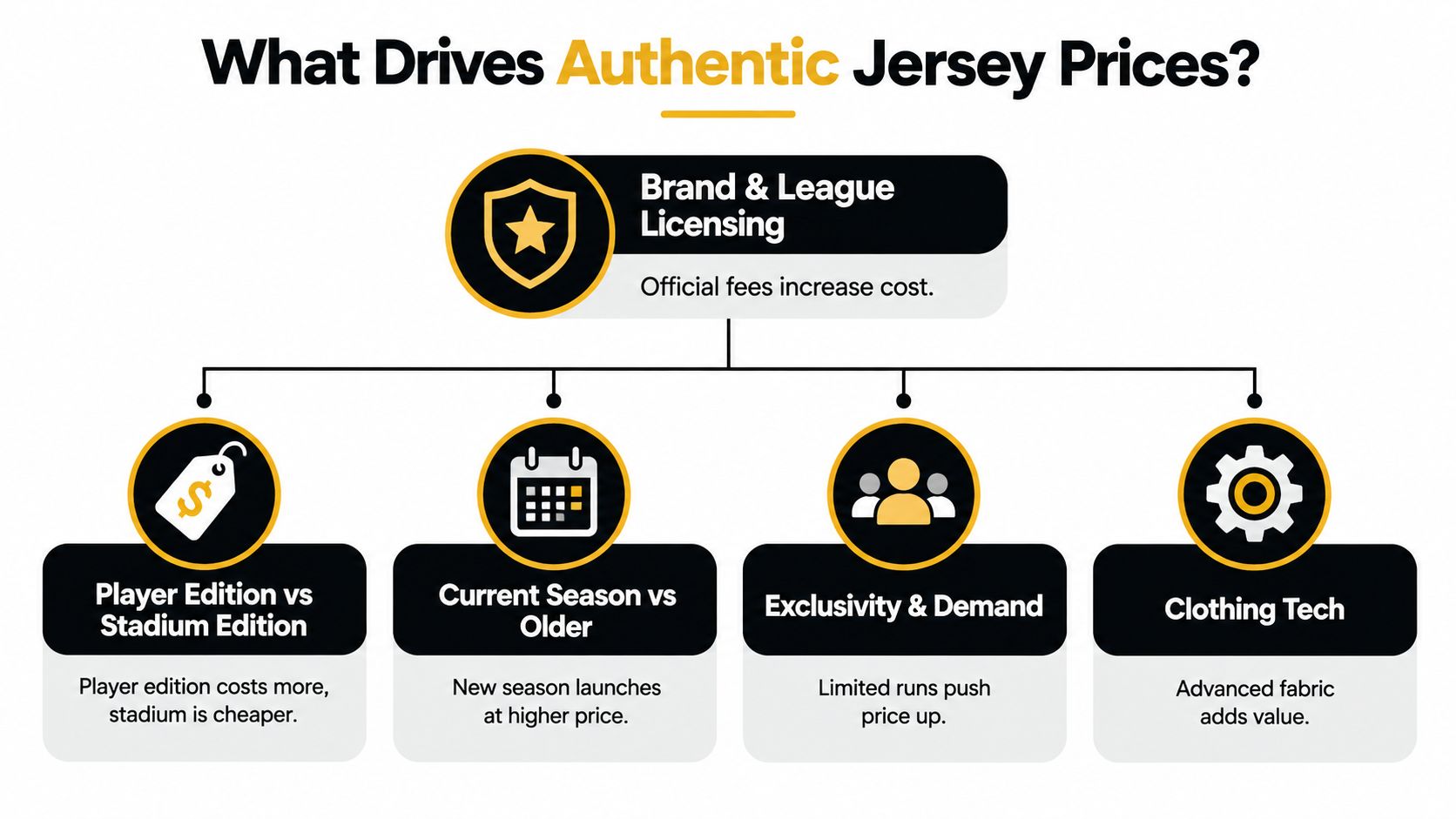
Brand and league licensing set the commercial foundation. Major brands pay for the rights to produce official club or national-team merchandise, and those costs flow through the distribution chain. A shirt from a globally recognized team may therefore command more than a similar-looking shirt from a less commercially valuable property.
Player edition versus stadium edition creates one of the clearest splits. Player versions use performance-focused details such as lighter ventilation fabrics, heat-pressed badges, and athletic cuts. Stadium or fan versions typically trade some of that technical specification for a more comfortable fit and a lower price.
Season timing changes availability. A newly released shirt attracts launch demand and usually carries a stronger retail price. An older design may become cheaper when sellers need to clear stock, but popular sizes and famous players can disappear first.
Details that make a listing more expensive
Personalization adds another layer. A shirt with a player name, squad number, captain's marking, or tournament patch may cost more than the blank version because the seller is adding work and materials. That doesn't automatically make the shirt more collectible, though. Personalization can increase emotional value for one fan while making the item less desirable to another.
Size availability matters, too. When only a few sizes remain, sellers may hold their prices because scarcity helps them avoid discounting. The reverse can happen when a retailer has many less popular designs or sizes to move.
The seller's final price also includes costs that aren't visible in the fabric. A breakdown of an authentic shirt priced around £85 in the UK estimates direct manufacture at roughly £8 to £10, with licensing, logistics, marketing, retailer margin, and VAT making up the rest. This analysis of football shirt pricing and manufacturing costs shows why retail price isn't a direct translation of factory cost.
Use this checklist before buying:
- Product tier: Confirm player edition, replica, or licensed lower-tier.
- Condition: Separate new, worn, used, restored, and damaged items.
- Details: Check badges, patches, labels, sponsor application, and sizing.
- Demand: Consider club popularity, player association, and season.
- Seller costs: Compare shipping, taxes, customization, and return terms.
For a broader explanation of the commercial forces behind jersey pricing, see this discussion of why soccer jerseys are so expensive. The price tag makes more sense when you view it as the result of several layers, not one mysterious markup.
Typical Price Brackets for Authentic Soccer Jerseys Today
A useful budget starts with the shirt's category. New player editions and vintage match-worn pieces shouldn't be compared as if they were competing products. One is performance merchandise made for the current season. The other may be a scarce historical object.
| Jersey Tier | Typical Price Range | What You Get |
|---|---|---|
| New player-authentic jersey | $120 to $180 | Performance-oriented construction, athletic cut, and player-grade details |
| Common benchmark for a new authentic | Around $150 | A current major-brand player version in the U.S. market |
| Replica or fan version | About $90 to $110 | Official design, more relaxed fit, and everyday-focused construction |
| Lower-priced official listing | About $65 to $70 for some models | Licensed shirt pricing that depends on retailer, team, and technology level |
| Genuine vintage retail piece | £100 to £400 | Older authentic shirt with value shaped by rarity, condition, and era |
| Match-worn collectible | £1,000 to £15,000 or more | A shirt connected to professional use, with provenance and exceptional scarcity |
The first two rows describe the normal new-authentic shopping experience. If you're budgeting for a current player edition, $120 to $180 is the practical range, and $150 is a sensible reference point. A price below that range may reflect a sale, an older season, a different retailer, or a lower-tier official top rather than a problem.
The replica row is useful context, not a judgment. A replica isn't fake, and it isn't automatically poor quality. It's the fan version, built around comfort and regular wear. If you want the club design for match-day use, the lower price may represent better value for your actual needs.
When a high price becomes a collector question
The final rows belong to a different market. A vintage shirt's value may come from a memorable era, scarce production, unusual design, or excellent condition. A match-worn item adds a direct link to professional play, but buyers should demand credible provenance before paying at that level.
A price table can narrow your expectations, but it can't authenticate a listing. The shirt's label, construction, seller reputation, and history still need checking. If the item sits far outside its expected bracket, ask what specific feature explains the difference.
Why Retro and Rare Authentic Jerseys Cost More Over Time
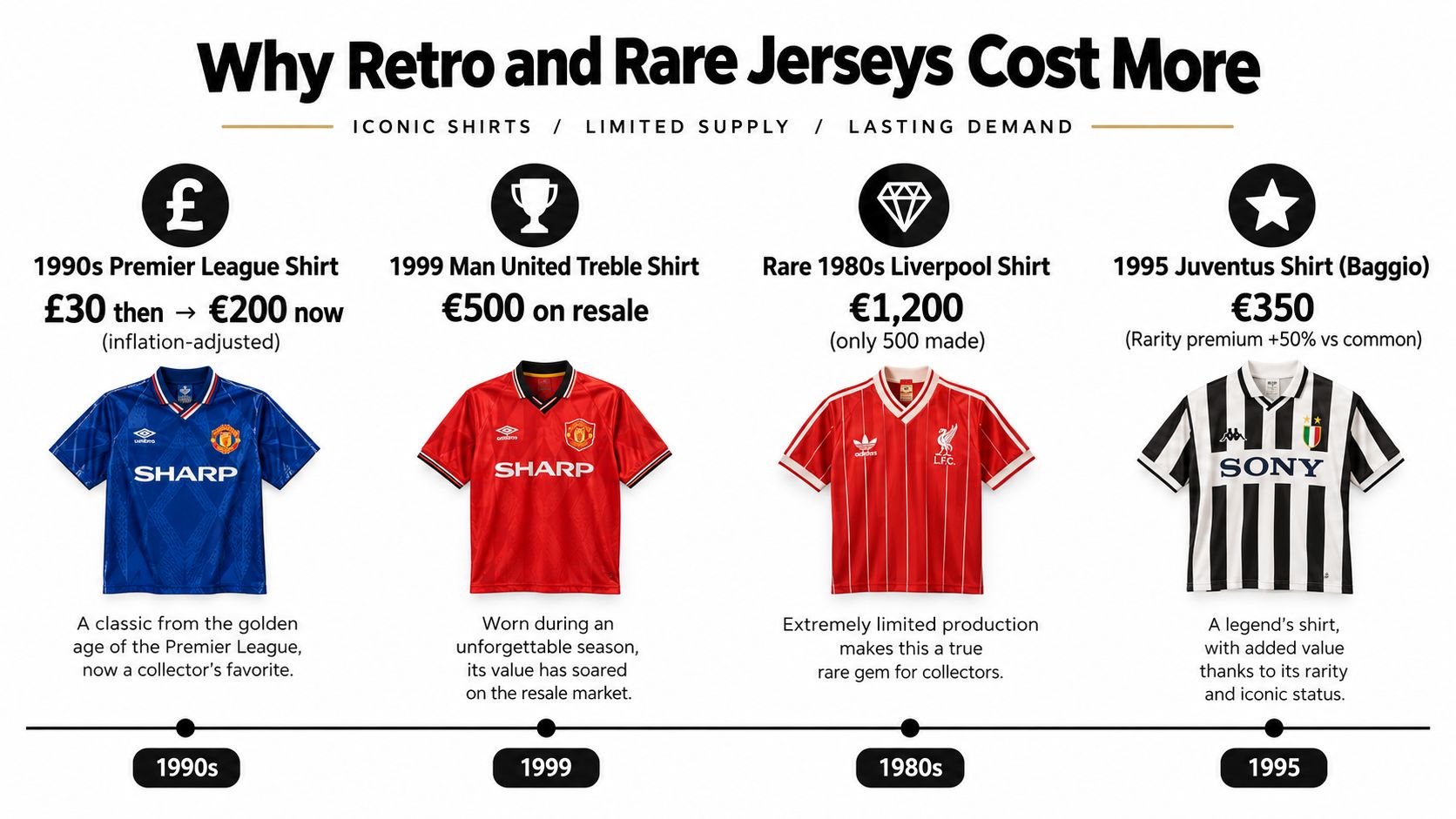
New retail pricing and collector pricing follow different logic. A current authentic shirt is manufactured for a broad audience and sold through a planned retail channel. A rare retro shirt may no longer be produced, so buyers compete for a limited number of surviving examples.
Historical pricing also shows why modern shirts can feel expensive even before rarity enters the equation. An independent analysis of Premier League shirts found that adult shirts cost about £29.99 in 1992 compared with an average of £85 in 2025. Children's shirts rose from about £23.99 to £61.67 over the same period. After inflation adjustment, the earlier prices equal roughly £65.98 for adults and £53.51 for children, implying a real increase of 28.83% for adults and 15.25% for children. The football shirt price and inflation analysis provides the underlying comparison.
Scarcity changes the question
Once a shirt becomes collectible, buyers stop asking only what it cost at launch. They ask how many remain, whether the design represents an important era, and whether the garment has a trustworthy history.
A genuine vintage retail piece commonly sells for £100 to £400, while match-worn items can reach £1,000 to £15,000 or more, according to the vintage jersey market reference cited above. Those amounts aren't justified by fabric alone. They reflect rarity, condition, player connection, competition history, and provenance.
A rare shirt is valuable because the next buyer may not have another comparable example to choose from.
Condition can work in two directions. Clean fabric, intact badges, and an undamaged sponsor can support a higher price, while wear may reduce value for a general collector. For a match-worn shirt, however, visible evidence of use can support the story, provided the seller can establish where and when the shirt was worn.
That's why a high price needs a specific explanation. “Vintage” isn't enough. Ask whether the item is authentic, whether it was a retail release or match-worn piece, and whether the claimed history is documented. Without those answers, scarcity may be marketing language rather than evidence of collectible value.
Smart Ways to Buy Authentic Jerseys and Save Money
The cheapest route to a genuine shirt isn't always the lowest sticker price. A suspiciously low listing can create risk, while a carefully chosen older design, official sale item, or verified mystery purchase may offer stronger value. Start by deciding whether you care most about a specific club, exact player version, size certainty, or the excitement of discovery.
Shop with a clear decision filter
- Choose the purpose first: For frequent casual wear, a replica may be enough. For a collector's display or professional-style construction, focus on player editions.
- Compare the complete cost: Include delivery, taxes, customization, and return conditions rather than comparing shirt prices alone.
- Inspect the listing: Look for precise product details, clear photographs, brand labels, badge application, and a seller with a credible returns policy.
- Check the fit: Player editions generally use a closer athletic cut, so compare measurements instead of assuming your usual shirt size will feel the same.
- Consider timing: Retailers may reduce older stock when they need room for newer releases, but waiting can mean losing your preferred size or design.
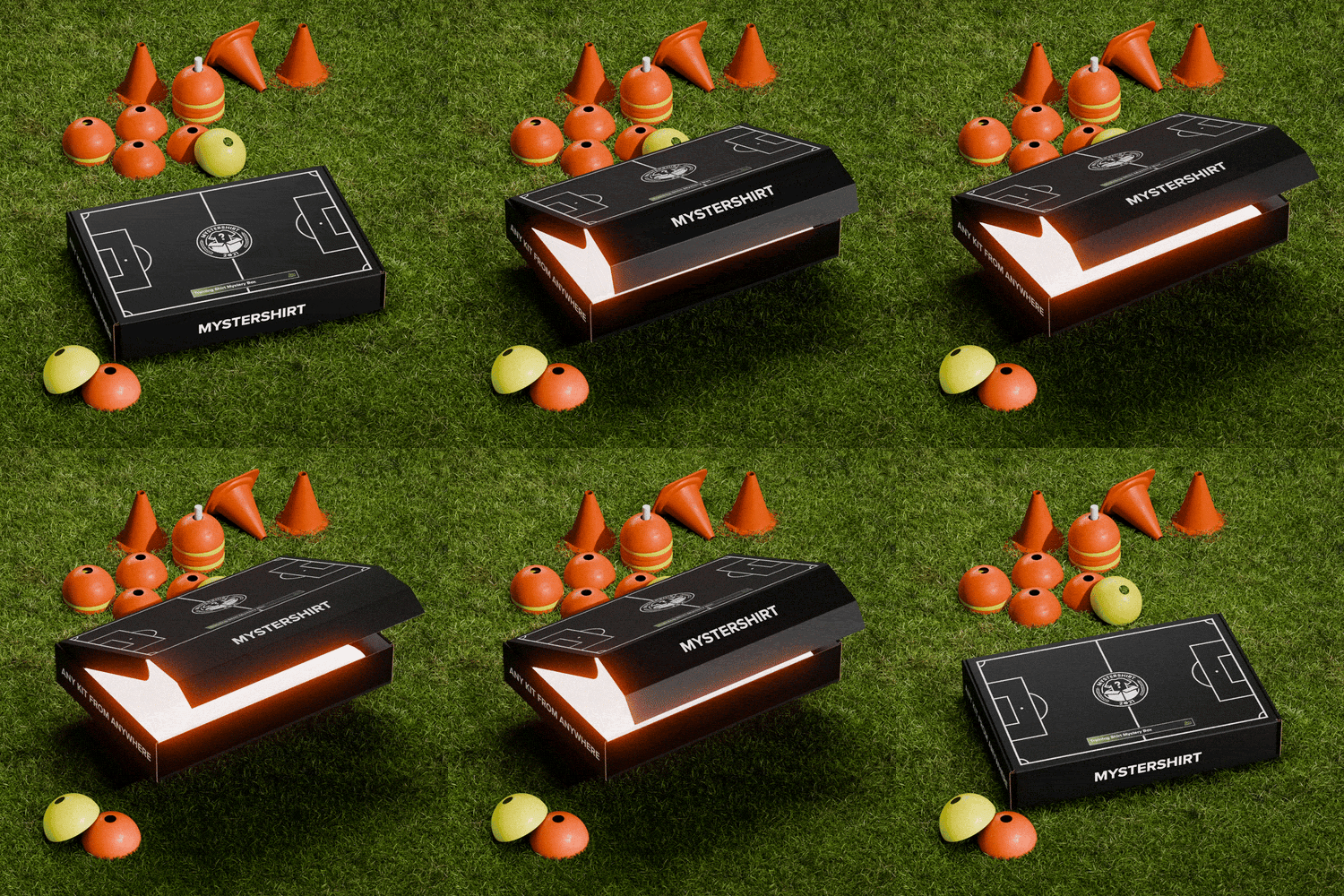
Mystershirt offers Mystery Soccer Jersey Boxes starting from $33.32, with 100% authentic shirts, official labels, a 100-day money-back guarantee, and sizes ranging from children's options to 5XL. Buyers can choose categories such as Premium, Retro, or Kids, list clubs, leagues, or colors to avoid, and use Sharing Boxes when ordering with friends. That model doesn't guarantee a specific club or player, but it changes the buying equation by trading certainty for surprise and access to genuine shirts at a lower entry price.
You can also review this guide to finding cheap real soccer jerseys before comparing retailers. The strongest value choice depends on what you're unwilling to compromise on.
If you're considering a surprise format, watch the unboxing example below before deciding whether the experience suits your collection.
A mystery box works particularly well as a gift or as a way to broaden a collection. It's less suitable when you need one exact current shirt, a particular player name, or a guaranteed color. That trade-off is the point. Traditional retail sells certainty at a higher price, while a mystery format makes discovery part of the product.
Final Takeaways for Getting Authentic Value With Confidence
The answer to how much authentic soccer jerseys cost depends on which tier you're buying. For a new player-grade shirt, plan around $120 to $180, with $150 as a common U.S. benchmark. Replica fan versions generally sit lower, around $90 to $110, while vintage and match-worn shirts belong to a separate collector market that can reach from hundreds into the thousands.
The word authentic doesn't remove the need for careful reading. It can describe a player edition, an official fan shirt, or a lower-priced licensed product depending on the retailer's language. Construction, season, availability, personalization, seller costs, rarity, and provenance all help explain the final price.
Use this checklist before checkout
- Identify the tier: Is it player-authentic, replica, or another licensed product?
- Confirm the condition: New, used, vintage, and match-worn items carry different expectations.
- Check the details: Review labels, badges, patches, sponsor application, and photographs.
- Explain the premium: Know whether you're paying for performance construction, rarity, customization, or documented history.
- Match the shirt to your purpose: Choose certainty for a specific target, or consider a mystery format if surprise and value matter more.
- Protect the purchase: Look for clear returns, authenticity assurances, and a seller you can identify.
A fair price isn't always the lowest one. It's the amount that makes sense for the shirt's construction, condition, history, and the way you plan to use it. Once you understand those layers, a $150 player edition, a lower-priced replica, and a rare vintage piece stop looking like contradictory offers.
If you want genuine football shirts without committing to one exact design, visit Mystershirt to explore its authentic Mystery Soccer Jersey Boxes. Choose a box type and size, share preferences to avoid, and decide whether the surprise format fits your next collection addition or gift.