The cardboard gave a soft crack as I opened it, and a blue-and-red Barcelona shirt appeared beneath the tissue paper. I hadn't chosen the season, crest, or sponsor, yet the jersey felt strangely personal, as if the box had handed me a memory I'd forgotten I was waiting for.
Table of Contents
- The Thrill of the Unboxing Experience
- From Plain Kits to Cultural Icons
- Why Shirts Matter Beyond the Pitch
- Building Your Collection with Purpose
- When Fashion Meets Fan Identity
- Choosing Your Acquisition Strategy
- The Future of Sustainable Collecting
The Thrill of the Unboxing Experience
A known purchase gives you certainty. You search for a club, season, colour, and size, then confirm that the shirt is exactly the one you wanted. A mystery jersey offers something different: a brief period in which the garment could belong to almost any football story.
That uncertainty changes the way collectors pay attention. You notice the weight of the box, the folded fabric, the first flash of a collar, and the sponsor logo emerging from the packaging. A shirt from an unfamiliar club can still trigger recognition through a pattern, a badge, or the memory of seeing that design on television years ago.

Why surprise creates attachment
The unboxing ritual separates acquisition from consumption. You aren't just adding a product to a wardrobe. You're receiving a small narrative prompt, then deciding where it belongs in your own football history.
Collectors often film the reveal because the reaction is part of the object's meaning. The camera catches the pause before the shirt is unfolded, the laugh when an unexpected club appears, or the careful inspection of a retro collar. For practical guidance on documenting that ritual, learn how to film football shirt unboxing videos without hiding the details collectors care about.
A mystery box can also create conversation. One fan posts a shirt, another identifies the season, and someone else remembers the player who wore it. The garment becomes a meeting point between private memory and shared knowledge.
Collector's habit: Keep the packaging, photograph the shirt as it arrives, and write down what you remember about the reveal. Provenance begins with a story, even when the shirt itself isn't match-worn.
The strongest surprises don't always involve the rarest design. A shirt may matter because its colours recall a childhood team, because its sponsor belongs to a vanished commercial era, or because it arrives when a collector needs a different kind of connection to the game.
That's why football shirt culture feels richer than ordinary merchandise collecting. A shirt carries the visible marks of a club, but the owner supplies the emotional caption. Mystery boxes make that caption begin at the moment of opening.
From Plain Kits to Cultural Icons
A 1950s cotton shirt was built to separate two teams and survive a match. Its club colours did the talking. For decades, collars, badges, and fabric changed slowly enough that a shirt mainly belonged to the pitch. Then cotton gave way to polyester, sponsors moved across the chest, and replica shirts let supporters wear the same visual language beyond the stadium.
The National Football Museum identifies the 1973–74 season as a turning point, when Admiral introduced what it describes as the first ever replica shirt. The museum's account of Admiral's replica-shirt history places that moment within the wider 1970s boom in supporter access to club garments.
The 1980s polyester revolution changed the shirt against the skin and in the shop window. Synthetic fabric made brighter colours, sharper graphics, and more ambitious patterns practical. The move from restrained cotton collars to vivid polyester designs made the shirt feel less like equipment and more like a recognisable object with a life of its own. For a closer look at how different eras shaped kit design, read about football historical kits.

The shirt becomes a public badge
Sponsors changed what supporters carried on their chests. A jersey now displayed club colours alongside the lettering, design habits, and commercial mood of a particular era. Collectors can often date a shirt from its sponsor before checking the season, because that name belongs to a specific set of matches, players, and memories.
By the 1990s, replica shirts had become part of everyday supporter behaviour. A 2019 study found that 92% of respondents had bought at least one adult-sized replica shirt, while 63% had owned a child-sized replica shirt. It also recorded visible growth between the 1987/88 and 1990/91 seasons, followed by a sharper rise in 1992/93, with replica-clad fans settling at about 25% to 30% by 1995. These findings come from the study of replica-shirt adoption and supporter culture.
The change was visible in the stands and on the street. Television put shirts in front of wider audiences, while recurring releases encouraged supporters to buy a current version, keep an older one, or search for the design linked to a favourite player. A shirt became part of a personal archive, preserving an era through its sponsor, cut, colours, and wear.
Academic research describes English league kits as both a visual identity marker and a surface for commercial interaction, as discussed in research on football kits, identity, and commerce. That tension still shapes collecting. Authenticity may mean an original fabric, era-accurate badge, or proven match connection, while modern streetwear adopts the shirt's graphics without sharing its football history.
Collectors are therefore buying more than an old pattern. They are managing memory, deciding which details deserve preservation and which can be reinterpreted. A retro reissue, a carefully stored original, and a contemporary design can all occupy different places in the same wardrobe. You can browse FLYP LTD football jerseys to see how the shirt now operates beyond strict matchday utility.
The modern shirt has several lives: equipment, merchandise, archive material, fashion, and identity marker. Its cultural force comes from the moment those roles meet, then remain attached to a garment long after the match has ended.
Why Shirts Matter Beyond the Pitch
A shirt can be mass-produced and still become irreplaceable. The difference lies in the relationship formed around it.
A supporter may buy a jersey after attending a first match with a parent. Another may inherit a folded collection from a relative and recognise each shirt by the stories attached to its stains, repairs, and fading sponsor. A match-worn piece carries an even stronger charge because its value depends on a verifiable connection between garment and event, not just on the fabric or badge.
Research on football shirt collecting describes the practice as a way to resist cultural homogenisation by anchoring objects to locality. Fan studies also frame jersey ownership through identification, socialisation, expression, and sacralisation, meaning that a shirt can become socially meaningful, personally expressive, and treated as almost sacred. These ideas are brought together in research on collecting, locality, and the symbolic life of football shirts.

A wardrobe of remembered places
Collectors often describe their shirts chronologically, but the deeper order is emotional. One garment belongs to a first away trip. Another recalls a title race watched in a crowded living room. A third represents a period when the owner moved cities and used football to find new friends.
That makes collecting a form of identity and memory management. The owner chooses which versions of the past remain visible, then stores those versions in fabric rather than in a digital album or written diary.
The shirt also helps strangers recognise one another. A crest can begin a conversation at a train station, in a classroom, or outside a stadium. A supporter doesn't need to explain every part of their identity. The shirt offers a shared reference point, and the other person decides whether to respond.
When an object becomes sacred
Sacralisation doesn't require a shirt to be expensive. It can happen because the garment is linked to a person who is no longer present, a match that changed a family's routine, or a club that gave someone a sense of home.
A collectible shirt isn't valuable only because it survived. It matters because someone remembers why it had to survive.
That distinction helps explain why authenticity matters so much in match-worn and certified collecting. Buyers are paying for an origin they can verify, whether that origin is a documented match, a player connection, or a reliable ownership trail. A replica can hold profound personal meaning, but a certified item makes a different promise about where it came from.
Football shirt culture lives between those promises. Some shirts preserve public history, while others preserve a private one. Both can deserve care, because both allow fans to keep belonging tangible.
Building Your Collection with Purpose
The easiest way to lose direction is to buy every shirt that catches your eye. A focused collection gives each new acquisition a job.
Start by choosing a theme that feels emotionally durable. You might collect one club across different eras, shirts from a specific league, designs linked to a particular decade, or unusual sponsor and colour combinations. The theme doesn't need to be academically neat. It needs to help you decide what belongs and what merely looks tempting for a moment.

Define the story before buying
Write a short collecting brief before you spend. Include preferred clubs, eras, shirt types, colours, and the memories you want the collection to hold. A brief protects you from buying attractive pieces that never connect with the collection's central idea.
Mystery boxes require a slightly different brief. You can't control the exact shirt, but you can set boundaries, select a size, and decide which clubs, leagues, or colours you want to avoid when the seller provides that option. Treat the surprise as a creative constraint rather than as a replacement for judgement.
Inspect the shirt, not just the listing
Photos should show the badge, manufacturer label, wash label, sponsor, stitching, seams, and any printing. Compare those details with reliable references from the same era. A convincing design can still have incorrect typography, an implausible label, poor embroidery, or a player print that doesn't fit the shirt's production context.
Provenance deserves its own file. Save the seller's description, photographs, receipts, certificates, and messages. For a match-worn shirt, record the player, fixture, date, and route by which the item reached you. Even if you never sell, these records preserve the garment's story.
Authentication rule: Never let rarity substitute for evidence. A scarce shirt with a vague origin deserves more questions, not fewer.
Preserve condition without removing the life
Store shirts clean and completely dry, away from direct sunlight and damp conditions. Fold delicate pieces with neutral tissue or use suitable hangers that don't stretch the shoulders. Keep heat away from names, numbers, sponsor prints, and older synthetic fabrics.
Decide which shirts are for wearing and which are for display. A prized shirt can be worn carefully, but every outing introduces washing, friction, food, weather, and accidental damage. Displaying a garment protects its condition, while wearing it creates new memories. Your collection should make room for both choices.
Let community improve your eye
Collectors learn quickly when they compare details with people who have handled the same eras. Local supporters, shirt forums, swap groups, and specialist sellers can help identify a collar variation or expose a suspicious label. Share your own findings too. Knowledge becomes more reliable when it circulates.
When Fashion Meets Fan Identity
A vintage jersey now travels through spaces that once belonged to completely different wardrobes. It appears in streetwear, editorial styling, celebrity outfits, and the online world often called “blocore.” Recent coverage describes football shirts being adopted by celebrities, luxury labels, and Gen Z fashion communities, pushing the garment beyond matchday use. The Guardian's reporting on the football jersey fashion trend captures that widening cultural reach.
The change creates opportunity and discomfort at the same time. A fashion wearer may value the shirt's colours, cut, or connection to a remembered era without following the club. A lifelong supporter may see the same garment as a declaration of allegiance, with rules about when it should be worn and what it means to wear it.
Neither reading is automatically false. Clothing has always allowed people to borrow, reinterpret, and remix symbols. Yet football shirts carry unusually specific histories, and that specificity makes casual styling feel different from wearing an ordinary graphic top.
The authenticity question
Traditional fans often judge authenticity through behaviour. Do you attend matches? Do you know the club's history? Do you understand the rivalry? Fashion communities may judge it through sourcing, styling, and visual literacy. A collector may care about the correct season, original sponsor, and condition, while a stylist may care about silhouette and contrast.
Those standards can collide when the shirt becomes a fashion badge first and a club badge second. The garment gains visibility, but the people who supplied its cultural meaning can feel pushed aside.
The argument isn't really about who is allowed to wear a shirt. It's about who gets to define what the shirt means.
Streetwear adoption can also rescue designs from obscurity. A shirt that once sat in a collector's drawer may reach people who encounter its pattern before its history. That first encounter can lead to genuine curiosity, club support, or deeper research.
The healthiest position rejects both extremes. A shirt doesn't become meaningless because a non-supporter wears it, but its history shouldn't be erased for the sake of a trend. Wear it with curiosity. Learn what the crest, sponsor, colours, and era represent. Fashion can open the door to football culture, provided it doesn't pretend the room was built only for fashion.
Choosing Your Acquisition Strategy
Different buying routes serve different kinds of collectors. A direct purchase works when the shirt itself is the priority. A mystery box works when the reveal matters as much as the garment. Vintage markets reward patience and knowledge, while trading communities turn relationships into access.
The right strategy depends on how much certainty you need, how comfortable you are assessing authenticity, and whether your collection has a clear theme.
Acquisition Methods Compared
| Method | Cost Range | Authenticity Risk | Surprise Factor | Best For |
|---|---|---|---|---|
| Direct purchase | Varies by shirt, era, and condition | Lower when sourcing is well documented | Low | Collectors seeking a specific design |
| Mystery box | Varies by box type and seller | Depends on seller transparency and guarantees | High | Fans who enjoy discovery and flexible collecting |
| Vintage market | Varies widely by rarity and condition | Requires careful inspection | Medium | Experienced hunters seeking unusual pieces |
| Trading community | Depends on the exchange | Depends on the other collector and documentation | Medium | Collectors building relationships and filling gaps |
A direct purchase gives you control over the exact club, season, size, and condition. It also encourages focused buying, because you can search for the missing piece rather than accepting whatever appears.
Mystery boxes remove some control but add emotional energy. Before ordering, check how the seller describes authenticity, sizing, exclusions, returns, and condition. A guide to football jersey mystery boxes can help you understand the format before you decide whether surprise suits your collecting habits.
Vintage markets often produce the most memorable finds, especially when a shirt's history isn't obvious from the first glance. They also demand discipline. Inspect labels and printing in person when possible, ask direct questions, and walk away when the seller avoids basic provenance questions.
Trading offers access that money alone can't always provide. It depends on trust, clear photographs, honest condition descriptions, and a willingness to accept that another collector may value a shirt differently.
Many serious collections combine these routes. Direct purchases establish the theme, mystery boxes introduce unexpected directions, markets provide the hunt, and trades strengthen the community around the collection.
The Future of Sustainable Collecting
Football shirt culture has a consumption problem when every new design encourages another purchase and older shirts lose attention as soon as the next trend arrives. The practical answer isn't to stop collecting. It's to make each garment stay useful for longer.
Recent kit coverage points toward subtler detailing, retro references, off-white and minimalist aesthetics, while the 2026 World Cup cycle has also encouraged streetwear-inspired and cropped designs, including versions shaped by fans altering shirts for a better fit, as reported by Footy Headlines' analysis of football kit trends. These changes make fit and versatility part of the conversation, not merely visual novelty.
A more circular collection treats ownership as an ongoing relationship. Rewear shirts instead of reserving every piece indefinitely. Trade duplicates. Buy secondhand when the condition and provenance make sense. Alter a shirt carefully if the fit prevents it from being worn, while preserving original details that carry historical value.
Collectors can also slow down their buying decisions. Choose a piece because it completes a story, not because a trend has made it temporarily visible. Wash garments according to their care requirements, store them properly, and repair small problems before they become irreversible.
Sustainable principle: The most responsible shirt is often the one you continue to wear, trade, repair, or pass on.
A circular approach also makes football shirt culture more inclusive. It values access, reuse, and shared knowledge alongside rarity. The future collector may still chase a remarkable vintage kit, but they'll ask where it came from, how long it can last, and who might enjoy it next.
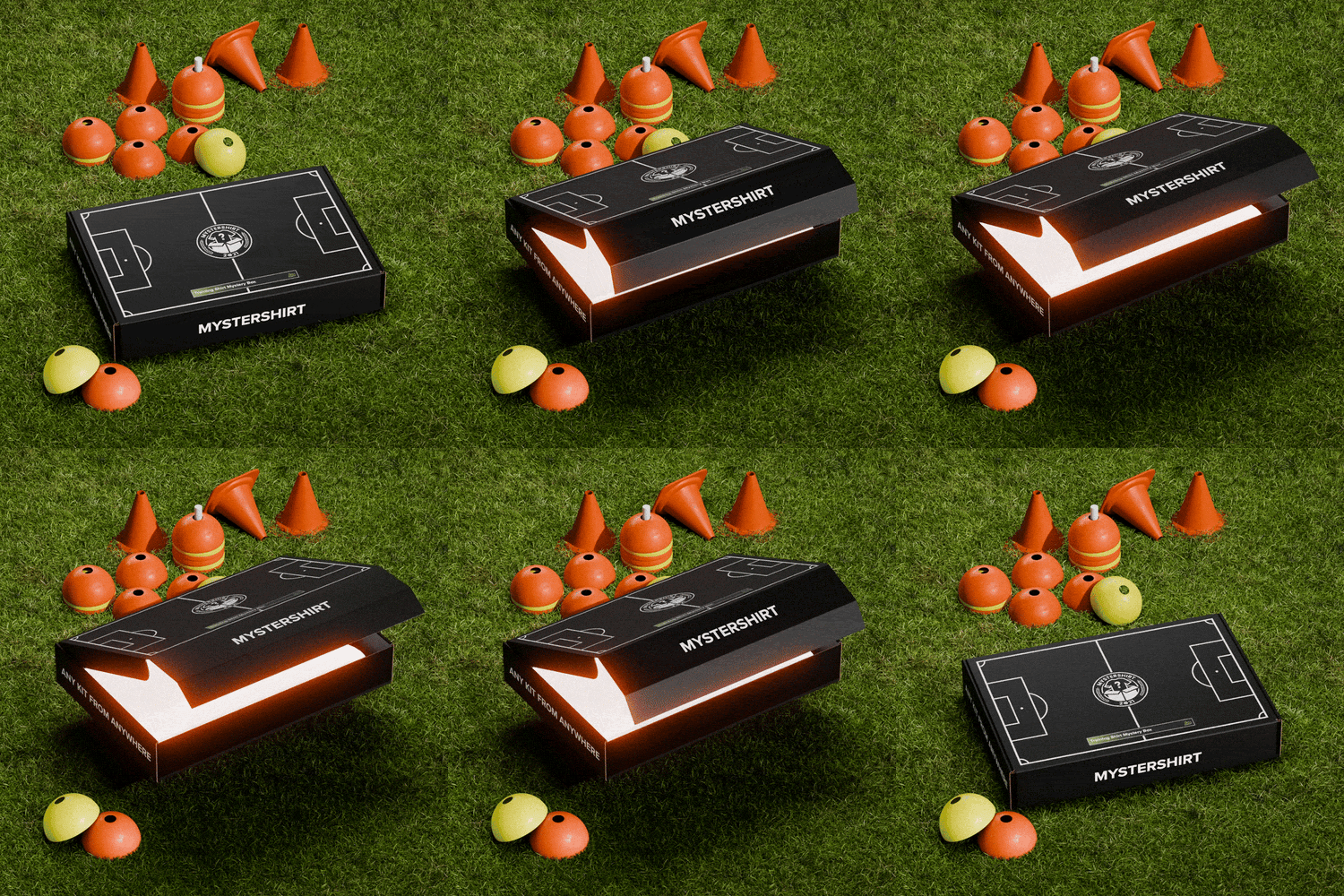
If you want the surprise of a new addition without abandoning the emotional side of collecting, explore Mystershirt, which offers authentic football shirt mystery boxes with options including Premium, Retro, Kids, and sharing formats. Choose your size, set available club or colour exclusions, and use the unboxing as the beginning of a documented, wearable story rather than the end of a purchase.