You've found the perfect little team shirt, but the listing leaves you wondering whether “age 3–4” will fit, whether the fabric will feel comfortable after a busy practice, and whether the badge will survive the washing machine. Toddlers don't stay still long enough for vague sizing advice. A shirt that looks adorable on a hanger can ride up, scratch the neck, trap sweat, or restrict movement once your child starts running.
A toddler soccer shirt should support play first and fandom second. The right choice combines measurable fit, comfortable construction, sensible fabric, and safety details that are easy to overlook. This guide breaks those decisions into simple checks, so you can shop with your child's body measurements and daily routine in mind rather than relying on an age label alone.
Table of Contents
- Introduction to Toddler Soccer Shirts and Why They Matter Early
- What Makes a Toddler Soccer Shirt Different
- How to Find the Right Size and Fit Without Guessing by Age
- Choosing Materials That Balance Comfort Durability and Sustainability
- How to Check Authenticity Labels and Safety Details
- Caring for Toddler Soccer Shirts and Keeping Them Play Ready
- Styling Gifting and Smart Ways to Buy for Toddlers
Introduction to Toddler Soccer Shirts and Why They Matter Early
Your toddler may wear a first soccer shirt to practice, the grocery store, or while kicking a soft ball around the living room. At this age, the shirt is less about understanding formations and more about making play, family support, and curiosity feel connected. It can become a play garment, a keepsake, or a simple way for a child to feel included at a match.
Football already reaches families on a remarkable scale. FIFA's widely cited 2006 Big Count estimated 265 million footballers worldwide, rising to 270 million people when referees and officials are included, or about 4% of the world's population, roughly 1 in 25 people involved in the sport. The same FIFA's Big Count summary includes 21,548 youth players in one dataset and describes young players as a substantial part of registered participation.

Why early sizing matters
Youth apparel is designed to reach families early. Major football clothing size charts begin around ages 3–4, showing how soon brands expect children to enter the category. An age label is only a rough signpost, like a road sign that points in the right direction without showing your child's exact route. Height, chest, waist, and garment measurements provide a more reliable fit check.
That early start changes the buying priorities. Adults may accept a close replica fit, scratchy labels, or a delicate printed crest for occasional wear. Toddlers need room to move, simple dressing, smooth contact points, and construction that can handle grass, spills, and repeated washing. Check the shirt as you would check a small piece of play equipment: look for comfortable contact areas, secure details, and no loose parts that could irritate or catch.
Parent perspective: A cute shirt is successful only if your child forgets they're wearing it once play begins.
The market also reflects the overlap between participation and fandom. Mordor Intelligence estimated the global football equipment market at USD 128.91 billion in 2025, with apparel representing 55.54% of that market, while its children segment is projected to grow at a 6.26% CAGR through 2031 (Mordor Intelligence football equipment market). For parents, the practical lesson is simple. Toddler football clothing belongs to a broad category shaped by youth sports, family identity, and everyday fanwear. That makes measurement, fabric comfort, and safety-label checks more useful than choosing by age alone.
What Makes a Toddler Soccer Shirt Different
A toddler soccer shirt looks like a T-shirt at first glance, but it has a different job. An everyday cotton tee mainly needs to feel pleasant and hold its shape. A football shirt must also cope with running, reaching, sweating, dressing over an underlayer, and contact with grass or playground surfaces.
The easiest analogy is footwear. You wouldn't choose house slippers for a muddy field just because both cover the feet. In the same way, a basic tee may work for watching a match, but a purpose-built toddler jersey usually offers lighter fabric, movement-friendly shaping, and more durable seams.

Three shirt categories to recognize
Everyday tee: This is often cotton or a cotton-rich fabric with a relaxed cut. It can be soft and useful for casual wear, but it may hold moisture close to the skin and may not have reinforced construction around the shoulders or side seams.
Adult replica jersey: A replica is usually designed to reproduce a club or national-team shirt. It may use a heavier performance fabric, a detailed badge, sponsor graphics, and a cut intended for older wearers. Those features can look authentic, but they don't automatically make the shirt comfortable for a toddler.
Toddler soccer shirt: This version generally prioritizes lightweight fabric, easy movement, durable seams, and simpler details. The neckline should be easy to pull over the head, while the body should allow room for natural movement and an underlayer. A printed or simplified crest may be more practical than a bulky badge that rubs against the chest.
Shirt, kit, or complete set
Listings use different terms, so check exactly what you're buying. A single shirt is useful when your child already has shorts or when the jersey is mainly for family match days. A kit or set may include a shirt and shorts, and sometimes socks, although the contents vary by seller.
Toddler cuts also differ from adult athletic cuts. A close-fitting adult jersey can feel restrictive when a child is still learning to run, bend, and change direction. For toddlers, a little ease through the chest and torso is usually more useful than a sharp, body-hugging silhouette.
Marketing words need context
“Breathable,” “official,” “performance,” and “premium” are not enough on their own. Look for the actual fiber composition, care instructions, size measurements, and close-up photos of seams, labels, crest attachment, and the inside of the neckline.
The shirt should make dressing straightforward. Avoid designs with stiff collars, rough internal stitching, heavy embellishments, or details that could detach during active play. Think of the garment as play equipment worn against the skin, not only as miniature supporter merchandise.
How to Find the Right Size and Fit Without Guessing by Age
Age labels are useful for narrowing a search, but they're a poor final decision tool. A child who has just turned three can have a very different height, chest, torso length, and preferred layering style from another child of the same age. Manufacturers also use different patterns, fabrics, and size systems.
Start with a soft tape measure and your child standing naturally. Don't pull the tape tight. The goal is to capture the space the shirt needs during play, not a compressed measurement.
Take three measurements
- Height: Measure from the floor to the top of the head. Keep the child barefoot and standing against a wall if possible. Height often provides the clearest first match when a brand organizes children's clothing around stature.
- Chest: Wrap the tape around the fullest part of the chest, keeping it level across the back. Your child should breathe normally. This measurement tells you whether the shirt will feel comfortable when your toddler reaches forward, runs, or wears a light layer underneath.
- Torso length: Measure from the shoulder area down to where you want the shirt to finish. This helps when your child has a longer or shorter body than the size chart assumes. A shirt can match the chest and still feel too short when your toddler bends or lifts their arms.
Compare those measurements with the seller's chart, not just the label. A useful youth jersey size chart can help you see how brands separate height and chest ranges, but each product page should remain the final reference.
Choose the fit, not merely the size
Use this table as a decision framework rather than a universal measurement chart. The available numbers and labels vary by manufacturer.
| Size Label | Height Range | Chest Measurement | Fit Guidance |
|---|---|---|---|
| Brand's toddler size | Use the seller's listed range | Use the seller's listed range | Select the closest match, then check torso length and the garment's cut |
| Size between two ranges | Child falls near a boundary | Chest may fit one size while height fits another | Size up when movement or layering matters more than a close silhouette |
| Larger growth-friendly option | Child is below the garment's maximum range | Chest has comfortable space without sagging | Keep extra room modest so sleeves and hem don't interfere with play |
A little extra room can be helpful for movement, a diaper or underlayer, and growth. Too much fabric creates its own problems. Long sleeves can cover the hands, a low hem can catch during running, and a wide neck may slip off one shoulder.
Fit check: The shoulder seam should sit close to the shoulder edge, the chest should allow a full reach forward, and the hem should stay in place when your child bends.
If possible, try the shirt over the layer your toddler will wear. Check the neckline while dressing, then ask your child to raise both arms, twist, crouch, and reach for a ball. A shirt that passes those movements is more useful than one that only looks right while standing still.
Pay attention to fabric stretch. A flexible knit can accommodate a close measurement more comfortably than a rigid fabric, while a structured shirt may need more room. When the chart is unclear, contact the seller with your child's height and chest measurement and ask which garment measurement they recommend. That's more reliable than assuming the next age label automatically means a better fit.
Choosing Materials That Balance Comfort Durability and Sustainability
Fabric choice becomes obvious within minutes of active play. A toddler who runs, rolls, and gets warm needs a shirt that manages moisture and doesn't create unnecessary rubbing. A child with sensitive skin may care more about soft seams and a smooth inner surface than about the fabric's headline feature.
Comparing common fabric choices
| Fabric | Strengths | Possible drawbacks | Best fit for |
|---|---|---|---|
| Virgin polyester | Durable, quick-drying, and commonly used for performance shirts | Can feel synthetic or plastic-like, especially when the inner finish is rough | Frequent outdoor play when easy washing matters |
| Recycled polyester, or rPET | Provides performance properties while using recycled material | May feel similar to virgin polyester and still needs careful seam and finish inspection | Families balancing active use with lower-impact material goals |
| Cotton blend | Soft, familiar hand feel and often comfortable for casual wear | Can absorb sweat and dry more slowly than performance-focused fabric | Light activity, everyday wear, or children who prefer a natural feel |
A soccer jersey material guide can help decode fiber labels, but the percentage of each fiber isn't the whole story. Two shirts with similar compositions can feel different because of knit structure, finishing, seam design, and printing.

Sustainability doesn't automatically mean softness
One sportswear source states that recycled polyester can reduce carbon emissions by about 30% compared with virgin polyester (Hope and Glory's recycled kit discussion). That makes rPET an appealing option for parents trying to reduce the impact of clothing purchases. It doesn't guarantee that the shirt will feel cool, gentle, or comfortable against a toddler's skin.
Sweat and friction can contribute to irritant dermatitis in youth sports settings, and sporting equipment can also trigger allergic contact dermatitis. Those concerns make construction important. Look for a soft neckline, flat or carefully finished seams, a smooth print, and a label that won't scrape the back of the neck.
Make the choice practical
Choose performance fabric when your child plays outdoors, gets hot quickly, or needs a shirt that can be washed often and dry promptly. Consider a cotton blend for relaxed fanwear, short outings, or children who strongly dislike the feel of synthetic fabric. If sustainability is a priority, recycled polyester may be a sensible compromise, provided the shirt also passes the comfort inspection.
Before the first practice, wash the shirt according to its care label. If your child develops persistent redness, itching, or discomfort, stop using the garment and consider discussing the reaction with a healthcare professional. Material selection can reduce avoidable irritation, but it can't predict every child's skin response.
How to Check Authenticity Labels and Safety Details
A toddler shirt can look convincing in a product photograph and still have poor finishing. Authenticity and safety require separate checks. A genuine team badge doesn't make a rough seam acceptable, and a soft fabric doesn't prove that the logo or label is officially licensed.
Start with the inside of the garment. The care label should identify fiber content and provide manufacturer or origin information. Official licensing marks, brand details, and product codes can support authenticity, although labels alone aren't proof if the seller's listing is unclear.

Inspect the visible details
Look closely at the badge, brand logo, sponsor mark, and lettering. Stitching should appear controlled and secure, with no obvious loose threads or uneven edges. A printed crest isn't automatically fake, especially on a simplified toddler design, but blurry graphics, peeling edges, or inconsistent alignment deserve caution.
Use a seller's football shirt authenticity checklist alongside the product photos. Ask for additional images when the listing doesn't show the inside label, badge attachment, or care information.
Safety checks parents often miss
The most important technical issue concerns cords around the hood or neck. European guidance for children up to 7 years says there should be no cords or drawstrings in the hood or neck area, while North American guidance for children's upper outerwear in sizes 2T–12 similarly prohibits hood and neck drawstrings (Australian Product Safety drawstring guidance). A shirt usually won't need a hood at all, so treat a hooded football top with a neck cord as a warning sign.
Use this quick inspection before buying:
- Neck and hood: Avoid accessible cords, long loops, and loose ties.
- Small attachments: Check whether badges, buttons, toggles, or decorative pieces could detach.
- Inside surface: Run your hand across seams and printed areas. Rough, raised, or scratchy sections can bother a toddler during movement.
- Labels: Prefer printed or tear-away labels when they're secure and designed for children's clothing.
- Fasteners: If the garment has buttons or snaps, make sure they're firmly attached and not positioned where they press into the skin.
Also check the age guidance for your market rather than assuming a product sold internationally follows your local requirements. A shirt intended for active toddlers should have no detail that can catch, tighten, detach, or distract from movement.
Caring for Toddler Soccer Shirts and Keeping Them Play Ready
A simple care routine protects the fabric, crest, print, and your child's skin. Sweat, grass, mud, and food stains are normal parts of toddler sportswear, but leaving a damp shirt in a kit bag can make it smell unpleasant and increase friction against sensitive skin.
Turn the shirt inside out before washing. This protects printed graphics and reduces direct rubbing between the crest and other garments. Use a cold or gentle cycle with a mild detergent, especially if your child reacts to fragranced products.
A useful match-day routine
- Air it out promptly: Take the shirt out of the bag after practice and let it dry in an open, ventilated place.
- Treat marks early: Rinse grass or mud with cool water, then apply a small amount of suitable detergent before washing. Don't scrub printed areas aggressively.
- Wash with care: Fasten anything that can catch, keep the shirt inside out, and avoid overloading the machine.
- Dry gently: Air drying is the safest default for maintaining shape and printed details. High heat can distort graphics and affect some blended fabrics.
- Store loosely: Fold the shirt or hang it with room around it. Tight, damp storage encourages odors and can contribute to pilling.
Don't use harsh bleach unless the care label specifically permits it. Strong chemicals can alter team colors and weaken decorative details. Fabric softener may also affect the moisture-management finish on some performance fabrics, so follow the garment instructions rather than adding it automatically.
Check the shirt before every wear. Look for loose threads, a lifted badge edge, a damaged snap, or a rough label. Repair or retire the garment when a detail becomes uncomfortable or unsafe. A well-maintained shirt should remain soft enough for play, easy to move in, and free from parts that could snag.
Styling Gifting and Smart Ways to Buy for Toddlers
A toddler soccer shirt can work beyond the pitch. Pair it with matching shorts for practice, soft leggings for cooler days, or a long-sleeved base layer when the weather changes. For casual wear, denim or comfortable joggers create a fan outfit without requiring a complete kit.
Keep layers simple. A bulky sweatshirt under a close-cut jersey can restrict arm movement, while a thin long sleeve under a roomier shirt usually preserves comfort. For family photos or match days, coordinating colors can create a shared look without requiring every family member to wear the same club.
Personalization can make a shirt feel special, but check the print method and washing instructions before adding a name or number. A plain, authentic shirt may also be more versatile if your toddler changes favorite players or teams quickly.
For gift buyers, think about how the child will use the garment. A single shirt suits a child who already owns shorts and socks. A complete set may be more practical for a first practice. If you're choosing beyond sportswear, this gifts for toddlers guide offers broader ideas that can help you pair a football shirt with age-appropriate play items.
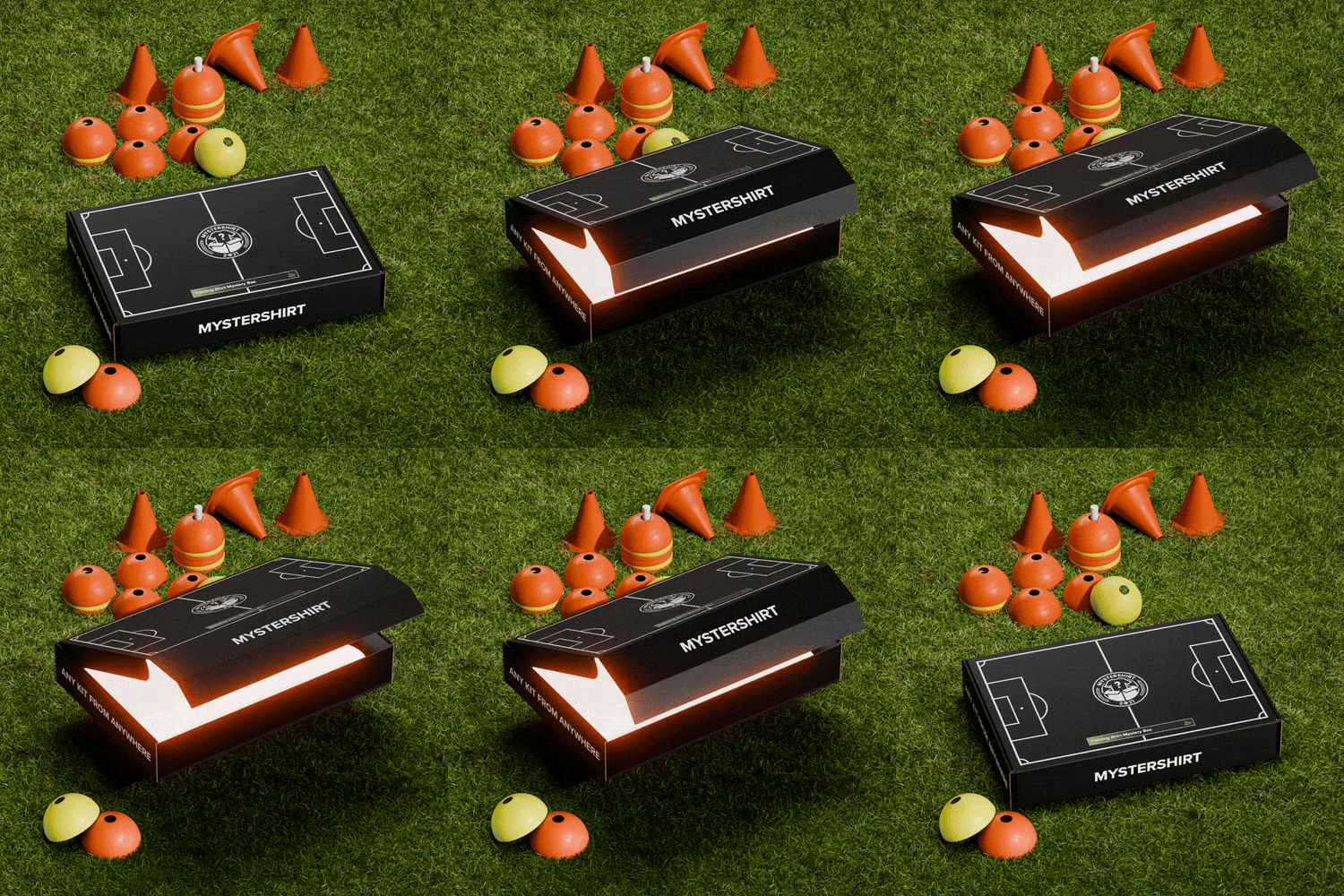
A surprise purchase can be fun when the child or family enjoys discovery. Mystershirt offers Kids Soccer Jersey Mystery Boxes with children's sizing, authentic football shirts, labels, and a 100-day money-back guarantee, while buyers can select a size and note clubs, leagues, or colors to avoid. That option suits families who want a genuine shirt without choosing a specific team in advance, but a direct purchase remains more predictable when exact colors or club identity matter.
Before you buy, run through this final checklist:
- Measurements: Match height, chest, and torso to the product chart.
- Movement: Leave enough room for reaching, bending, and a light underlayer.
- Fabric: Balance moisture handling, softness, washability, and sustainability goals.
- Construction: Inspect seams, neckline, badge attachment, and labels.
- Safety: Reject accessible hood or neck cords and questionable detachable details.
- Care: Confirm that the washing and drying routine fits your household.
Mystershirt's Kids Soccer Jersey Mystery Box gives families a way to choose a child's size while discovering an authentic football shirt from a club around the world. Visit Mystershirt to explore the kids option and compare it with your toddler's measurements, comfort needs, and preferred colors.