You're staring at a birthday reminder for someone who lives for match day, and you've got about twenty browser tabs open. One shirt looks perfect until you realize you don't know if they're still a medium, another is suspiciously cheap, and you're not even sure you picked the right club, let alone the right season. That's the problem with buying for a football fan. It's rarely a lack of ideas.
Good sports gifts come down to three decisions you can get right before you pay, club, fit, and authenticity. Get those three right and even a modest shirt lands well. Get one wrong and an expensive gift sits in a drawer. I'd work through it in that order, recipient first, product second, then a final go or no-go check before you order.
Table of Contents
- Quick-Pick Gift Ideas by Recipient
- Jerseys, Retro Shirts and Other Apparel Choices
- Sizing and Fit by Age and Recipient
- Spotting Authentic Shirts Before You Buy
- Personalizing and Timing a Sports Gift
- Six Steps and Go or No-Go Check Before Ordering
Quick-Pick Gift Ideas by Recipient
You're not unusual for landing on sport in the first place. In 2024, 50% of surveyed U.S. consumers planned to buy toys, games, sporting goods, or other hobby items as gifts, according to ICSC's 2024 Holiday Shopping Intentions survey of 1,009 people. Use the table as a lookup. Find your recipient, take the format and budget tier, then do the one check in the last column before you browse anything else.
Gift Formats by Recipient and Budget
| Recipient | Best gift format | Typical budget | Check before buying |
|---|---|---|---|
| Child new to football | Kids' replica shirt in the right size | Under $25 | Age and height size chart |
| Collector | Retro shirt or signed item | Over $60 | Season, labels and club history |
| Casual fan of one club | Current-season replica shirt | $25 to $60 | Confirmed club and kit year |
| Teammate or group | Sharing box or group bundle | $25 to $60 per person | Number of people and sizes |
| Gift-giver unsure of the team | Mystery-style shirt box | $25 to $60 | Clubs and colors to avoid |
The pattern is simple. The closer a gift sits to a known club and a known size, the less you need to spend to impress. A correctly sized kids' replica beats a premium shirt in the wrong colors, and a collector cares more about the right season than about newness. If you're shopping for a younger fan, browse soccer gift ideas for kids with their height in hand rather than guessing an age label.
Personal touches help once the basics are locked. The same logic applies outside football, which is why golf gift personalization tips are worth a look if you're adding initials or a name to any sports present. Don't personalize to cover up uncertainty about the team.
Start with two facts: write down the recipient's age and club now. Every later choice, size, format, and price, depends on those two.
If you can't name the club yet, don't force a specific shirt. Choose the mystery route in the table and spend your effort on the avoid list instead.
Jerseys, Retro Shirts and Other Apparel Choices
| Option | Best for | Main trade-off |
|---|---|---|
| Current-season replica (fan fit) | Everyday wear and supporters | Less technical fabric, looser cut |
| Player-fit or performance shirt | Training, playing and active recipients | Tighter cut, less forgiving sizing |
| Retro shirt | Collectors and nostalgia | Limited sizes and a sizing check needed |
| Signed shirt or item | Display and special occasions | Higher cost and fewer options |
| Shorts or matching set | Pairing with a shirt | Needs its own size check |
Start with fit, not design. A fan-fit replica has a looser cut through the body and sleeves. It suits supporters, everyday wear, and anyone who'll wear the shirt to watch rather than play. It's also the safer gift when you're estimating a size, because a little extra room doesn't look wrong.
A player-fit shirt is cut close for movement on the pitch. It suits recipients who train or play regularly, but it punishes a wrong guess. If the recipient usually wears relaxed clothing, that tight cut can feel a full size smaller than expected even when the label matches.
Fabric and How It Will Be Worn
Fabric matters once you know the use. A 2024 peer-reviewed sportswear study tested 24 multilayer knitted structures and found that fiber type, yarn structure, fabric density, and top-layer porosity significantly influence moisture transport. Higher stitch density can impede movement of sweat, while a more porous outer layer generally improves transfer away from the skin.
In plain terms, a lightweight polyester or micro-polyester shirt with ventilation or wicking zones suits someone who'll sweat in it. A denser, cotton-heavy shirt traps moisture and feels heavy during play, but it's fine for casual wear or display. Don't judge comfort by fiber name alone, because construction and density change how the same yarn performs.
Ask one question before you choose. Will they play in it, train in it, or watch from the sofa? Play and train point to breathable performance fabric. Sofa and street point to fan fit.
Decide if the gift is for use or for keeping. A retro or signed item belongs on display or on special occasions, a current-season replica belongs in weekly rotation.
I'd default to fan fit for gifts. Choose player fit only when you know the recipient trains and you have a reliable chest measurement.
Sizing and Fit by Age and Recipient
A wrong size is the fastest way to turn a thoughtful gift into a return parcel. Club, maker, and season all shift the cut, so a familiar label from everyday clothing isn't a safe shortcut. Work from the seller's chart for that specific garment every time.
Children and Growth
For a child, match age and height on the seller's chart, and use height as the deciding measure when the two disagree. Kids' shirts are often sold in height bands, so measure the child or ask a parent for a recent height rather than guessing from a school year.
Allow for growth only when the shirt will be worn casually. A slightly long replica looks fine with jeans, but an oversized shirt on the pitch catches, twists, and looks sloppy. If the child plays weekly, buy the current fit and accept they'll outgrow it. That's better than a season spent swimming in fabric.
Adults, Retro Shirts and Sets
For adults, get a chest measurement if you can. Measure around the fullest part of the chest, keep the tape flat, then compare that number with the seller's garment chart. If the recipient sits between sizes, let the fit decide. Between sizes in fan fit, stay down for a neat look. Between sizes in player fit, go up.
- Player-fit shirts: move up a size for anyone who prefers loose clothing, or switch to fan fit.
- Retro shirts: confirm the exact size is in stock first, because runs are limited and older cuts don't always match modern labels.
- Shorts and matching sets: check waist and length separately. A correct shirt size doesn't guarantee the shorts work.
If you can't measure the recipient, ask a partner, parent, or close friend what size they wear in a comparable sports shirt, not in a formal shirt or knitwear. Note the brand they referenced, because that context helps you translate to the seller's chart.
Keep the receipt and leave tags on until the gift is tried on. Write the chosen size and the chart you used in your order notes or phone. At checkout, confirm that size first before you check price or delivery.
Spotting Authentic Shirts Before You Buy
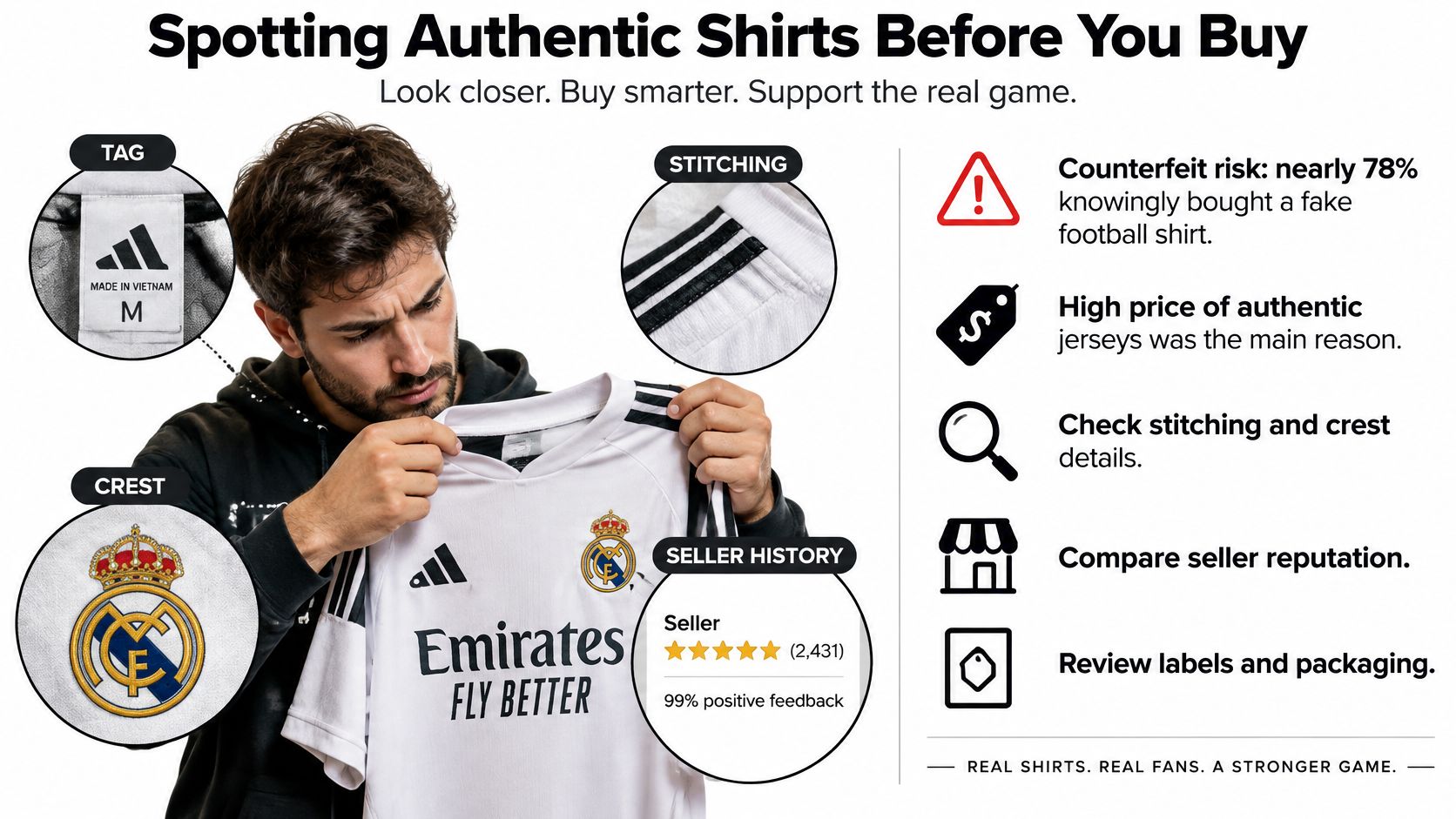
The counterfeit risk is real, and price pressure drives it. A 2025 survey reported by The Athletic found that nearly 78% of respondents had knowingly bought a counterfeit football shirt, and the same reporting identified the high price of authentic jerseys as the main reason people choose counterfeits. That trade-off, around £85 for a Premier League shirt before customization compared with roughly £8 for a counterfeit, explains the temptation. It doesn't make a fake a good gift.
A recipient who knows the club will spot wrong stitching, a misplaced crest, or thin fabric quickly. The cheapest shirt isn't the best gift, but full-price current-season stock isn't the only route to authenticity either.
Before you buy, work through the checks shown below on the listing photos or in store.
Six Checks That Take Two Minutes
- Crest placement and finish: it should sit correctly and look stitched or properly applied, not thinly printed and off center.
- Season match: confirm the season or edition matches the seller's listing title and photos.
- Manufacturer branding: check it matches that season's official kit maker and placement.
- Sleeves and collar: compare sleeve configuration and collar details with the official design for that year.
- Labels and stitching: look for attached labels and even stitching with no loose, uneven seams.
- Seller guarantee: read the guarantee and return terms before you order, not after a problem appears.
For a fuller walkthrough of labels, codes, and construction, use this guide on how to check if a football shirt is authentic alongside the listing. Treat a suspiciously low price on a current-season shirt as a warning, not a bargain.
The video below shows what to inspect up close when photos are all you have.
Vintage pieces follow the same discipline in other sports, and 2ndShotMVP's guide to vintage golf tees shows how era, condition, and original details drive value there too. For football, a verified retro or pre-owned shirt can give you authentic value at a lower entry price than a new replica, provided the seller documents season and condition.
Personalizing and Timing a Sports Gift
Say it's a teenager's birthday. You know the club, you know the size, and the current-season shirt arrives with a short note naming a favorite match or player. That gift works because the personal part sits on top of two confirmed facts. Reverse the order, print first and guess the club, and you've made an unreturnable mistake.
Name and number printing is the strongest personal option when a shirt carries a real player's name and number the recipient follows. Signed items suit a milestone and a display shelf. Matching shorts turn a single shirt into a set for someone who plays. Each option narrows your exit. Personalized and signed pieces are harder to exchange, so I'd use them only when club, player, and number are certain. If you're considering printed designs, compare options for custom football t-shirts before you commit a name to fabric.
Occasions change the right format. Birthdays and holidays suit a single well-chosen shirt. A graduation or end-of-season leaving gift suits something kept, such as a retro or signed piece. For someone who has moved abroad, a shirt from home carries weight beyond the design, and a note explaining the club connection matters more than wrapping.
Say a five-a-side team is giving a leaving gift. A group or sharing box lets everyone contribute, the unboxing happens together, and nobody has to guess one perfect club. That shared moment is the gift as much as the shirt inside.
Order early around peak holiday weeks, when stock and shipping are under pressure and popular sizes sell through first. If you're adding a cap or hat to the parcel, pack it so the crown holds its form, and protecting hat shape during packaging will save you from a crushed brim on arrival.
A surprise should hide the product, not the recipient's preferences.
If you don't know their team, ask a friend discreetly. If nobody knows, choose a flexible mystery-style box and list clubs and colors to avoid. The surprise stays intact, and their dislikes stay respected.
Six Steps and Go or No-Go Check Before Ordering
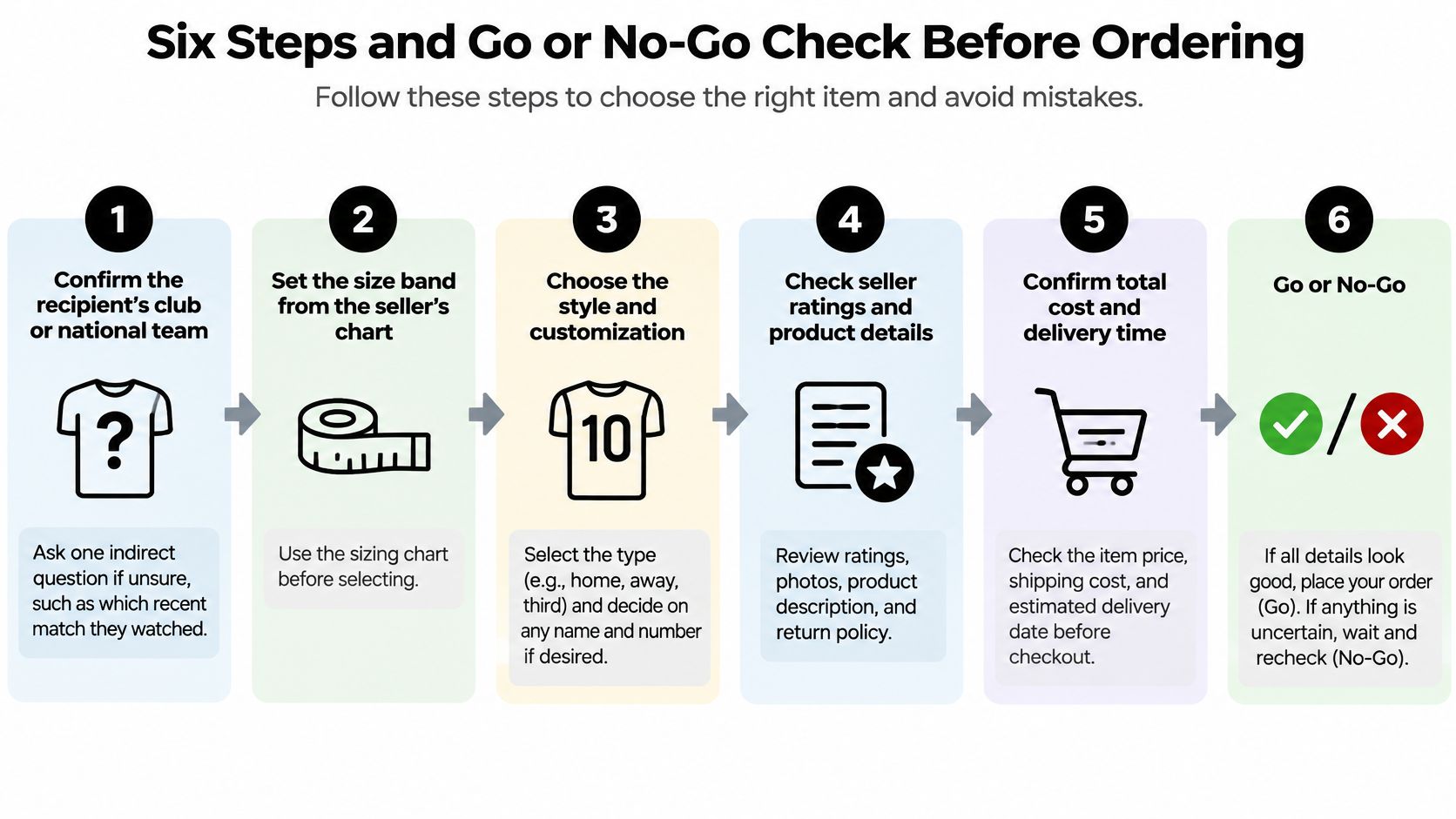
A good gift decision comes down to three things: the recipient's preferences, a suitable fit, and a trustworthy product. Check them in that order before you place the order.
The Six Steps
1. Confirm the club or national team. If you're unsure, ask which recent match they watched or which result annoyed them most. If they name two clubs, ask which shirt they'd wear to a game. That helps distinguish a passing interest from a firm preference.
2. Set the size band from the seller's chart. Use height as a starting point for a child and chest measurement for an adult. Record the size before browsing, then check the chart for the specific item. Sizing can vary between shirts and sellers.
3. Set a budget tier before browsing. Choose a working limit, then compare similar products within it. A kids' shirt and a signed collector item offer different value, so comparing them by price alone can mislead.
4. Pick the format that matches use. A current-season shirt suits regular wear, a retro shirt may appeal to a collector, and a signed item is suited to display. Shorts work as part of a playing set, while a sharing box gives friends or teammates something to unbox together. Mystershirt's boxes contain authentic shirts from recent seasons, with labels still attached, and include a card explaining the club, where it plays, and why the shirt matters.
5. Run the authenticity checks before paying. Check the crest, season, branding, sleeves and collar, labels, stitching, and seller terms. Review the exact listing you intend to order, not a similar shirt shown elsewhere.
6. Confirm the guarantee and return terms. Check what happens if the size is wrong, whether personalized items are excluded, and how long the recipient has to act. Clear terms matter when the gift may not be tried on straight away.
Go or No-Go
Before ordering, answer four questions:
- Club confirmed: Can you name the club or national team, or have you chosen a mystery format deliberately?
- Size checked: Did you use the seller's chart rather than rely on the recipient's usual label?
- Format matched: Does the item suit wearing, playing, collecting, or sharing?
- Terms understood: Do you know the return and exchange terms for this item?
If any answer is no, resolve that point first. A higher spend, faster shipping, or better wrapping won't fix the wrong club, size, or product. Ask about the club, get a measurement, or choose an option with terms you understand.
If you don't know the recipient's team, a mystery box can keep the club a surprise. At checkout, you can list clubs and leagues to avoid, and Mystershirt takes those requests into account when preparing the order. Name specific rivals or dislikes rather than relying on vague preferences.
Once all four checks pass, place the order without reopening the shortlist. Avoid last-minute personalization unless the player and number are confirmed. The aim is to remove preventable problems with club, fit, and authenticity, then let the gift deliver the surprise.
Choose a recipient, run the four checks, and select a suitable option from Mystershirt, including Premium, Retro, Kids, or Sharing boxes.