It's a cold Saturday morning at training, and your child is already pulling their hands inside their new club jersey. Later, facing a wall of long-sleeve base layers, you're trying to work out whether they need something thermal, something tight, or something that won't cause an argument at the next kit inspection. The most expensive option isn't automatically the right one.
Table of Contents
- Why the Right Undershirt Matters on the Pitch
- Matchday Colour Rules Under IFAB Law 4
- Thermal, Compression, and Lightweight Fabrics Compared
- Sizing and Fit Checks Before You Buy
- Matchday Versus Training Priorities
- Choosing Undershirts for Kids, Adults, and Return-from-Injury Players
- Care, Storage, and Common Troubleshooting
Why the Right Undershirt Matters on the Pitch
Buying long sleeve undershirts for soccer starts with the shirt they'll sit beneath, not the packaging claims. A garment can feel comfortable in the changing room yet prove unsuitable once the player starts moving or the referee checks the kit.
Start by separating the jobs you're asking it to do. Keeping a substitute comfortable on a cold touchline is a different problem from dressing a player who'll be working hard throughout a mild-weather match.
Give the garment a clear job
- Regulatory compatibility: For competitive matches, the visible base layer needs to meet the equipment requirements. Check the team shirt before choosing a colour.
- Temperature management: Decide whether you need insulation or just a light layer beneath the jersey. Don't treat thermal and lightweight as interchangeable labels.
- Comfort and coverage: Assess the feel of the sleeves, neckline, and seams. Treat coverage as a clothing preference, not evidence that the garment prevents injury.
Age and setting matter, too. For a child, prioritise something they can put on comfortably and explain how it feels. For an adult buying their own kit, start with the conditions they play in rather than the professional look they want to copy.
Buying rule: Choose for the league, the weather, and the wearer before choosing for the brand.
There's a useful distinction between clothing for football and clothing for a treatment appointment. If you're buying around an appointment as well as training, Aspen Falls Wellness's guide to the best clothing for chiropractic visits is a separate resource to consult. Don't assume a close-fitting match layer is the right choice for every activity.
The practical starting point is straightforward: take the actual jersey shopping, or keep clear photographs of its sleeves available. Establish the club's expectations, decide what conditions the garment must handle, and only then compare fabrics. That prevents an attractive base layer from becoming an expensive training-only purchase.
Matchday Colour Rules Under IFAB Law 4
The jersey sleeve is the colour reference, not the shorts, socks, club crest, or player's favourite colour. Under IFAB Law 4 as published by The FA, undershirts must be a single colour matching the sleeve's main colour, or use a pattern and colours that exactly replicate the sleeve. Players on the same team who wear undershirts must use the same colour.
That makes a black undershirt beneath white sleeves a potential compliance problem even if the team wears black shorts. A shared club colour isn't enough when it doesn't match the relevant part of the shirt.
Turn the rule into a purchasing check
For a plain-sleeved jersey, compare the proposed garment directly against the sleeve. Don't approve a team order from a product name alone. Ask for a sample or a clear comparison before committing.
Patterned and differently coloured sleeves deserve an explicit decision from the club. Don't let players independently choose whichever stripe colour they prefer. If a competition applies additional equipment guidance, have the team manager confirm the acceptable choice before anyone buys.
Use the visual guide as a reminder, but apply the written rule to the actual kit.
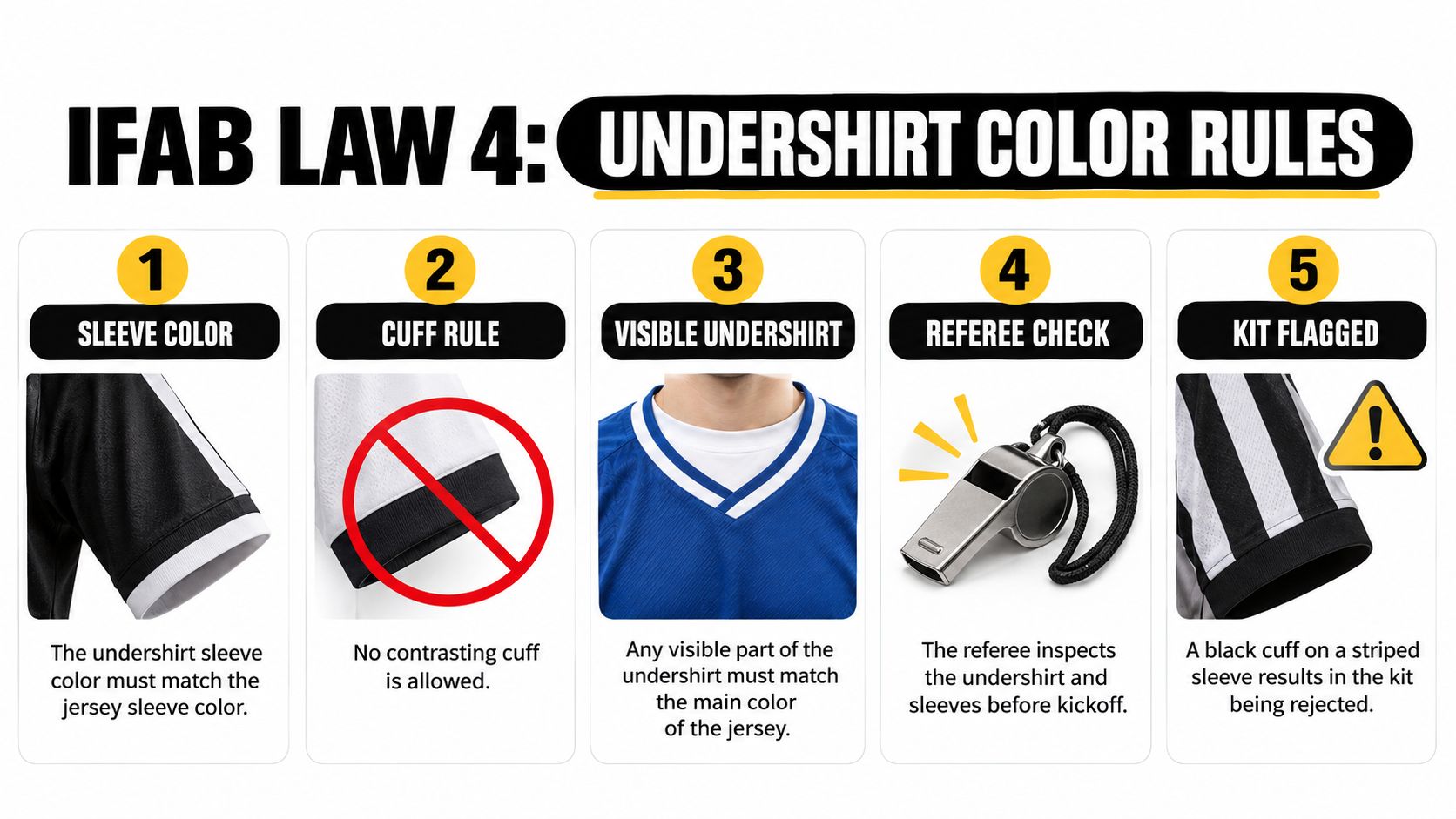
A contrasting cuff isn't a separate exemption. Equally, a black cuff beneath a striped sleeve shouldn't be judged from that description alone; its acceptability depends on the applicable sleeve standard and team selection.
- Club shops: Identify the approved undershirt colour alongside each playing shirt.
- Team managers: Communicate the decision before families order independently.
- Players: Ask about an uncertain colour before match morning, not while the referee is checking equipment.
Treat compliance as the first purchasing gate. Warmth, stretch, and a good discount won't rescue a garment that the player can't wear in the intended competition.
Thermal, Compression, and Lightweight Fabrics Compared
Thermal, compression, and lightweight describe different priorities, and they can overlap. A close-fitting shirt isn't necessarily warm, while a thermal garment doesn't have to feel heavily compressive. Read the construction details rather than assuming the category name tells you everything.
For any category, inspect the fabric weight, stretch, seams, and care instructions. The guidance below is a buying framework, not a laboratory rating of every garment carrying the label.
Undershirt fabric categories at a glance
| Fabric Category | Best Weather | Breathability | Stretch | Price Band |
|---|---|---|---|---|
| Thermal, including brushed-back constructions | Cold conditions where added insulation is wanted | Check thickness and ventilation rather than the thermal label alone | Check reach and shoulder movement | No reliable category-wide band; compare individual products |
| Compression-style elastane blends | Conditions suited to the garment's actual weight | Depends on construction, not tightness alone | Should feel snug without restricting movement | Compare like-for-like construction and finish |
| Lightweight moisture-wicking fabric or mesh | Mild conditions where extra insulation isn't wanted | Look for a light, ventilated construction | Choose enough give for unrestricted movement | Price alone doesn't establish suitability |
Warmth and moisture handling are separate decisions. A buyer who needs insulation should look beyond a general sweat-wicking claim. Conversely, a player who only wants light coverage shouldn't buy a thick garment because it's marketed for football.
Use the guide to what soccer jerseys are made of when assessing the outer shirt, too. Fit the layers together rather than judging either garment in isolation.
What compression can and can't promise
A systematic review of compression garments found equivocal evidence for physical-performance improvements, with little support for meaningful kinetic or kinematic gains. It identified possible benefits for muscle oscillation and sensorimotor function, but those findings don't justify promising faster sprints or injury prevention.
Buy compression because you prefer the fit, not because the label promises a better player.
Compare perceived effort, temperature, and rubbing during similar training sessions in compression and non-compression shirts. If the tighter option restricts your shoulders or distracts you, don't keep it for a speculative advantage.
Keep recovery purchases separate from that decision. If you're also comparing massage tools for sore muscles, SunnyBay's resource belongs in that separate shopping conversation, not as proof that a compressive undershirt improves recovery.
For durability and value, inspect the actual garment and return policy. Without product-specific testing, there's no sound reason to rank every thermal, mesh, or elastane-blend shirt by lifespan or price.
Sizing and Fit Checks Before You Buy
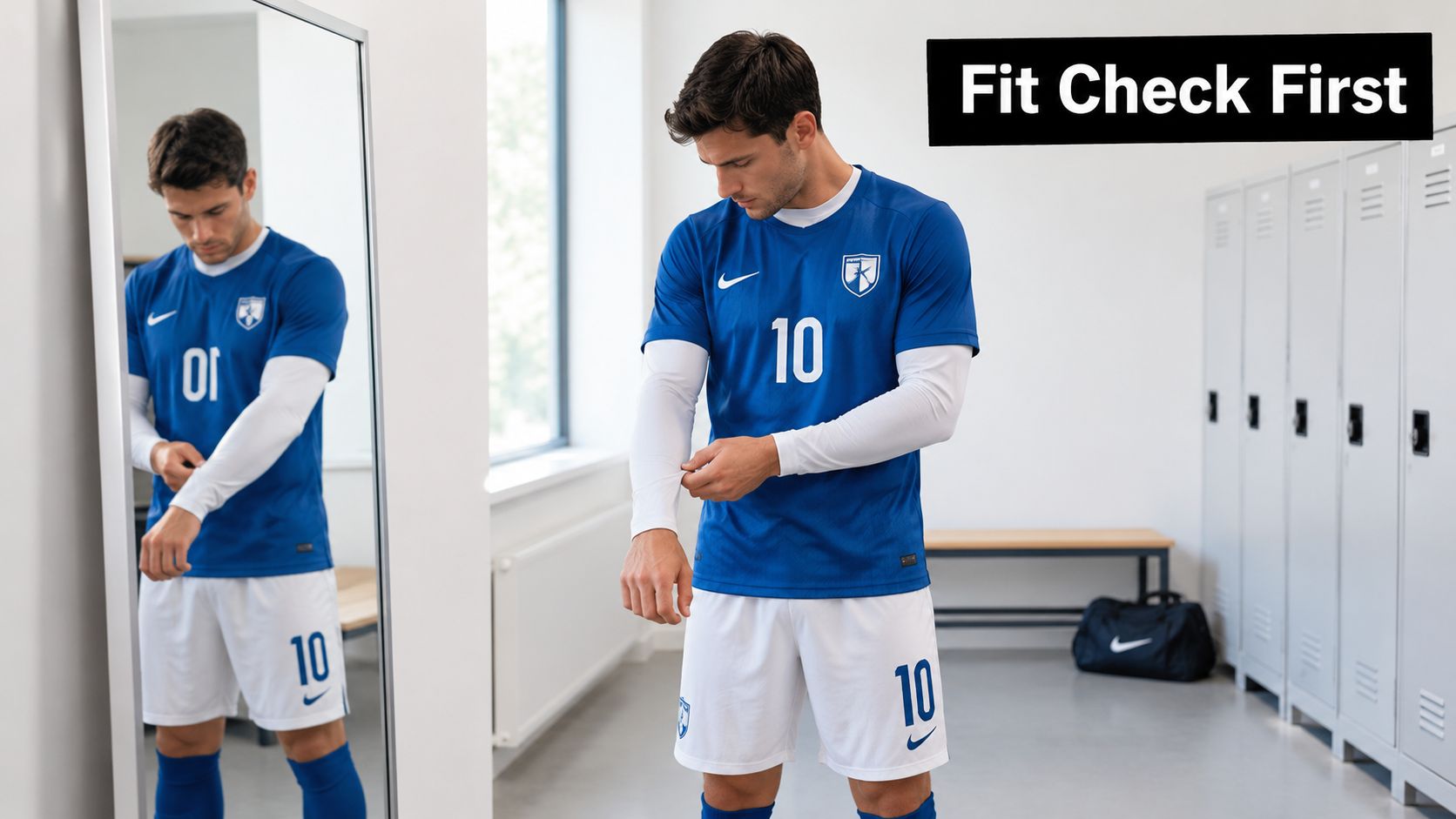
Fit the undershirt beneath the jersey you'll wear. Trying it alone can miss the sleeve overlap, neckline exposure, and torso bunching that matter once the complete kit is on.
Use the player's full kit as the fitting reference.
Check the garment in motion
- Chest and shoulders: Follow the manufacturer's measuring instructions, then reach forward and overhead. Reject a fit that makes ordinary football movements uncomfortable.
- Sleeve position: Check the cuffs with arms down and raised. Don't judge sleeve length only while standing still.
- Torso: Put the jersey over the top and look for folds or material gathering beneath it. A snug base layer shouldn't require constant rearranging.
- Visible details: Inspect cuffs, logos, graphics, and the neckline from the front, side, and back.
The IFAB equipment guidance also matters when checking exposed messages and advertising. Don't assume graphics become acceptable because they're printed on an undershirt rather than the jersey.
If the outer shirt itself is a questionable fit, consult the authentic soccer jersey sizing guide before replacing the base layer. Otherwise, you may spend money correcting the wrong garment.
Use measurements rather than an age label alone
For children, compare the size chart with a currently comfortable shirt, taking measurements in the way the seller specifies. Leave sensible growing room without choosing sleeves that need folding or a torso that gathers beneath the kit.
Use the video alongside a hands-on fitting, not instead of trying the complete outfit.
Finish with football movements: an overhead throw-in action, a short run, a turn, and a crouch. Check again afterward rather than pulling everything neatly into position first. The fit you're buying is the one the player has while moving.
Matchday Versus Training Priorities
A match layer needs to pass equipment inspection and suit the conditions. A training layer gives the coach more flexibility, subject to the club's dress expectations. Neither setting automatically calls for a particular fabric weight.
The useful distinction is fixed requirements versus adjustable choices. Matchday adds compliance constraints; training often gives players more opportunities to change or remove a layer. Both still require a weather decision.
Use this comparison as a starting prompt, not a literal rulebook.
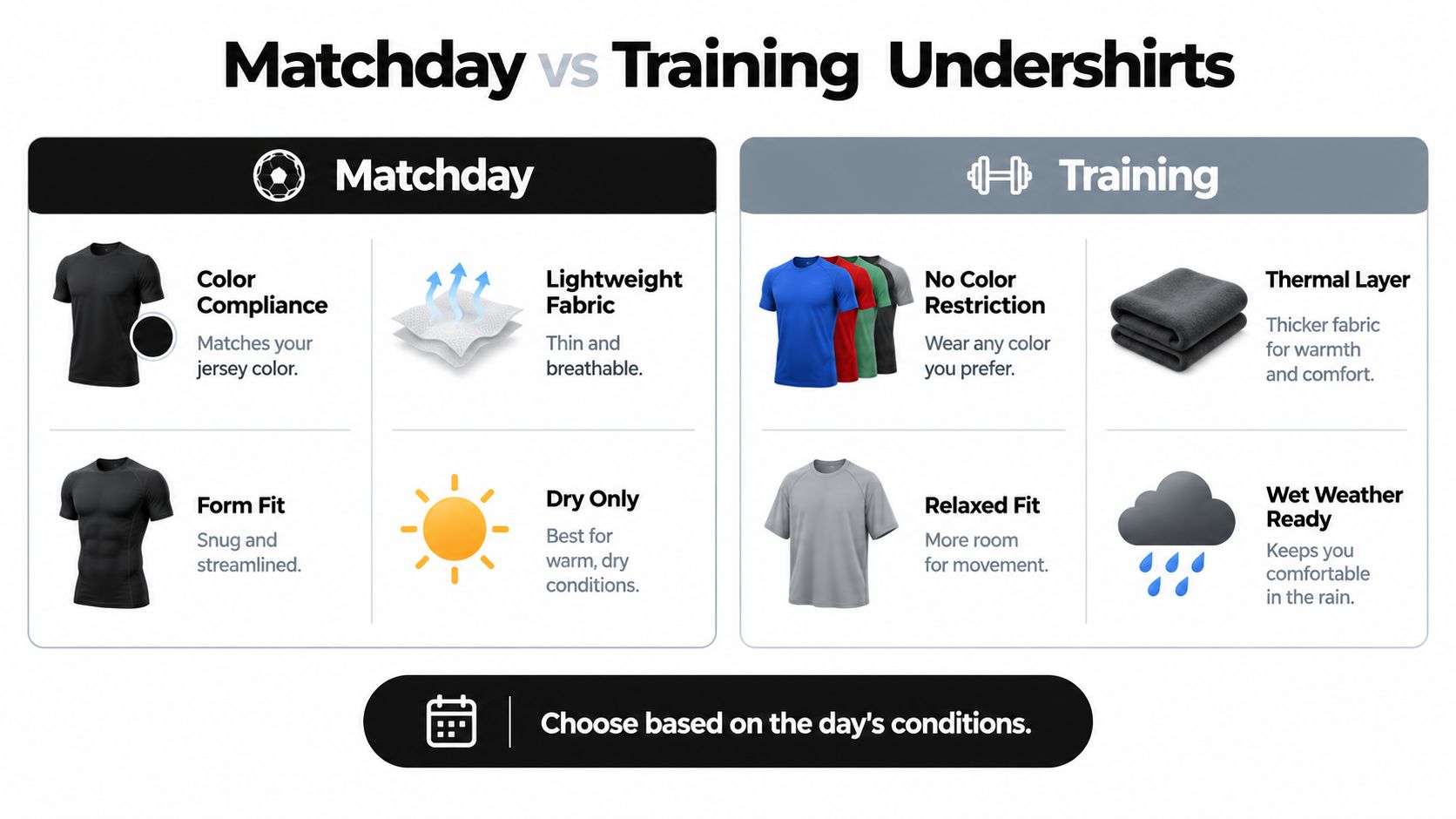
The chart's simplified labels need qualification: matches aren't dry-weather-only activities, training shirts aren't automatically unrestricted, and a relaxed fit isn't always preferable. Choose from the day's conditions and the club's requirements.
Cold match, mild session, humid fixture
For a cold-weather match, consider a thermal construction if the player wants insulation. Test it under the match jersey before selecting it, and discuss what the player will wear while waiting to start or sitting out. Don't base the whole decision on how cold the car park feels.
For a mild training session, start with the least insulated option that provides the coverage the player wants. A light layer is a more sensible trial than a thick thermal shirt chosen out of habit. Ask how it feels after active work, not just during the opening instructions.
For hot or humid conditions, reconsider whether long sleeves are needed at all. Youth-sport heat guidance from the National Athletic Trainers' Association advises minimising clothing and equipment in heat and humidity, alongside hydration and rest to reduce heat-illness risk.
Make the decision before leaving home
- Check conditions: Consider humidity and expected exertion, not just whether the sky looks grey.
- Plan adjustments: Establish when the player can change or remove a layer.
- Pack an alternative: Where practical, bring a lighter option rather than forcing the original choice to work.
Weather check: Moisture-wicking fabric isn't permission to ignore excessive insulation, hydration, or rest.
Don't buy separate match and training garments automatically. If the same correctly coloured, comfortable layer suits both uses, use it. Add another option when it solves a real difference in conditions, not because the packaging assigns it to a different occasion.
Choosing Undershirts for Kids, Adults, and Return-from-Injury Players
A child borrowing a parent's tight base layer, an adult buying for winter fixtures, and a player returning after injury need different conversations. Start with what each person can comfortably wear and manage, rather than assigning everyone the same squad purchase.
Children need a usable fit
Ask the child to put the garment on and take it off without someone continually rescuing the sleeves or neckline. Check that they're happy wearing it beneath the jersey, not merely willing to tolerate it during a quick shop fitting.
- Ask specific questions: Can they reach comfortably? Does the neck bother them? Are the sleeves distracting?
- Check after activity: Invite an honest answer rather than asking whether their new shirt is “good.”
- Buy for current use: Allow growing room without making the garment awkward now.
As the heat guidance above makes clear, parents shouldn't equate more clothing with better protection in every condition. A garment the child tolerates throughout activity is a better purchasing target than the warmest item available.
Adults should buy around their routine
For adult amateurs, make a shortlist from actual needs: the usual playing conditions, the jersey's fit, washing arrangements, and whether a spare is practical. There's little value in buying a specialist garment whose care requirements you won't follow.
If you play in different team shirts, check each kit before assuming the same undershirt works everywhere. A comfortable training favourite may still be the wrong matchday purchase.
Returning players need a separate medical decision
A slightly compressive feel may appeal to someone returning after time out, but clothing preference isn't clearance to play. The evidence discussed earlier doesn't establish that a base layer protects an injured area or makes a return safe.
For anyone planning how to get back in the game, MedAmerica Rehab Center's return-to-play resource is a separate starting point for that discussion. Ask the treating professional about any clothing restrictions relevant to the individual.
An older player shouldn't be assigned heavier compression because of age alone. Ask what feels comfortable, preserve free movement, and keep garment selection separate from rehabilitation decisions.
Care, Storage, and Common Troubleshooting
Start with the garment's care label, not a universal sportswear washing recipe. Different constructions may have different instructions, so don't assign every undershirt the same temperature, detergent, or drying method.
As a practical kit-room routine, separate the base layer from boots and exposed fasteners, check it for damage, and follow the stated washing directions. Let it dry fully before storing it, and put it away without pulling the neckline or cuffs out of shape.
For the outer shirt, use the separate guidance on how to wash a football jersey. Don't assume its instructions automatically apply to the undershirt.
Fix the problem you can actually identify
| Problem | Practical response |
|---|---|
| Cuffs or graphics become exposed | Repeat the complete-kit movement check and reassess the garment's cut |
| Player feels too warm | Reconsider insulation and whether the layer is needed |
| Snags or loose seams appear | Inspect the damage before further use; don't pull loose threads |
| Fit no longer feels secure | Compare with the original fit and replace if it no longer serves its purpose |
Don't invent a fixed replacement schedule. Judge condition, comfort, and suitability rather than assuming every garment expires after the same number of washes.
Questions that remain on match morning
Can a referee require a mismatched undershirt to be changed?
Yes. The equipment requirements discussed earlier apply before the player takes part. Ask for a decision early enough to change, rather than assuming the player can start and resolve it later.
Can a player wear a thermal layer over a compression shirt?
Don't treat permission and practicality as the same question. Check the complete arrangement with the team, then assess movement and temperature; an acceptable visible colour doesn't establish that additional insulation is sensible.
Do the matchday rules apply to ordinary training?
Don't automatically treat a practice session as a regulated fixture. Ask the coach about club dress requirements, and confirm what applies if the session includes an organised match.
Final buying checklist: approved colour, moving fit, suitable fabric, manageable care, expected climate, and the wearer's needs. Put the jersey and proposed undershirt together before removing tags.
Mystershirt offers Mystery Soccer Jersey Boxes for fans who enjoy discovering an authentic football shirt. Visit Mystershirt to explore the options, then use the jersey you receive as the reference when choosing a comfortable, colour-compatible undershirt.