1970s international shirts average £557.49, while modern remakes rarely retain much resale value. The right purchase depends on whether you want wearable retro style or an original shirt with scarcity, provenance, and collector appeal.
That price gap changes how you should browse listings labelled retro football jerseys for sale. A shirt can look vintage without being vintage, and a remake can be an excellent fashion purchase while being a poor collecting purchase. Treating both as the same product is how new buyers overpay, misunderstand condition, or expect investment value from a garment that was designed for repeat production.
The market has plenty of room for both choices. You just need to decide which lane you're entering before you start scrolling.
Table of Contents
- Why Retro Football Jerseys for Sale Are Splitting Into Two Markets
- How to Read Era, Fabric, and Construction Like a Collector
- Authenticity Checks Every Buyer Should Run Before Paying
- Original Vintage vs Retro Remake vs Mystery Box
- How a Mystery Box Delivers Authentic Shirts From $33.32
- Sizing, Payments, and the 100-Day Safety Net
- Care and Storage Habits That Protect Resale Value
Why Retro Football Jerseys for Sale Are Splitting Into Two Markets
A 2023 analysis found that international shirts from the 1970s averaged £557.49, compared with £371.93 for the 1980s and £94.40 for the 2010s. The sample included 22 shirts from the 1970s, with prices ranging from £89.99 to £999.99, showing how sharply scarcity, condition, and historical relevance can separate one shirt from another. See the detailed analysis of vintage football shirt prices for the underlying comparison.
That doesn't mean every old shirt deserves a premium. It means age creates the possibility of scarcity, while provenance and condition determine whether that possibility becomes real value. An original international shirt from a meaningful era may attract collectors because it carries period-correct materials, badges, labels, and cultural history. A new shirt with a retro graphic may offer the same visual language without the same supply constraint.

The style buyer
The first buyer wants a shirt to wear. They care about the colour palette, fit, comfort, and the way the piece works with denim, trainers, jackets, or casual match-day clothing. A licensed remake is often the sensible choice here because it gives you predictable sizing, cleaner fabric, and less anxiety about a delicate sponsor print.
This buyer usually shops through official club stores, sports retailers, recognised remake labels, and fashion-focused sellers. They're paying for design and usability, not a chain of ownership. A remake can be a good buy if you accept that its value comes from wearing it rather than preserving it.
Retro football culture also overlaps with broader throwback sportswear. If you're building an outfit around an old shirt, accessories such as retro trucker caps from Dirt Cheap Headwear can complete the look without pretending the entire outfit is collector-grade.
The provenance buyer
The second buyer wants an original. They'll inspect the label, fabric, crest, sponsor, stitching, measurements, and seller history before paying. They may accept fading or light wear if those marks are consistent with age and the shirt's story.
This buyer relies more heavily on specialist vintage sellers, auction listings, established collectors, and resale platforms with detailed photographs. Their main risk isn't choosing the wrong colour. It's paying an original-shirt price for a reproduction.
Collector rule: Decide whether you're buying a garment or an artefact. The same design can satisfy one purpose and fail the other.
The market is growing well beyond a private hobby. Classic Football Shirts reported selling upward of 750,000 pre-owned shirts a year and operating toward about $50 million in sales, while its U.S. market represented around 15% of sales and had doubled year over year. The same reporting placed global new soccer-shirt sales above $6 billion annually, with the pre-owned market growing by more than 100% year over year. Earlier eBay UK evidence recorded “retro football shirts” searches up 136% and average secondhand shirt selling prices up 25% year over year. Those figures are summarised in coverage of the vintage football shirt economy.
The practical answer is simple. Pick the wearable lane if you want style, the original lane if you want scarcity, or a discovery model if you want authentic pieces without choosing every club and era yourself.
How to Read Era, Fabric, and Construction Like a Collector
You don't need expert-level knowledge to reject a suspicious listing. Start with the material, then inspect the construction, and finally compare the details with known shirts from that era.
Older shirts often feel denser than modern replicas. Pre-1990s football shirts commonly used heavier cotton, cotton-poly blends, or thicker polyester, while many modern shirts use lightweight moisture-wicking synthetics. Fabric alone won't prove authenticity, but an unusually thin, stretchy, or intensely bright material should make you ask more questions. The guide to spotting authentic vintage football jerseys explains why fabric weight and texture matter.

Start with the fabric
Run your fingers over the listing photos, even though you can't physically feel the shirt before purchase. Look for a surface with believable density, period-appropriate sheen, and a structure that doesn't appear overly elastic. A shirt described as an early vintage piece but photographed with thin performance fabric deserves scrutiny.
Don't rely on the infographic's illustrative weights as authentication rules. Manufacturers varied, and a genuine shirt may not match a neat era category. Use those visual differences as prompts for closer inspection, not as a substitute for labels and construction evidence.
Then inspect the badge and sponsor
Early shirts often feature cloth or embroidered crests, while later designs increasingly used heat-pressed or sublimated graphics. Construction changed across manufacturers, so the question isn't whether a badge is embroidered in every period. The question is whether the badge, sponsor treatment, collar, and stitching make sense together.
Check the collar shape, sleeve cuffs, hem finish, and seam density. Older licensed production often has distinctive stitching and finishing that a later reproduction may imitate poorly. Yellowing on white panels, controlled screen-print flaking, and natural fabric wear can support an older date, but artificially distressed shirts can copy those signs.
Use details as a group
A label font that belongs to a later production run can undermine an otherwise convincing shirt. So can a modern wash tag attached to a supposedly early piece, a crest placed slightly differently from documented examples, or a sponsor graphic with the wrong dimensions.
Practical test: No single detail should carry the entire decision. Authentic shirts are usually supported by several matching indicators, not one convincing logo.
This video guide to football shirt identification is useful for training your eye across fabric, badges, labels, and construction. Watch it before you make your first expensive purchase, then compare its principles against multiple listings rather than copying one visual cue.
Authenticity Checks Every Buyer Should Run Before Paying
A seller's description is not evidence. Photos are evidence, and the best listings give you enough detail to test the shirt from several angles.

Inspect the labels first
Ask for a clear image of the neck label, wash tags, size information, and country-of-origin text. Check whether the brand, size conversion, manufacturing details, and product code appear coherent. A missing label doesn't automatically prove a fake, especially on an old or heavily worn shirt, but it removes one of your strongest verification tools.
Product codes deserve special attention. Compare them with reliable references or known examples from the same manufacturer and era. Wash-tag fonts, spacing, care symbols, and print quality can reveal a later reproduction even when the front of the shirt looks right.
Examine the crest and sponsor
Zoom in on the crest edges and surrounding stitching. Look for clean alignment, consistent thread tension, and a shape that matches documented examples. On heat-pressed graphics, inspect the reverse side if the seller provides it. Excessive plastic film, uneven edges, or an unusually glossy finish can signal a reproduction.
The sponsor should also match the era. Check its dimensions, colour, placement, and print method. A listing with a club crest from one period and a sponsor treatment from another should be treated as a problem, not a charming variation.
For broader context around traceability and brand authenticity compliance, review the way authenticity systems connect product identity with supporting information. You can also compare your findings with this football shirt authenticity checklist.
Challenge the condition
A supposedly flawless shirt from an early era isn't impossible, but it needs a stronger explanation. Look for pilling, fading, discoloration, loose threads, badge damage, and fabric stress around the collar. Independent grading guides treat shirts near 9.5/10 as near-mint or mint, with no visible defects, and even small issues can lower desirability. The vintage shirt condition guide provides useful grading context.
Ask for the exact pit-to-pit measurement, front and back photos, close-ups of every label, and images of any damage. Reverse-searching the hero image can expose stock photography or copied listings.
Walk away when the seller refuses reasonable detail, pressures you to pay outside the platform, or claims “authentic” without showing the evidence needed to support that claim. A low price doesn't compensate for a shirt you can't verify.
Original Vintage vs Retro Remake vs Mystery Box
These three options serve different buyers. Don't compare them only by sticker price, because certainty, scarcity, and resale behaviour matter just as much.
| Factor | Original Vintage | Retro Remake | Mystery Box |
|---|---|---|---|
| Main purpose | Collecting, provenance, and historical ownership | Wearable style and nostalgia | Authenticated discovery at a lower entry point |
| Shirt identity | You choose the exact shirt | You choose the exact remake | You choose preferences, not the exact item |
| Scarcity | Depends on era, club, condition, and documented originality | Usually restocked or reproduced | Depends on the supplied vintage stock |
| Resale outlook | Can retain collector appeal when condition and provenance are strong | Rarely holds value because remakes are frequently restocked | The individual shirt's condition and rarity determine appeal |
| Main risk | Fakes, hidden damage, and overpaying | Paying for a look while expecting investment value | Receiving a team or era you wouldn't have chosen |
| Best buyer | Patient collector | Fan or fashion buyer | Beginner building breadth without selecting every piece |
Original vintage
Originals are the correct choice if you care about era accuracy and provenance. Recent coverage says authentic vintage jerseys can sell for £200–£300+ on major resale platforms, while remakes rarely hold value because sellers can restock them. That distinction is central to the coverage of the remake trend.
Buy originals when you're prepared to inspect the listing carefully. You'll have more control over club, year, colour, and condition, but you'll also carry the burden of authentication and the risk of paying too much.
Retro remakes
A remake makes sense when you want the visual identity without the fragility or sourcing hassle. It's easier to wear, easier to replace, and often less stressful around food, travel, or regular washing. Just don't call it an investment. Its value is practical and aesthetic.
Mystery boxes
A mystery box is the middle path. You sacrifice certainty about the exact shirt but can access authenticated originals through a curated sourcing model. That's useful if you want variety, don't have a fixed grail, or want to learn your preferences by handling shirts from different clubs and eras.
My recommendation is blunt. Buy an original for collecting, a remake for everyday style, and a mystery box when discovery matters more than control.
How a Mystery Box Delivers Authentic Shirts From $33.32
The surprise-box model works because it separates shirt selection from shirt sourcing. Instead of paying a specialist to locate one exact club and season for you, the supplier pools authenticated stock, grades it, and matches it to broad preferences such as size, colour, or exclusions.
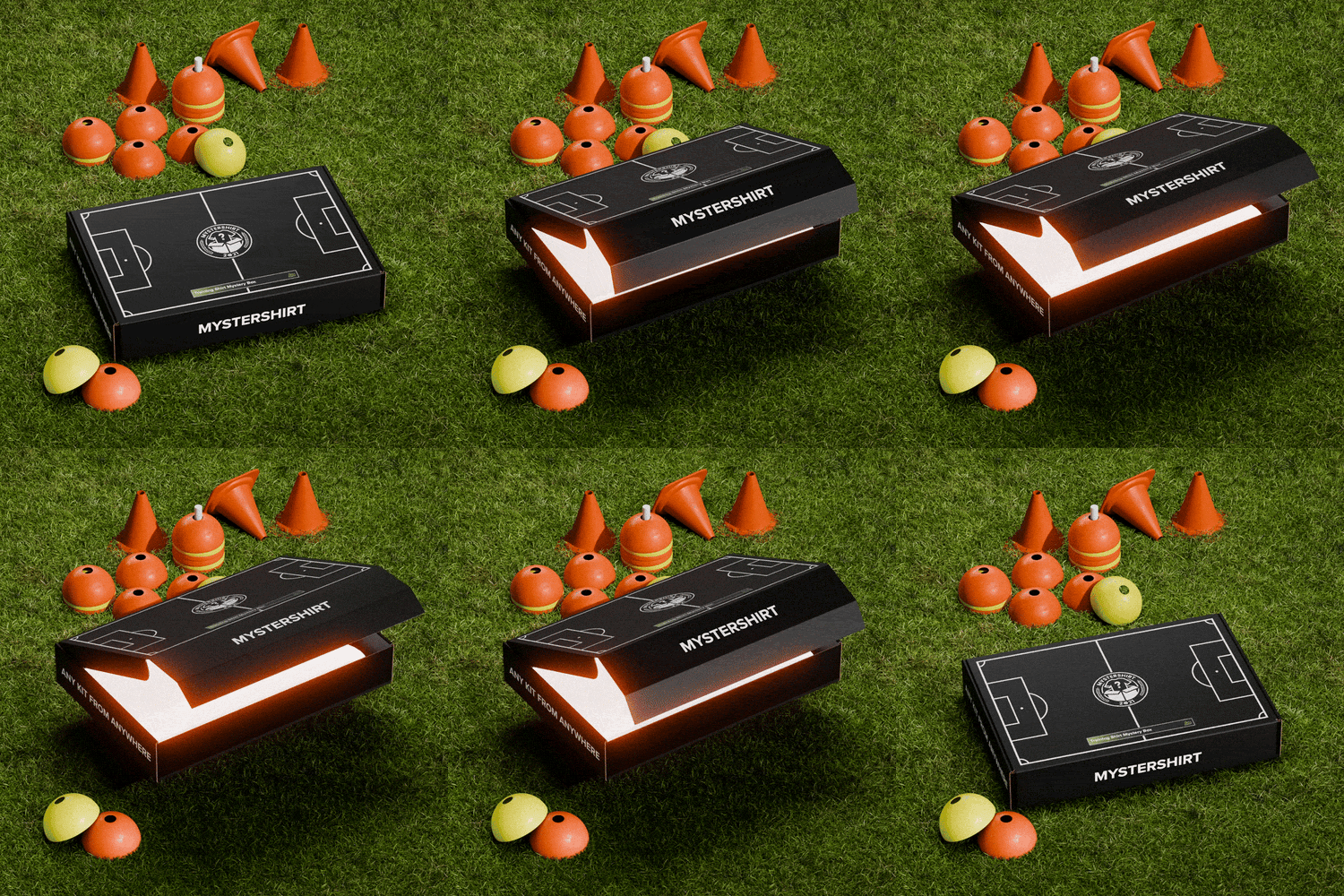
Mystershirt offers tiers listed at $33.32 for Basic, $53.32 for Pro, $93.32 for Premium, and $169.99 for Plus. Those tiers are designed to map to differences in era, condition, and league rarity, while the customer chooses a size and preferences rather than a specific shirt. The company's football jersey mystery box guide explains the purchase model in more detail.

What happens before the box is sealed
Suppliers can draw from estate collections, club clearances, and European trade-ins. The important point is that the shirts should be reviewed before packing, rather than pulled randomly from an unverified pile.
Grading creates a usable quality filter. A mint or near-mint shirt should show no visible defects, while an excellent or good shirt may carry wear that remains acceptable for wearing or collecting. The customer still needs to read the seller's exact grading and returns policy, because “vintage” doesn't guarantee perfect condition.
What you give up
You don't control the exact club, season, sponsor, or design. That's the entire trade-off. If you want a specific 1990s national-team shirt, buy a direct listing instead. If you want to expand beyond familiar teams, the surprise can uncover styles and leagues you wouldn't have searched for.
The model also reduces the friction that makes original vintage expensive to shop for. Individual sourcing takes time, photography, negotiation, authentication, and inventory management. A box packages those decisions into one purchase, then lets the supplier use its broader stock to create a match.
Mystery boxes aren't a loophole around collecting discipline. You should still photograph what arrives, retain the order details, inspect the labels, and report undisclosed damage promptly. The format is budget-friendly because it narrows the search burden, not because authenticity stops mattering.
Sizing, Payments, and the 100-Day Safety Net
A surprise purchase only works if the fit and return process are controlled. Start with measurements, not the letter printed on the label. Vintage cuts vary, and a modern medium doesn't guarantee a vintage medium will sit the same way across the chest or shoulders.
Request the exact pit-to-pit measurement in centimetres before confirmation whenever the seller can provide it. Compare that measurement with a shirt you already own and like. This is more reliable than relying on “true to size,” especially when the shirt may come from a different manufacturer, country, or decade.
Make the fit decision deliberately
Choose whether you want a relaxed everyday fit or a closer collector-style fit. Tell the seller about exclusions and colour preferences, but don't assume those preferences control the exact design. A box can narrow the outcome without eliminating the surprise.
If the first selection misses, Mystershirt's stated process allows a second swap for fit issues. Read the current terms before ordering, because return conditions are part of the product, not fine print you can ignore.
Protect the payment
Payment flexibility can reduce the risk of committing more cash than you want to spend at once. Available methods include PayPal, Klarna, Apple Pay, and Google Pay. Choose the option that gives you a clear transaction record and dispute process.
The practical test is the same as managing any household purchase. Don't let a jersey purchase interfere with essentials such as paying rent on your unit. Set the amount first, then choose the box or listing that fits it.
Read the guarantee
The stated 100-day money-back guarantee covers authenticity disputes, undisclosed damage, and sizing failures, with no restocking fee and return shipping absorbed. Keep your order confirmation, photograph the shirt immediately, and contact the seller as soon as you identify a problem. A guarantee only helps when you preserve evidence and follow the stated process.
Care and Storage Habits That Protect Resale Value
Condition is where many promising shirts lose their future appeal. A collector can find an authentic piece, verify its era, and still reduce its desirability through careless washing or poor storage.
Wash a retro shirt inside out in cold water with phosphate-free detergent. Skip fabric softener, which can affect prints and fabric feel, and air-dry the shirt flat away from direct sunlight. Heat from a tumble dryer can stress stitched crests, sponsor graphics, elastic, and older polyester.
Treat graphics as vulnerable components
Don't scrub a sponsor logo or badge. If a shirt needs attention, handle the affected area gently and follow a conservative cleaning method rather than experimenting with stain removers. Screen-print flaking and badge damage already affect condition grading, so aggressive cleaning can turn a manageable flaw into permanent loss.
A shirt you wear regularly should still be rotated with other pieces. Repeated folding in the same place can create permanent creases across sponsor logos, while constant hanging can stretch collars. The preservation techniques guide offers further guidance for keeping collectible shirts presentable.
Store the shirt like an archive
Fold long-term pieces with acid-free tissue and keep them in a cool, dark, breathable environment. Avoid plastic bins that trap moisture, and monitor humidity rather than storing valuable shirts in a damp wardrobe or basement. A breathable cotton bag is safer for long-term protection than sealed plastic.
Record the purchase date, seller, source, condition, and any known match-worn context. Photograph the labels, crest, sponsor, and existing flaws when the shirt arrives. That record won't transform an ordinary shirt into a rare one, but it preserves the information that helps prove originality and condition later.
The most sensible buying habit is to match care with intent. Wear a remake freely, treat an original as a fragile archive, and inspect a mystery-box shirt before deciding whether it belongs in regular rotation or long-term storage.
Mystershirt offers mystery football shirt boxes, including a retro option, with size and preference choices for buyers who want authenticated shirts without selecting every exact design. Visit Mystershirt to compare the available box options, check the current guarantee, and choose a discovery-led route into retro football jerseys for sale.