You've just opened another clothing box. The packaging looks promising, but the key questions arrive before the shirt is even out: Will the fit match the size chart? Will the design suit me? What happens if it doesn't? A surprise can feel like a gift, but it can also become an expensive item sitting unworn in a drawer.
I've subscribed to, returned from, and cancelled enough clothing boxes to know that the unboxing is the easy part. The value depends on the details sellers often place below the product photos: how preferences are collected, whether avoid-lists are respected, whether returns are accepted, and whether an authenticity or money-back guarantee has meaningful conditions. This guide focuses on those practical risks, so you can judge a t shirt box subscription before recurring billing starts.
Table of Contents
- Why Shirt Lovers Keep Coming Back to Subscription Boxes
- What a T Shirt Box Subscription Actually Is
- What Happens From Order to Doorstep
- Honest Pros and Cons of Subscribing to Shirt Boxes
- How to Choose the Right Plan for Your Style and Size
- Authenticity Guarantees and Returns What to Check First
- Judging Real Value Before You Commit
Why Shirt Lovers Keep Coming Back to Subscription Boxes
The appeal begins with the moment the parcel lands. You cut through the tape, pull back the packaging, and see a folded shirt you didn't choose yourself. There's a small rush of curiosity, followed by a more practical thought: I hope this fits.
That combination of surprise and curation explains the model's staying power. A good box removes some shopping effort while still giving you something new to look forward to. It can also help collectors discover designs, clubs, eras, or styles they wouldn't have searched for directly. Football-shirt culture adds another layer, because a shirt can represent a place, a season, a supporter identity, or a story rather than just being another item of clothing. Readers interested in that wider context can explore this discussion of football shirt culture.
The format has moved far beyond a novelty experiment. A 2026 industry summary estimates the global subscription box market at $49.7 billion in 2026, compared with $57 million in 2011, and projects $101.81 billion by 2030. The same summary says food and beverage boxes account for 30% of global revenue, which puts apparel inside a broad, established subscription economy rather than an isolated niche. (Subscription box market data and category context)
That growth doesn't make every shirt plan good value. It means buyers have more formats to compare. Some services send a regular graphic tee selected around a style profile. Others focus on football jerseys, with premium, retro, kids, or group options. A mystery plan may let you reject certain clubs, colors, or leagues, while a curated plan may ask for more detailed preferences before each shipment.
The useful question isn't “Will the unboxing be fun?” It's “What risk does the seller remove if the shirt is wrong?”
Before subscribing, check four things: the fit process, the degree of control, the delivery schedule, and the remedy for disappointment. A resource about problems solved by this shop can also help you think about the broader reason people buy shirt-focused services, especially when the convenience of discovery matters as much as the garment itself.
What a T Shirt Box Subscription Actually Is
A t shirt box subscription is a recurring delivery of shirts selected by a seller or chosen through a preference system. Some plans are recurring, while others are one-off mystery boxes that imitate the subscription experience without creating an ongoing charge.
The two basic models are easy to understand:
- Mystery selection: You provide broad information, then the seller makes the final choice. It's similar to a lucky dip at a fair. You might receive something excellent, but you accept more uncertainty.
- Curated selection: You provide a style profile, size, color preferences, or category choices, and the seller uses those inputs to narrow the options. It's closer to hiring a personal shopper who knows your taste, although the final choice may still be a surprise.
- Self-selected delivery: You choose the actual shirt or a defined product category, then receive it on a schedule. This offers the least surprise and the lowest style risk.

The settings that shape your order
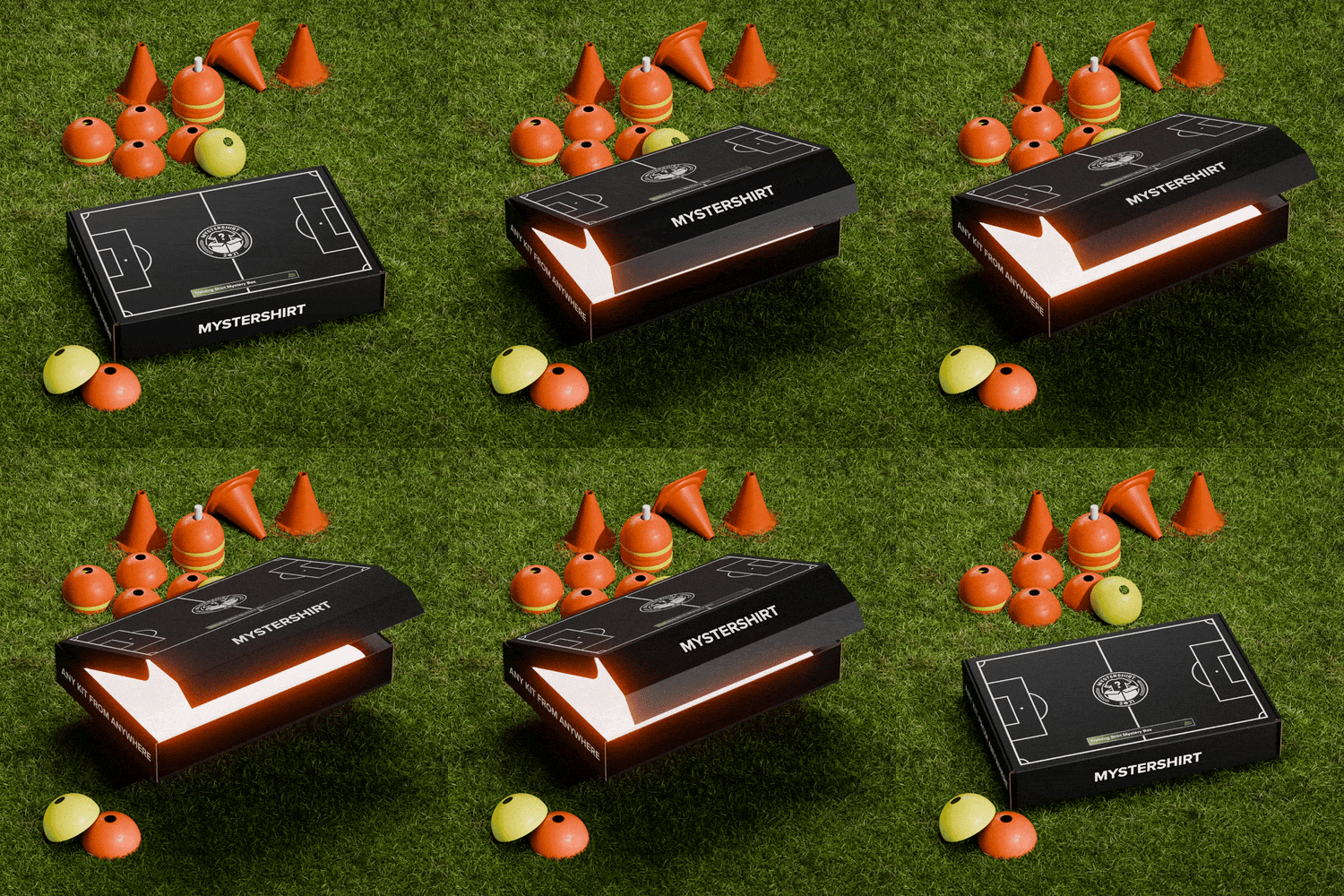
Most services charge a flat price per box, though some use tiers based on shirt quality, quantity, category, or extras. Football-shirt buyers may choose between premium and retro themes, children's sizes, or sharing and bundle formats. A football jersey mystery-box explanation can be useful if you want to understand how those themed selections differ from a general apparel subscription. (Football jersey mystery box overview)
Sizing deserves more attention than the product name suggests. A service may offer children's sizes through adult sizes, with some providers extending to 5XL, but the range alone doesn't tell you whether the garment will fit properly. Compare your measurements with the seller's own chart, and check whether the plan uses different brands or cuts. A medium in one shirt can feel noticeably different from a medium in another.
Delivery frequency usually falls into monthly or quarterly patterns, although exact options vary. Read the dispatch language carefully. “Ships monthly” may mean a fixed billing date, a window after payment, or a shipment triggered by your original order date. For football boxes, delivery can also vary sharply by destination. European express delivery may take 1–4 days, while global shipping may take 1–30 days, depending on the destination and carrier.
What Happens From Order to Doorstep
The seller's work begins before your parcel enters a courier network. Apparel subscription fulfillment requires the business to reserve stock for future boxes, track every size and SKU, and assemble combinations that match the subscriber's profile. The workflow generally involves receiving seasonal inventory, storing it by size and product details, selecting the contents, kitting the package, and handling exchanges or replacements after delivery. (Apparel subscription box fulfillment workflow)
Your order data becomes an operational instruction. Size isn't a decorative preference in this model. It determines which inventory can be allocated to you, whether a replacement is possible, and how confidently the seller can maintain a recurring delivery. Color exclusions, club avoid-lists, age category, and retro or premium preferences serve the same purpose.
The shipment sequence
- You complete the order or style quiz. The seller records your size, preferences, delivery address, and any clubs, colors, or categories you want excluded.
- Inventory is allocated. Staff or software checks available stock and chooses a shirt that fits the plan's theme and your profile.
- The box is packed. The shirt is folded, packaged, and labelled. Authentic football products should arrive with original labels, and sellers may include documentation that supports authenticity.
- The carrier receives the parcel. Tracking should be supplied when the service supports it. The delivery estimate starts to matter from dispatch, not necessarily from the moment you place the order.
- You inspect before removing anything you may need for a return. Check the size, labels, condition, club or design, and any promised extras before wearing or washing the shirt.
The difference between domestic express and international delivery is significant. Mystershirt's stated delivery guidance gives 1–4 days for express shipping in Europe and 1–30 days for global shipping, so international buyers should allow for a much wider window rather than treating a delayed parcel as an immediate fulfillment failure.
A well-run operation makes the process visible. You should know whether the box is a one-time purchase or a subscription, when the next charge occurs, how tracking is issued, and what evidence you need if the product arrives damaged or incorrect. If those answers aren't easy to find, the mystery isn't limited to the shirt.
Honest Pros and Cons of Subscribing to Shirt Boxes
Shirt boxes trade control for convenience. You usually give up the certainty of selecting a precise design in exchange for discovery, regular delivery, and the possibility of receiving a shirt at a better per-item value than buying comparable products individually.
The upside is strongest for buyers who enjoy collecting. A mystery format can introduce you to a club or design outside your normal search habits, and the regular cadence keeps a wardrobe or football collection moving without repeated browsing. Boxes also make straightforward gifts for fans, especially when the recipient enjoys the ritual of opening something unexpected.
The downside is equally concrete. The shirt may fit differently from the last one, the design may clash with your wardrobe, or the service may send a category you already own. Recurring billing creates another failure point, particularly when cancellation rules are buried in account settings or confirmation emails. Mystery services that refuse returns shift nearly all style and fit risk onto the buyer.
| What You Gain | What You Risk |
|---|---|
| Regular discovery without repeated shopping | A shirt you wouldn't have selected |
| Potentially stronger value per shirt | Fit uncertainty across brands or cuts |
| A growing personal collection | Duplicate styles, clubs, or colors |
| A giftable experience | Recurring charges you forget to cancel |
| Preference-based curation | Limited remedies under no-returns terms |
Why retention shapes the experience
Subscription businesses rely heavily on existing customers. One 2026 industry analysis says 70% of subscription revenue comes from existing subscribers, while typical subscription boxes face 10% to 15% monthly churn and top performers keep churn below 3%. (Subscription retention and churn data)
That explains why sellers ask for detailed preferences and offer flexible payment methods. They need subscribers to keep finding the next box worthwhile. The same analysis reports that 68% of subscription churn is involuntary, caused by failed payments rather than intentional cancellations, so billing reliability affects continuity alongside product satisfaction.
If the seller asks about your size and dislikes but offers no practical remedy for a bad fit, the personalization is doing more work for the seller than for you.
How to Choose the Right Plan for Your Style and Size
Start with fit, not theme. Measure a shirt you already like, compare its chest, length, and sleeve dimensions with the seller's size guide, and check whether the box uses standard, relaxed, slim, or athletic cuts. A size label is only a shorthand. The chart is the actual decision tool.
Next, decide how much uncertainty you can tolerate. Choose a mystery plan if the discovery matters more than control and you're comfortable receiving an unfamiliar club or design. Choose a curated or self-selected plan if you already know your colors, leagues, brands, or silhouettes and would resent an unwanted item.
Use exclusions as a safety valve
An avoid-list can make a mystery box much more sensible. List clubs you already own, colors you never wear, leagues you don't follow, and shirt types that won't work for your wardrobe. Don't assume the seller can infer these preferences from one broad style choice.
Plan type also matters:
- Premium boxes suit buyers prioritizing current or higher-grade shirts.
- Retro boxes work better for collectors who care about older designs and historical character.
- Kids' plans need especially careful size checking because children can move between sizes quickly.
- Sharing boxes make sense for friends, teammates, or families who want several surprises and can tolerate different outcomes.
Quality mystery football shirt boxes can start from around $33.32, according to the publisher's product information. Treat that as an entry point, not a complete budget. Add shipping, possible taxes, the number of shirts, and the cost of a disappointing item before deciding whether the plan fits your spending limit. Some services also offer Klarna's buy now, pay later option, but spreading a payment doesn't make an unsuitable box cheaper.
Before checkout, run this quick test:
- Measure first: Confirm the seller's chart matches your measurements.
- Define taste: Choose premium, retro, kids, or another relevant category.
- Write exclusions: Add clubs, colors, leagues, and duplicates to avoid.
- Set the cadence: Confirm monthly, quarterly, or one-off status.
- Read the remedy: Check returns, exchanges, guarantees, and cancellation timing.
- Consider the recipient: For gifts, verify size and avoid-list details before ordering.
Authenticity Guarantees and Returns What to Check First
Mystery doesn't excuse poor fit policies. Apparel creates more return risk than many other product categories because buyers can't assess fabric, cut, or sizing perfectly from a product page. A returns analysis reports that 56% of apparel and footwear brands have return rates at or above 30%, while apparel and electronics rank among the categories most frequently returned by global consumers. (Apparel return and subscription trend context)
That makes the guarantee more important in a shirt box than in a low-risk consumable subscription. A buyer needs to know whether “authentic” means officially licensed, genuine second-hand stock, or just a seller's assurance. For football shirts, inspect whether original labels remain attached and whether the seller supplies authenticity documentation. A certificate of authenticity guide can clarify why that paperwork matters to collectors.
Read the terms before the surprise
Check these points before paying:
- Authenticity: Does the seller explicitly guarantee that the shirt is genuine?
- Condition: Are new, vintage, used, or refurbished items included?
- Labels: Must original tags remain attached for a claim?
- Time limit: How long do you have to request a return or refund?
- Reason required: Does the seller accept fit and preference complaints, or only damage and incorrect items?
- Return cost: Who pays postage, and does the seller provide a label?
- Replacement process: Do you get the same item, another mystery selection, or store credit?
- Subscription cancellation: Can you cancel before the next box, and where is that option located?
Mystershirt states that its boxes include 100% authentic shirts with labels and are backed by a 100-day money-back guarantee. Those terms reduce the buyer's exposure, but you should still read the conditions governing wear, packaging, proof of purchase, and return shipping before ordering.
Fit prediction helps both sides. Logistics guidance recommends standardized measurement data, size-conversion charts, and fit notes, while one apparel source reports that AI sizing tools can reduce return rates by 18–23%. (Fit prediction and apparel reverse-logistics guidance) Even without an AI tool, a precise size chart and consistent garment measurements can prevent avoidable exchanges.
Billing deserves a separate check. The subscription analysis cited earlier says failed payments account for 68% of subscription churn, so multiple payment methods and clear billing notices protect continuity. For buyers, the practical lesson is simple: verify the charge date, keep payment details current, and know how to stop the next shipment.
Judging Real Value Before You Commit
Value isn't the lowest advertised price. It's the relationship between what you receive, what you could have chosen yourself, and how much risk the seller accepts when the shirt disappoints.
Use this five-part test:
- Calculate the effective shirt price. Include shipping and any taxes you can identify. Compare the total with the ordinary retail price of a similar shirt, not an inflated suggested price.
- Price the surprise. If you enjoy discovery, an unfamiliar club may add value. If you only wear specific teams or colors, surprise subtracts value.
- Measure the guarantee. A clearly stated money-back window is more useful than vague language about customer satisfaction. Check its conditions, not just the headline.
- Inspect operational evidence. Review ratings, review volume, available stock, and the number of products sold. These aren't proof that every order will be perfect, but they help you judge whether the seller has experience handling recurring demand and replacements.
- Test the exit. Find cancellation, return, and exchange instructions before checkout. If you can't locate them quickly, assume the post-purchase process will be frustrating.
Mystershirt reports a 4.3 out of 5 rating across more than 1,000 reviews, more than 40,000 shirts in stock, and more than 300,000 jerseys sold. Those are seller-provided indicators, so use them as part of a broader check rather than as a substitute for reading recent customer feedback.
A t shirt box subscription suits you if regular discovery feels exciting, your size is easy to specify, and the return terms protect you from a bad match. It doesn't suit you if you need exact club selection, consistent brand sizing, or guaranteed approval of every design. Verify the risk terms first, then let the unboxing provide the fun.
Mystershirt offers Premium and Retro Football Shirt Mystery Boxes, Kids' options, Sharing Boxes, authentic shirts with labels, worldwide delivery, and a 100-day money-back guarantee. Visit Mystershirt to compare the available box types, review the sizing and avoid-list options, and check the terms before placing your first order.