You open a mystery box expecting a football shirt, but the questions arrive before the excitement fades. Is the crest licensed? Does the fabric match the shirt's intended use? Will the size fit, and is the low price a genuine bargain or a warning sign? A branded football jersey can be a match-day uniform, a fashion piece, a thoughtful gift, or a collectible. It can also be a costly mistake when buyers treat every logo and bargain listing as proof of authenticity.
The safest way to buy is to connect three ideas: what the shirt is made of, how its authenticity can be checked, and what the buying channel promises. That approach works whether you're choosing a present for a child, building a collection, or opening a surprise box with friends. It also helps you judge value without assuming that the most expensive shirt is automatically the right one.
Table of Contents
- Introduction to Branded Football Jerseys Today
- What Makes a Branded Football Jersey Authentic
- Materials Fit and Comfort Explained Simply
- How to Verify Authenticity and Avoid Fakes
- Price Ranges and Smart Buying Options
- Sizing and Care That Keeps Jerseys Looking New
- Branded Football Jersey FAQs for Collectors and Gift Shoppers
Introduction to Branded Football Jerseys Today
A football jersey can carry a club's identity before anyone reads the badge. Its colors may recall a favorite season, player, final, or personal milestone. For a parent, the right shirt can turn a child's favorite team into a gift they wear repeatedly. For a fashion-conscious fan, it can work with jeans, a jacket, or trainers away from the stadium.
That wider role has moved branded shirts beyond basic sportswear. A key moment came on 24 March 1973, when Eintracht Braunschweig placed the Jägermeister logo on its shirt in the German Bundesliga. The deal helped establish shirt-front sponsorship and showed clubs that a jersey could serve as valuable media space as well as athletic clothing. The history of football shirt sponsors follows that development from early sponsorship to the modern advertising economy.
The emotional value stays personal, while the commercial system behind each shirt is much larger. A BBC report citing GlobalData valued Premier League shirt sponsorship deals involving gambling companies at $135.43 million, or £101.1 million, in the 2024-25 season. The same report said broader Premier League commercial income rose from £67 million in 1992-93 to £1.6 billion in 2020-21, citing football finance expert Kieran Maguire. The changing value of football shirt sponsorship places the jersey within this wider merchandise and sponsorship system.
For buyers, the shirt is both a garment and a product claim. Check authenticity, fabric, fit, seller risk, price, and care before treating a mystery-box reveal or low listing price as a bargain. Adjacent fanwear, such as a BBQ Club tee, shows how team-inspired clothing can express identity away from the pitch. Football shirts follow the same idea, but official licensing and construction determine whether familiar colors represent a genuine club product or only a convincing imitation.
What Makes a Branded Football Jersey Authentic
A buyer opens a mystery box and sees a familiar crest, sponsor, and manufacturer logo. Those details create recognition, not proof. Authenticity means the shirt was officially licensed and produced within the club's or manufacturer's approved system. A counterfeit copies those signals without authorization.
The distinction works like a concert poster. An approved poster follows a legitimate design and printing process. A copied version may look convincing at a glance, yet its paper, color alignment, printing quality, and seller history can expose it. Football shirts require the same closer inspection.
The main product tiers
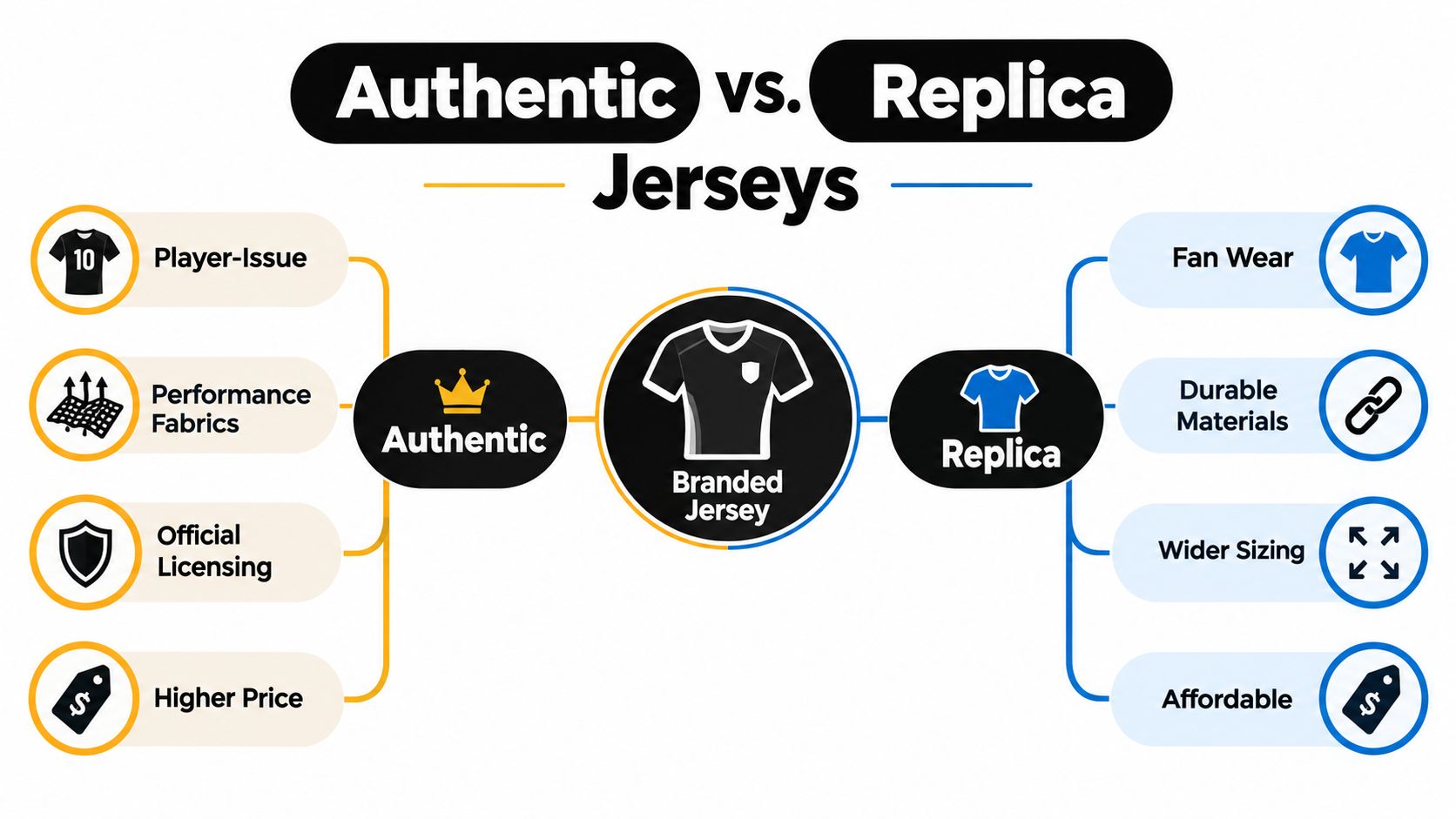
Player-issue shirts are built for elite match performance. They can use lighter construction, closer cuts, heat-applied details, and technical panels. That design may feel restrictive for everyday wear because it assumes an athletic shape and prioritizes movement.
Authentic fan versions retain official club and manufacturer details while making practical adjustments for supporters. Their cut or construction may differ from the shirt worn on the pitch, but licensing still distinguishes them from counterfeits.
Replica shirts are also official fanwear. They generally prioritize durability, comfort, broader sizing, and a more accessible price. “Replica” describes a supporter product based on the club's official design. It does not mean fake.
A counterfeit sits outside all these licensed tiers. It may reproduce the badge, sponsor, labels, or manufacturer mark, but the authorization is missing. A lower-priced official replica can therefore be genuine even when it does not match the fit or fabric of a player-issue shirt.
Why sponsorship matters
The sponsor logo is part of the shirt's identity and its production history. Chest branding gained commercial value through repeated exposure during matches, interviews, photographs, and fan content. From early deals such as Jägermeister to major agreements including Manchester United's Sharp sponsorship and the later Chevrolet contract, valued at £64 million annually, clubs turned shirt space into premium advertising inventory.
For collectors, these details help establish provenance. For gift buyers, they clarify what the purchase represents. Compare the listing with the manufacturer's official product images, then follow this practical guide to checking whether a football shirt is authentic before paying.
A mystery-box purchase deserves the same checks as a standard listing. A surprising design or low price can signal a different product tier, missing licensing, or a counterfeit. If you are adding supporter décor, you can order custom crest flags, but a custom accessory does not prove that the jersey itself is licensed.
Materials Fit and Comfort Explained Simply
A jersey's comfort comes from the interaction between fiber, knit, finish, and cut. The label might say polyester, but that single word doesn't tell you how quickly the shirt moves moisture, how much air reaches the skin, or how the garment will sit over the shoulders. Two polyester shirts can feel very different because their construction serves different purposes.
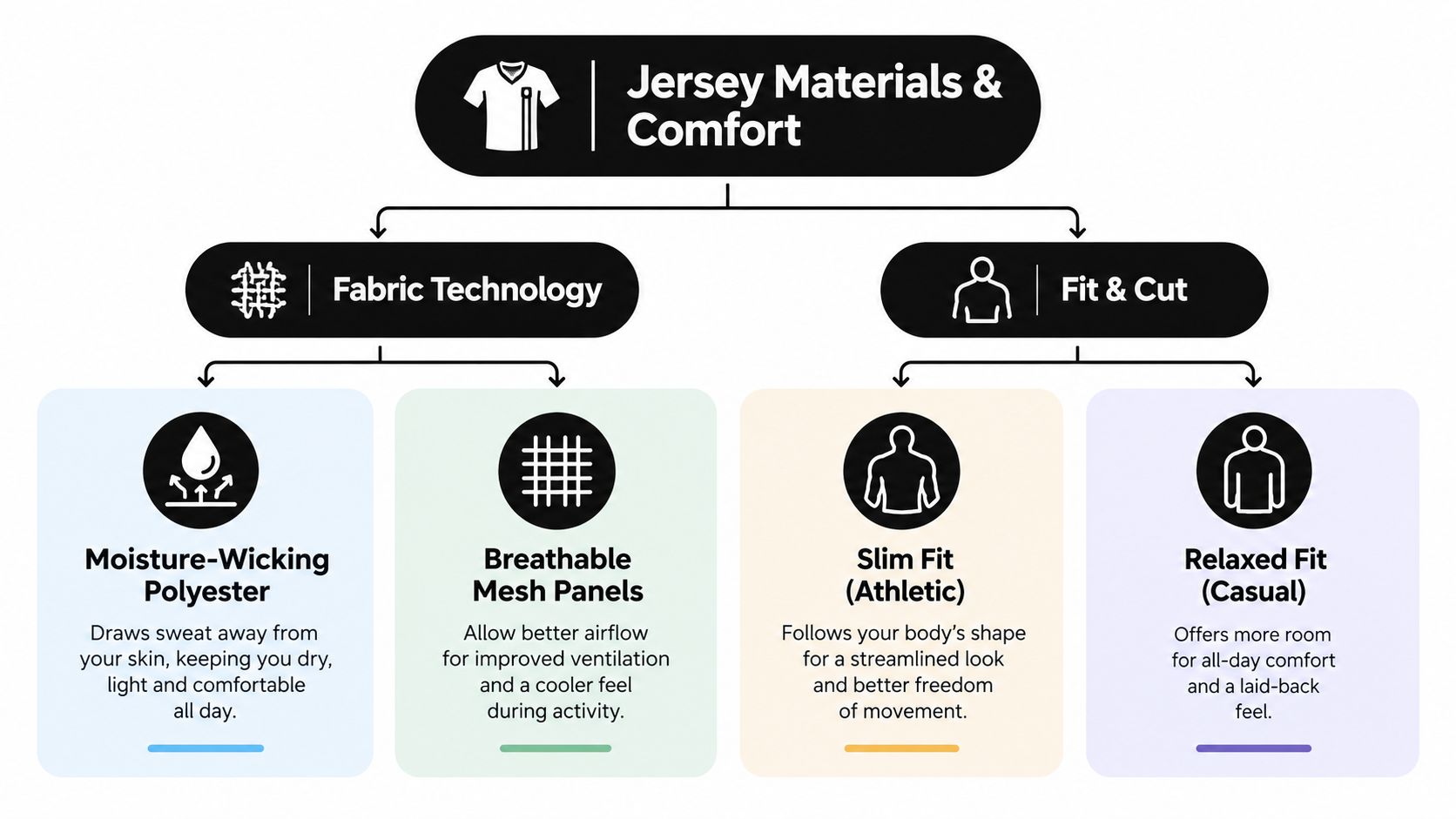
Cotton absorbs sweat and can hold it against the body. Polyester-based technical fabrics are designed to move moisture through the garment so it can evaporate more readily. In a heat-stress test, a shirt made from 81% polyester and 19% elastane produced significantly lower rectal temperature during the final 15 minutes of exercise and retained less sweat than a 100% cotton shirt. The PubMed study on football clothing and heat strain connects fiber choice directly with thermoregulation during intense activity.
Reading fabric performance
Moisture transport is the shirt's ability to move sweat away from the skin. It isn't the same as making sweat disappear. A good technical knit helps spread moisture across a larger surface, where airflow can support evaporation.
Air permeability describes how easily air passes through the fabric. Water-vapor permeability concerns moisture vapor moving through the material. One football jersey study reported a polyester fabric with thermal resistance of 0.009 m²K/W, water-vapor resistance of 0.44 m²Pa/W, water-vapor permeability of 237.7 g/m²/day, and air permeability of 2149.2 mm/s when the knit and finish were optimized. The textile comfort study from UTHM shows why the construction matters as much as the fiber name.
Practical rule: Choose technical polyester or polyester-elastane for active use, and judge the knit and cut rather than assuming every synthetic shirt feels identical.
Fit changes the experience
A slim athletic cut follows the torso and can reduce loose fabric during play, but it leaves less room for layering or body-shape variation. A relaxed fan cut gives more space across the chest and waist, making it easier to wear over a base layer or casual clothing.
Stretch fibers such as elastane can improve freedom of movement, but they don't remove the need to measure. Check the seller's garment measurements, compare them with a shirt you already own, and decide whether you'll wear the jersey for football, everyday outfits, or display. A useful companion guide to what materials soccer jerseys are made of can help you interpret the label before choosing a style.
How to Verify Authenticity and Avoid Fakes
A low price doesn't prove that a shirt is fake, and a high price doesn't prove that it's genuine. Verification works best as a chain of evidence. Check the seller first, inspect the product second, and compare the details with reliable official imagery before removing tags or washing the garment.
The risk is large enough to justify that effort. Independent research estimated the UK online fake football-shirt market at £180 million a year, with 16.2 million counterfeit shirts sold annually. The same research compared legitimate Premier League shirt sales of about 10 million units at an average £76.50 with counterfeits priced around £11. Corsearch's analysis of counterfeit football shirts also reported that searches for fake football shirts rose 514% compared with the 2021 Euros.
Use a physical inspection checklist
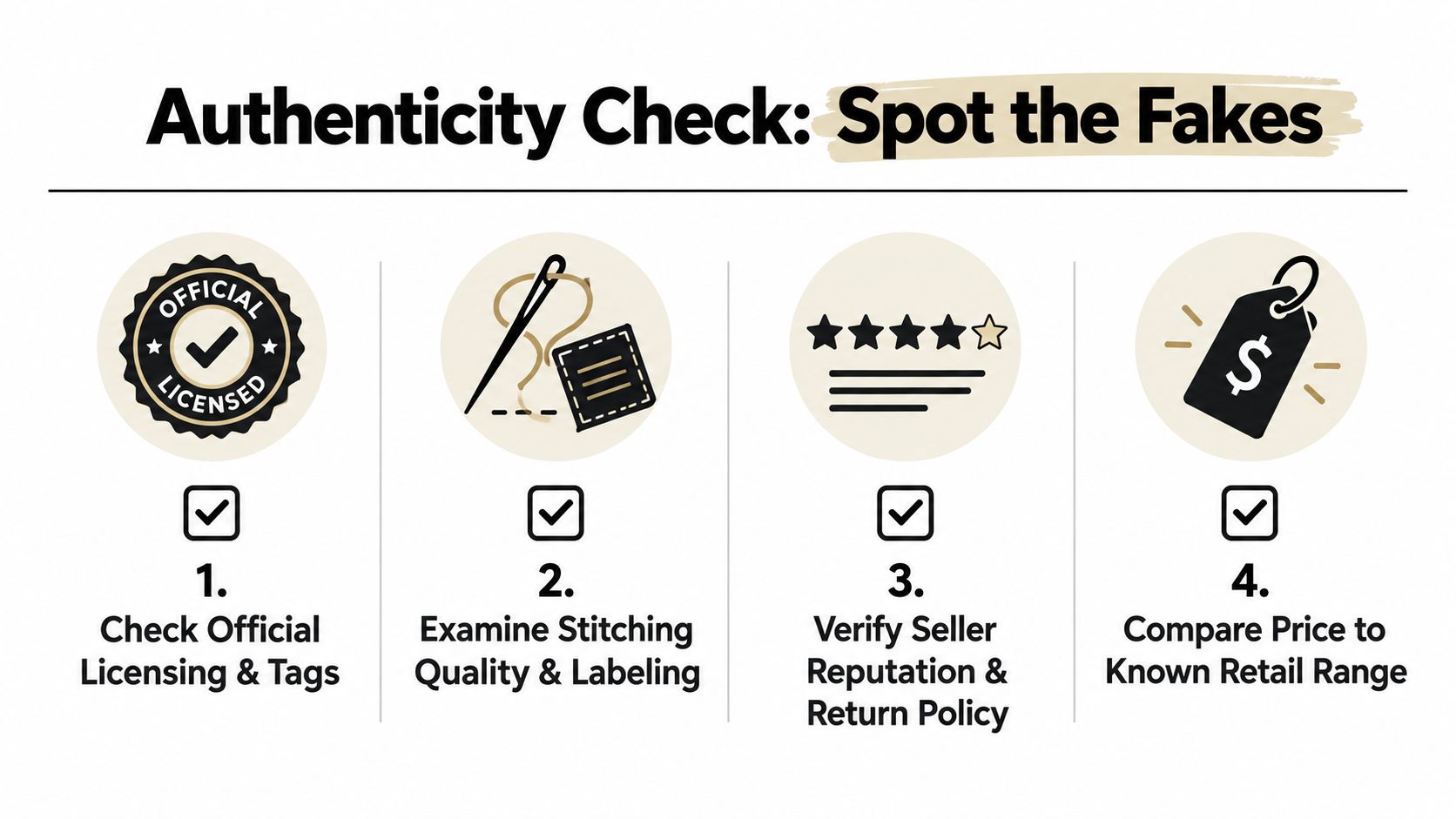
- Check the official labels and tags. Look for manufacturer labels, product codes, size information, care instructions, and licensing details. A code should correspond logically with the shirt's season, design, and manufacturer. A tag alone isn't proof, because counterfeiters copy tags too.
- Study the crest and sponsor. Official badges usually have clean edges, consistent shape, and careful attachment. Uneven embroidery, loose threads, distorted lettering, incorrect colors, or a sponsor logo placed at the wrong height deserve scrutiny.
- Inspect stitching and fabric. Seams should look controlled rather than hurried. Compare the collar, sleeve cuffs, side panels, and ventilation sections with official product photographs. Poor alignment can reveal a copy even when the front looks convincing.
- Assess the packaging. Crushed packaging isn't proof of fraud, but missing labels, unexplained substitutions, or packaging that conflicts with the seller's description should prompt questions.
Judge the transaction, not only the garment
Before buying, review the seller's identity, return policy, customer feedback, product photographs, and guarantee language. Be cautious when a listing uses only generic images, refuses close-ups, pressures you to pay outside a protected checkout, or can't explain whether the shirt is an official replica, player-issue product, retro release, or counterfeit.
A certificate can support provenance, but it shouldn't replace product inspection. Read how certificates of authenticity work for football shirts, then keep invoices, tags, photographs, and correspondence if you're buying a collectible. Mystery-box buyers should also confirm the provider's authenticity promise, exchange terms, size process, and approach to unwanted clubs or colors before ordering.
Price Ranges and Smart Buying Options
Price becomes easier to judge when you identify the ownership experience first. An official replica suits weekly wear and regular washing. A player-issue shirt is aimed at collectors or active players who value technical construction and a closer athletic fit. A retro release offers historical or design appeal. A mystery box gives up control over the exact shirt in exchange for surprise and curation.
Sponsorship demand helps explain why elite shirts can command attention, although sponsorship value is separate from retail value. The market grew from about £100 million per year around 2012-13 to roughly £400 million by 2022-23, as shown in The sponsorship market overview. Treat that figure as background, not proof that any particular jersey is valuable. Construction, authenticity, condition, rarity, and seller terms still decide whether the purchase offers good value.
| Buying Option | What You Get | Best For |
|---|---|---|
| Official replica | Licensed fan shirt with a wearable cut and durable construction | Regular supporters and children |
| Player-issue or authentic version | Closer performance design and a more athletic fit | Collectors and active players |
| Retro release | A past design reproduced or officially reissued | Fans drawn to club history |
| Marketplace purchase | Potentially broad stock and unusual finds, with varying seller risk | Experienced buyers willing to verify carefully |
| Mystery box | A surprise authentic shirt selected by the provider, sometimes with size and avoid-list choices | Gifts, discovery, and collection building |
| Sharing or bundle option | Several shirts intended for a group or coordinated order | Friends, teammates, and families |
Match the channel to your priorities
Use a standard retailer when you need a specific club, season, player name, or delivery date. Resale can offer unusual finds, but the price only makes sense after checking condition grading and seller evidence. A mystery box fits buyers who enjoy discovery more than exact selection. Before ordering, confirm the size process and whether you can exclude unwanted clubs, competitions, or colors.
Mystershirt lists Premium, Retro, Kids, bundle, and Sharing Box formats. Its stated choices include children's sizes through 5XL, avoid-list preferences, included labels, and a 100-day money-back guarantee. These details make the service relevant to shoppers seeking an authenticity-backed surprise, but read the terms carefully. A box is like buying a sealed pack for a collection: the excitement has value, while the rules determine how much control you retain.
The same decision rule applies to accessories. If you are preparing a fan-themed gift, finding the best promotional water bottle can help pair apparel with a practical item. Keep that accessory purchase separate from jersey verification, since branded merchandise does not establish that a football shirt is official.
Sizing and Care That Keeps Jerseys Looking New
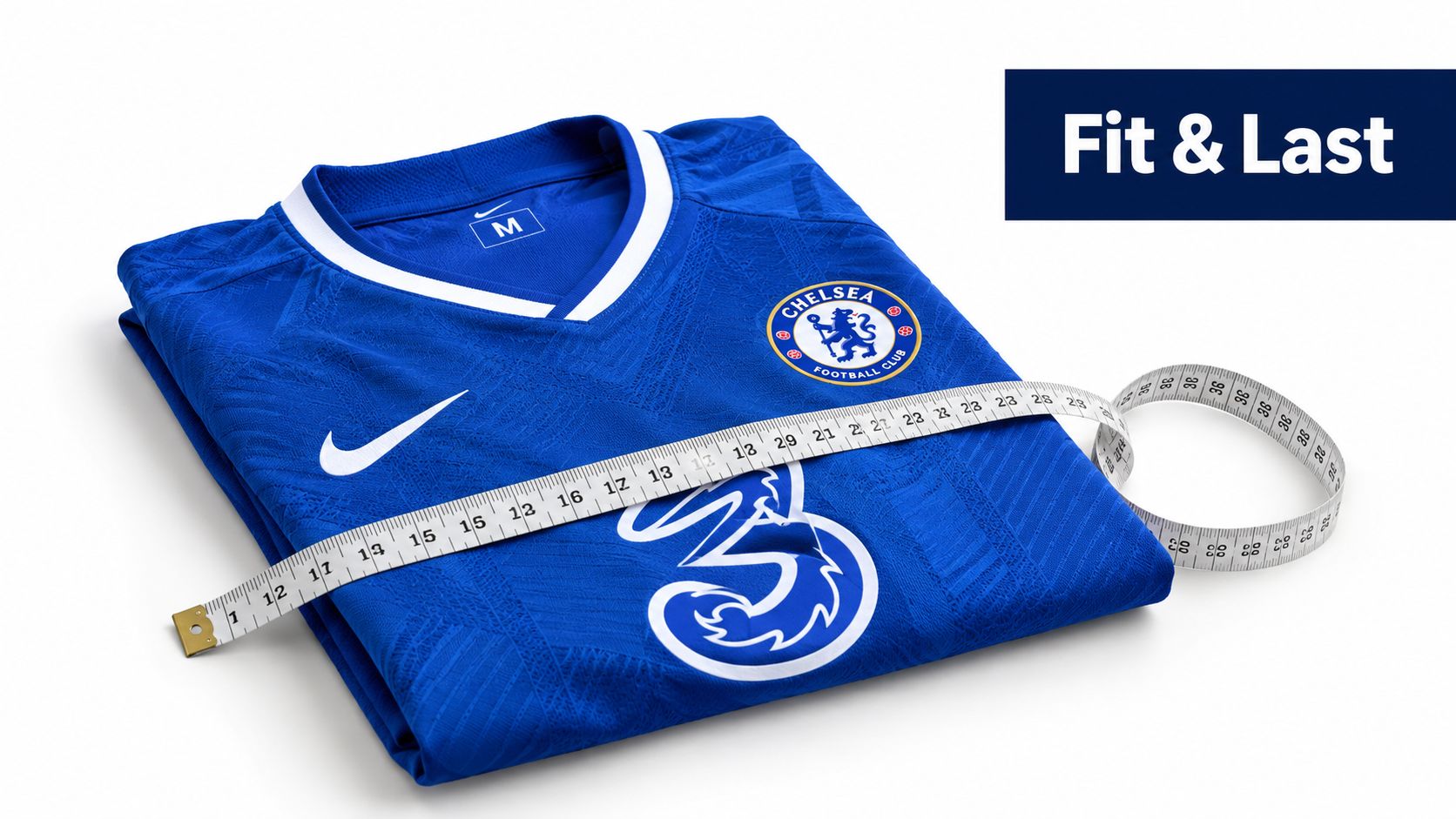
A correct size starts with measurements, not guesswork. Lay a shirt you already like flat, measure across the chest from underarm to underarm, and compare that number with the seller's chart. Check the length and sleeve measurements too, especially if you're choosing between a slim athletic cut and a relaxed fan fit.
Make the fit decision deliberately
For active use, leave enough room to move your shoulders and arms without creating excessive fabric around the torso. For casual wear, consider what you'll layer underneath. A gift buyer should ask for the recipient's chest measurement and preferred fit rather than relying only on age or a familiar letter size.
Children's sizing deserves extra care because growth can make a close fit short-lived. A slightly relaxed official replica may offer more practical wear than a tight player-issue cut, but avoid buying so large that the collar, sleeves, or sponsor print constantly fold.
Protect the shirt during washing
Turn the jersey inside out before washing. Use a cool or low-temperature cycle, mild detergent, and similar colors. Avoid bleach, fabric softener, harsh stain scrubbing over badges, and high heat.
Air-dry the shirt away from direct sunlight. Don't tumble-dry a garment with heat-applied numbers, sponsor graphics, or badges unless the care label explicitly allows it. Heat can encourage prints to crack, lift, or lose their finish.
Store a collectible clean and completely dry. Fold it with minimal pressure on printed areas, or use a suitable hanger that supports the shoulders without stretching the collar. Keep signed shirts away from frequent washing and handling, and photograph condition, tags, and details when the jersey arrives so you have a record for future insurance, resale, or authenticity questions.
Branded Football Jersey FAQs for Collectors and Gift Shoppers
Is a football jersey becoming a lasting fashion item?
Football shirts now work across matchwear, streetwear, and casual outfits. Fashion coverage describes jerseys as going-out tops and reports that the category has matured into a structural part of streetwear, but that doesn't guarantee every shirt will become collectible. Long-term appeal usually depends on official status, design, club significance, condition, demand, and the story attached to the release. Wear what you enjoy, and treat future value as possible rather than promised.
What makes a jersey a strong gift?
Start with the recipient's club preferences, size, and tolerance for surprise. A named shirt offers control, while a mystery box creates an unboxing experience. For a child or casual supporter, an official replica may be easier to wear. For a collector, labels, documented provenance, condition, and a clear return policy may matter more than the club's current popularity.
Can friends share a mystery box?
Yes, a sharing format can suit groups that want several shirts without each person selecting a specific design. Agree on sizes, avoid unwanted clubs or colors, and decide in advance how duplicates or unexpected leagues will be handled. The experience works best when everyone accepts that discovery is part of the purchase.
Which guarantee matters most?
Look for a clear authenticity promise, a usable return window, transparent sizing information, and written delivery terms. A money-back guarantee is useful only if you understand how to request it and what condition the shirt must be in. Keep the order confirmation and tags until you're satisfied.
Mystershirt offers authentic football shirt mystery boxes across Premium, Retro, Kids, bundle, and Sharing options, with size selection and clubs or colors to avoid. Visit Mystershirt to explore a surprise branded football jersey that fits your collection, gift plan, or group order.