You've got ten browser tabs open, three abandoned carts, and one nagging suspicion that the cheapest football jersey is a fake. One listing says “authentic,” another uses blurry product photos, and a third has the right club but no clear season or size information. The safest way to buy football jerseys online isn't to chase the lowest price. It's to filter the seller, identify the exact shirt, verify the evidence, and calculate the actual cost before you pay.
The demand is substantial. The global football merchandise market was valued at USD 15.9 billion in 2025 and is projected to reach USD 29.03 billion by 2034, according to Fortune Business Insights' football merchandise market analysis. Online buying already dominates the category, with the online segment holding 60.8% of the market in 2024, while Europe's e-commerce share reached 61% in the same research. That scale gives shoppers more choice, but it also gives counterfeit sellers more room to hide.
Table of Contents
- Starting Your Search for the Right Football Jersey Online
- How to Verify Jersey Authenticity Before You Pay
- Getting the Size Right on the First Try
- Choosing Between Premium, Retro, Kids, and Sharing Options
- When a Mystery Soccer Jersey Box Makes More Sense
- Pricing, Shipping, Returns, and Payment Methods Compared
- Turning a Jersey Into the Perfect Football Gift
- Your Final Checklist for Buying Football Jerseys Online
Starting Your Search for the Right Football Jersey Online
You have found the club, opened several listings, and still cannot tell whether you are comparing the same shirt. One page says “authentic,” another shows only a blurry crest, and a third leaves the season, fit, and return terms unclear. The safest way to buy football jerseys online combines four checks: filter the seller, identify the exact shirt, verify the evidence, and calculate the full cost before paying.
Start with the seller before judging the shirt. An official club store, licensed sports retailer, established independent shop, and marketplace listing may look alike in search results, yet their stock, delivery support, pricing, and counterfeit risk can differ sharply.
Official club stores give you the clearest route for current kits, personalisation, and club-linked returns. Expect higher prices and limited availability, especially for popular sizes. Licensed retailers often provide wider stock across several clubs and more promotions. Established independent shops can be useful for retro shirts and harder-to-find releases. Marketplaces such as eBay and Amazon offer range, but the individual seller matters more than the platform. Read feedback, inspect original-looking photos, and treat “brand new authentic” as a sales description rather than proof.

Use a three-part filter
Choose the seller first. Shortlist two or three shops before comparing shirts. This keeps polished product pages from distracting you from vague business details, weak policies, or poor customer support.
Define the product. Record the club, season, competition, shirt type, and intended fit. “Barcelona jersey” is too broad. “Barcelona home 2024/25, adult replica, no name printing” gives you a proper basis for comparison.
Compare the complete offer. Save the product description, size chart, delivery estimate, and return terms. Screenshots preserve the details shown when you order, including specifications that may later change. Use this football shirt value guide to assess value beyond the headline price.
Football shirts have been consumer products for far longer than many casual buyers realise. Standardized jerseys became commonplace in England from the 1890s, then developed from functional teamwear into identity-led commercial apparel, as documented in Cambridge's history of the football jersey. That history explains why one search can mix match kits, lifestyle shirts, retro designs, gifts, and collectibles.
Before adding a shirt to your cart, record its exact version. Confirm whether it is home, away, third, goalkeeper, training, premium, or replica, and check whether personalisation changes the price or return eligibility.
How to Verify Jersey Authenticity Before You Pay
A convincing fake can survive a quick glance. It struggles under a structured inspection. Use the product page and seller information first, then examine the shirt itself when it arrives.
Check the evidence in order
Start with the inner label. An authentic jersey normally has a well-sewn label showing information such as the size, fabric composition, manufacturer, and production details. Depending on the release, you may also find a QR code or security hologram. Missing, crooked, generic, or mismatched coding deserves serious suspicion.
Study the crest and sponsor marks. Genuine crests and logos have clean edges, consistent alignment, and sharp colour transitions. Loose threads, fuzzy borders, uneven heat pressing, or a sponsor logo sitting noticeably too high or low indicate poor production. Compare the collar, sleeve cuffs, and panel construction with photos from the club's official store. Counterfeit factories often copy the main colours but miss the knit pattern or smaller construction details.
Match production information. A matching production code helps, but it doesn't prove authenticity on its own. Independent authentication guidance recommends cross-checking the label, stitching density, crest alignment, and fabric composition rather than trusting a single code. The football shirt authenticity guide from PlanetFoot offers a useful reference for this multi-point approach.
Then inspect the paperwork. A serious seller should be able to identify the club and season clearly in the invoice or order record. Be cautious when the listing uses generic language, avoids manufacturer details, or offers a returns policy that never names the actual product.
Practical rule: One matching tag isn't enough. Buy only when the label, construction, product photos, seller records, and returns policy tell the same story.
| Checkpoint | Genuine Jersey | Counterfeit Jersey |
|---|---|---|
| Inner label | Sewn label with coherent size, composition, and production information | Missing, generic, crooked, or inconsistent label |
| Code or hologram | Code or security feature matches the product details where applicable | Unscannable, copied, missing, or unrelated code |
| Crest and sponsor | Clean edges, accurate placement, consistent stitching or pressing | Fuzzy edges, loose threads, poor alignment, uneven colours |
| Fabric | Composition and texture match the listed product | Thin, stiff, shiny, or inconsistent material |
| Seller documentation | Clear team, season, invoice, and return terms | Vague description and unclear recovery process |
Use the football shirt authenticity checklist before checkout, not after a dispute starts. If the seller refuses detailed photos or answers with “trust me,” walk away.
Getting the Size Right on the First Try
Football jerseys aren't ordinary T-shirts. The cut may be designed for movement, layering, heat management, or printed numbers, so the same labelled size can feel very different across a replica shirt and an authentic or player-style shirt.
Replica cuts usually suit casual wear and offer more room through the body. Authentic or player cuts sit closer to the body and may use shaped panels or a narrower waist. Don't assume your usual T-shirt size will transfer cleanly, especially if you're buying a premium shirt or ordering for a child.
Measure the body, then read the listing
Take three measurements:
- Chest: Wrap the tape around the fullest part of the chest, keeping it level.
- Shoulders: Measure from one shoulder seam position to the other, or compare the width of a well-fitting shirt laid flat.
- Length: Measure from the highest point near the collar to the hem of a shirt whose fit you already like.
Map those measurements to the brand or seller chart on the actual listing. Don't rely on a generic US, UK, or EU conversion table. Nike, Adidas, and Puma can size the same labelled shirt differently, and a club's replica range may not match its authentic range.

Kids' jerseys require even more care. Use the height and body measurements provided by the seller rather than age alone. Children grow unevenly, and a shirt bought for a full season may need enough room for movement without becoming unwearably large.
Women's cuts are available for some clubs, but many listings still use a unisex or men's base pattern. Check the product description for the cut before ordering. For plus-size buyers, inspect the actual measurement range, because “extended sizing” isn't standardized across retailers.
Sizing errors create an expensive return problem. Independent e-commerce research reports that roughly 30–40% of fashion e-commerce returns are absorbed by sellers, with sizing and fit among the leading causes, as explained by ReadyCloud's research on reducing online fashion returns. Choose a seller with free exchanges where possible, and try the jersey on before removing tags or applying personalisation.
Choosing Between Premium, Retro, Kids, and Sharing Options
The right format depends on what you want the shirt to do. A premium shirt makes sense for performance or close collecting. A retro release works better as everyday clothing. A kids' option should prioritize measurements and durability, while a sharing or fan-style edition usually makes sense when several people want coordinated shirts without paying for the most technical version.
| Format | Price Band | Fabric and Badge | Fit Profile | Best For |
|---|---|---|---|---|
| Premium | Higher | Performance fabric, heat-pressed sponsors, embroidered or detailed badges | Athletic and close-fitting | Match use, serious collectors, display pieces |
| Retro | Mid to higher | Heritage fabrics and classic crest treatments | Often more relaxed | Casual wear and nostalgia |
| Kids | Lower to mid | Scaled-down construction and child-focused materials | Sized by height and measurements | Young supporters and presents |
| Sharing | Accessible to mid | Fan-focused graphics and practical materials | Usually casual or standard | Groups, gifts, and coordinated wear |
Premium shirts are closest to the technical idea of a match kit. They may use lighter performance fabric, engineered panels, and less forgiving cuts. Buy one for playing, collecting, or displaying a release where construction details matter. Don't buy premium because the word appears in a title. Confirm the manufacturer, product code, and exact specification.
Retro jerseys appeal to buyers who want a shirt that works away from matchday. Older crests, classic colour combinations, and heritage styling make them easier to wear with ordinary clothes. The main risk is confusing an officially released retro product with an unlicensed reproduction, so the same label and seller checks still apply.
Kids' jerseys need a separate decision. A child who wants a specific player may care more about the name and number than the technical fabric, while a parent may care more about washing, comfort, and room to grow. Measure the child against the listing rather than buying by school year.
Sharing options prioritize the social experience. They suit friends attending a match, families supporting the same club, or groups who want a coordinated look without identical premium shirts. If you're researching how club apparel and commercial partnerships shape kit availability, this partnership guide for football clubs provides useful context.
Ask three questions before choosing: What's my budget ceiling? Who will wear it? Will it be worn or displayed? The answers usually point to the correct format faster than browsing dozens of product photos.
When a Mystery Soccer Jersey Box Makes More Sense
A mystery box suits the fan who wants a shirt but does not want to spend hours comparing clubs, seasons, and designs. It works especially well for collectors branching beyond their main club, gift buyers who want a reveal, and fans curious about international teams they have not followed closely.
The process is simple: choose a size and broad preference, then let the specialist select the shirt. That removes decision fatigue, but it does not remove your responsibility to check the seller. Treat the box as a serious buying channel. Review its authenticity proof, fit information, condition policy, returns, and possible extra charges before paying.
The appeal is discovery combined with a ready-made purchase. Boxes may include Premium, Retro, or limited-run shirts, and the per-shirt cost may be lower than building a collection piece by piece. The unboxing also becomes part of the gift, something a predictable catalogue purchase cannot provide.
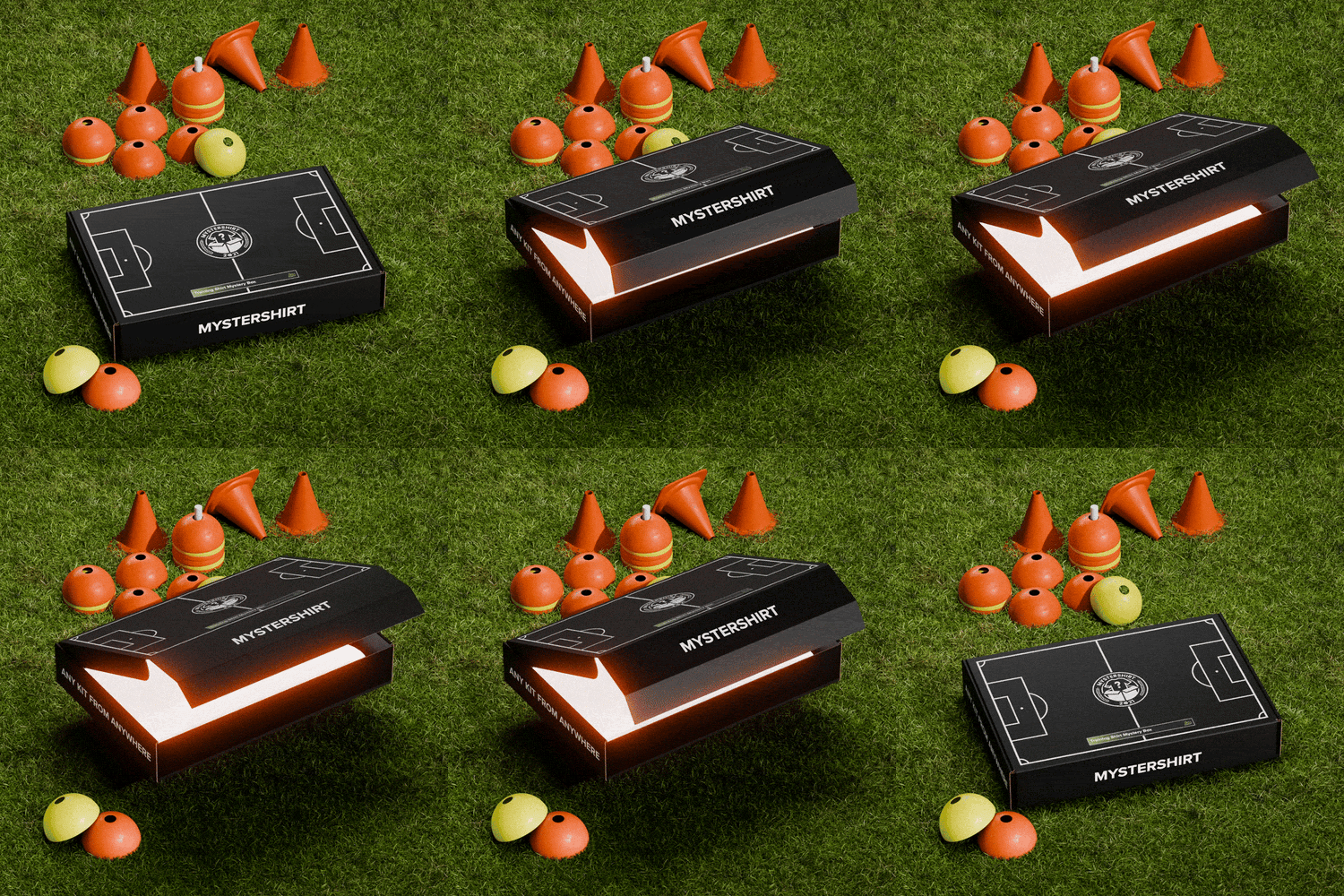
Mystershirt offers mystery football shirt boxes in Premium, Retro, Kids, and Sharing formats. Buyers can select a size and list clubs, competitions, or colours to avoid. Its store states that shirts are authentic and include labels, and it offers a 100-day money-back guarantee. Read the exact terms before ordering, especially for exclusions and return conditions.
Know when to skip the surprise
Choose another format if you need a specific club for an upcoming match, a particular player print, or an exact home shirt. The same applies to collectors seeking only authenticated match-worn pieces. A mystery format promises discovery, so it cannot guarantee a precise item.
Use this checklist before paying:
- Selection control: Confirm whether adult or children's sizing is available and whether you can list exclusions.
- Authenticity: Look for a clear statement covering genuine shirts, labels, and sourcing.
- Condition: Check whether shirts are new, unworn, vintage, or may show signs of age.
- Duplicates: Ask how repeat orders are handled if you are building a collection.
- Returns: Confirm whether surprise boxes are refundable, exchangeable, or final sale.
- Delivery: Read the estimated shipping period and check for cross-border charges.
A mystery box requires the same due diligence as any other purchase. It adds discovery to the process while leaving authenticity, fit, returns, and hidden costs for you to verify.
Pricing, Shipping, Returns, and Payment Methods Compared
The amount shown beside the “add to cart” button is only the starting point. Your real cost may include shipping, customs, currency conversion, personalisation, exchange postage, gift packaging, and return deductions. Calculate the landed total before you compare one jersey with another.
Shipping varies by seller type. Official club stores often give the clearest delivery estimates for current releases, licensed retailers may offer more warehouse options, and marketplace sellers can range from highly efficient to completely opaque. Express delivery sounds attractive when a match is close, but it can cost more than expected on a low-value order. International buyers should also check whether import duties are collected at checkout or requested by the carrier later.
Returns deserve equal attention. A shirt with a name and number may be excluded from returns, and a jersey that has been washed or had its tags removed may fail the condition requirement. Mystery boxes often have stricter rules than standard products. Never assume a general store policy applies to every category.
Compare protection, not just convenience
Credit cards can provide dispute and chargeback routes when a seller fails to deliver or misrepresents an item. PayPal may offer an additional dispute process under its applicable terms. Mobile wallets such as Apple Pay and Google Pay can reduce card exposure to the merchant, while instalment services can spread payments but don't remove your responsibility to understand the return policy or total amount due.
Before checkout, write down:
- Item total: Include the shirt, personalisation, and gift packaging.
- Delivery: Add domestic or international postage and the cost of faster service.
- Border charges: Check customs, import duties, and currency conversion.
- Returns: Confirm the window, condition rules, restocking charges, and exchange postage.
- Payment: Check surcharges, instalment terms, and available buyer protection.
For cross-border orders, use this international football shirt shipping guide to review the practical details before committing.
A cheap jersey with expensive return shipping isn't cheap. A higher-priced shirt with reliable sizing information, transparent delivery, and a workable exchange policy may be the better purchase.
Turning a Jersey Into the Perfect Football Gift
A football jersey makes a memorable gift because it connects identity, memories, and everyday use. Start with the recipient's habits and loyalties, then choose the right format.
For a partner who watches every match, the current-season home shirt suits the occasion, provided you know the club and size. A parent who still talks about a favourite striker may value a retro kit more than a generic new release. For a child devoted to one player, a kids' shirt with official name and number personalisation can create the biggest reaction. Confirm the child's measurements before ordering, and keep the packaging suitable for a present.
Group gifts need coordination. Friends attending a match together can choose coordinated Sharing options, while siblings can support the same club in different sizes. Complementary colours or different eras keep the set interesting without forcing identical shirts. Ask each recipient about preferred players, colours, and shirt styles before placing one combined order.
Personalisation needs a final check
Add the recipient's name, a favourite player, or a meaningful number only after checking spelling, character limits, and the seller's policy. Player printing is not automatically officially licensed. For an autographed shirt, require a certificate or clear provenance.
Mystery boxes suit recipients who enjoy discovery and can accept unfamiliar clubs, colours, or eras. Skip one for someone loyal to a single club unless the seller lets you request that club or exclude others. Surprise works only when the buyer understands the recipient's preferences. Otherwise, the gift creates an avoidable return problem.
Leave three to four weeks before the occasion for production, delivery, and a possible exchange. Last-minute orders increase stress, especially when personalisation is involved. Save the confirmation email, product details, and personalisation information. Wrap the jersey only after checking that the order matches the intended club, shirt type, and recipient. Keep tags attached until the recipient has tried it on.
Your Final Checklist for Buying Football Jerseys Online
Use four buckets before you click pay. If a shirt fails one bucket, pause the order instead of hoping the problem will resolve itself.
Trust signals
- Seller identity: Confirm the business name, contact details, reviews, and product-specific policy.
- Authenticity evidence: Look for coherent labels, manufacturer information, stitching, crest alignment, and applicable security features.
- Product clarity: Record the club, season, shirt type, condition, and personalisation terms.
- Documentation: Save the listing and invoice so the promised product is clear.
Fit readiness
Measure your chest and preferred shirt length. Pull the size chart from the actual listing, then mark whether the shirt is a replica cut or an authentic, closer-fitting version. For children, use height and body measurements rather than age. For women's and plus-size ranges, verify the garment measurements because labels vary.
Total cost
Add the shirt, printing, shipping, customs, currency conversion, gift packaging, and possible return or exchange postage. Check whether the payment method adds fees or offers dispute protection. A transparent total is more useful than a low headline price.
Timing
Match the delivery estimate to the event. Leave enough time for an exchange, and don't remove tags or wash the shirt until the recipient has checked the fit. Keep the return window open until you're certain the jersey is correct.
Choose your next action based on your buying goal:
- Collector: Search authenticated marketplace listings and verify every product detail.
- Gift buyer: Choose the format and personalisation early, then confirm size without guessing.
- Budget shopper: Compare three reputable replica or standard-fit sellers using the full landed cost.
- Curious fan: Try a mystery box from a transparent retailer that explains sizing, exclusions, authenticity, and returns.
Screenshot the order confirmation and the seller's stated authenticity policy before closing the browser.
Mystershirt offers mystery football jersey boxes across Premium, Retro, Kids, and Sharing formats, with size selection and club, competition, or colour exclusions. If you want to expand a collection or give a football fan a genuine surprise, visit Mystershirt and check the box details, authenticity terms, and return conditions before ordering.