You're probably in one of two spots right now. You want a fresh football shirt, but every normal route feels annoying. Buying directly from a club shop can be expensive. Hunting vintage shirts takes time. Scrolling resale listings feels like digging through a bargain bin with a flashlight.
That's why the streetwear mystery box has become such a pull. It gives you the same thrill as opening a pack of rare trading cards, except the prize might be a retro jersey, a current-season shirt, or a piece you'd never have picked for yourself but end up loving. For football fans, that surprise is half the fun. The other half is hoping you beat the price and land something with real collector value.
The problem is that most content around mystery boxes is hype. It's all reactions, reveals, and “look what I got,” while the buyer's real question gets skipped. What are you getting for your money, and how do you avoid fakes or filler? As noted on Los Angeles Apparel's mystery box collection page, existing content tends to be promotional or hype-driven and rarely answers the buyer's core question about expected value versus buying directly.
If you're jersey-first, streetwear-curious, or shopping for a gift, a practical approach beats blind excitement every time. You can enjoy the surprise and still buy smart.
Table of Contents
- Your Guide to the Streetwear Mystery Box Phenomenon
- What Exactly Is a Mystery Box and How Does It Work
- Decoding the True Value and Price of a Mystery Box
- Your Ultimate Checklist for Authenticity and Quality
- How to Choose the Right Mystery Box for Your Goals
- Unboxing Strategies and Building Your Collection
- Frequently Asked Questions About Jersey Mystery Boxes
Your Guide to the Streetwear Mystery Box Phenomenon
A streetwear mystery box makes immediate sense if you've ever wanted a new shirt but didn't want to spend your whole evening comparing sponsor logos, sizing charts, and resale prices. You pay for a curated surprise instead of a single known item. In football terms, it's a bit like backing your scouting department instead of signing one obvious star.
That idea didn't appear out of nowhere. The format was described by nss magazine as having been “born as a trend on Youtube in the wake of the hype culture,” with brands such as HEAT turning unsold goods and factory stock into luxury surprise parcels. The same reporting says HEAT sold “hundreds” of boxes in the first hours after launch, which shows how fast people bought into the concept when surprise, scarcity, and recognizable labels came together in one offer. You can read that original reporting in nss magazine's piece on the rise of the streetwear mystery box.
For football fans, the appeal is easy to understand. Shirts already sit at the crossroads of sport, design, nostalgia, and identity. A mystery format adds discovery to that mix. You might end up with a club from a league you barely follow, then suddenly you're reading about the kit manufacturer, the season, and the story behind the badge.
Why football fans click with the format
Some buyers want a wearable shirt. Others want a collectible. Others just want the rush of the reveal.
A football-focused streetwear mystery box works because it can satisfy all three:
- Collection building: You add variety fast, especially if you're tired of only buying shirts from clubs you already know.
- Gift value: It feels more memorable than handing over a gift card.
- Style discovery: A shirt you'd never search for can end up becoming a favorite casual piece.
Practical rule: Buy mystery for discovery, not for certainty. If you need one exact club, one exact season, or one exact player, buy direct instead.
Where people usually get burned
The confusion starts when buyers mix up surprise with guaranteed bargain. Those aren't the same thing. Some boxes are thoughtfully curated. Some are just a stock-clearing exercise with better packaging.
That's where most unboxing videos fall short. They show emotion, not method. A smart buyer wants to know how to judge value, how to read seller signals, and how to separate a fun punt from a bad deal.
What Exactly Is a Mystery Box and How Does It Work
You pay for a football shirt, choose your size, maybe rule out a rival club, and then wait to see what turns up at your door. That mix of control and uncertainty is the whole product.
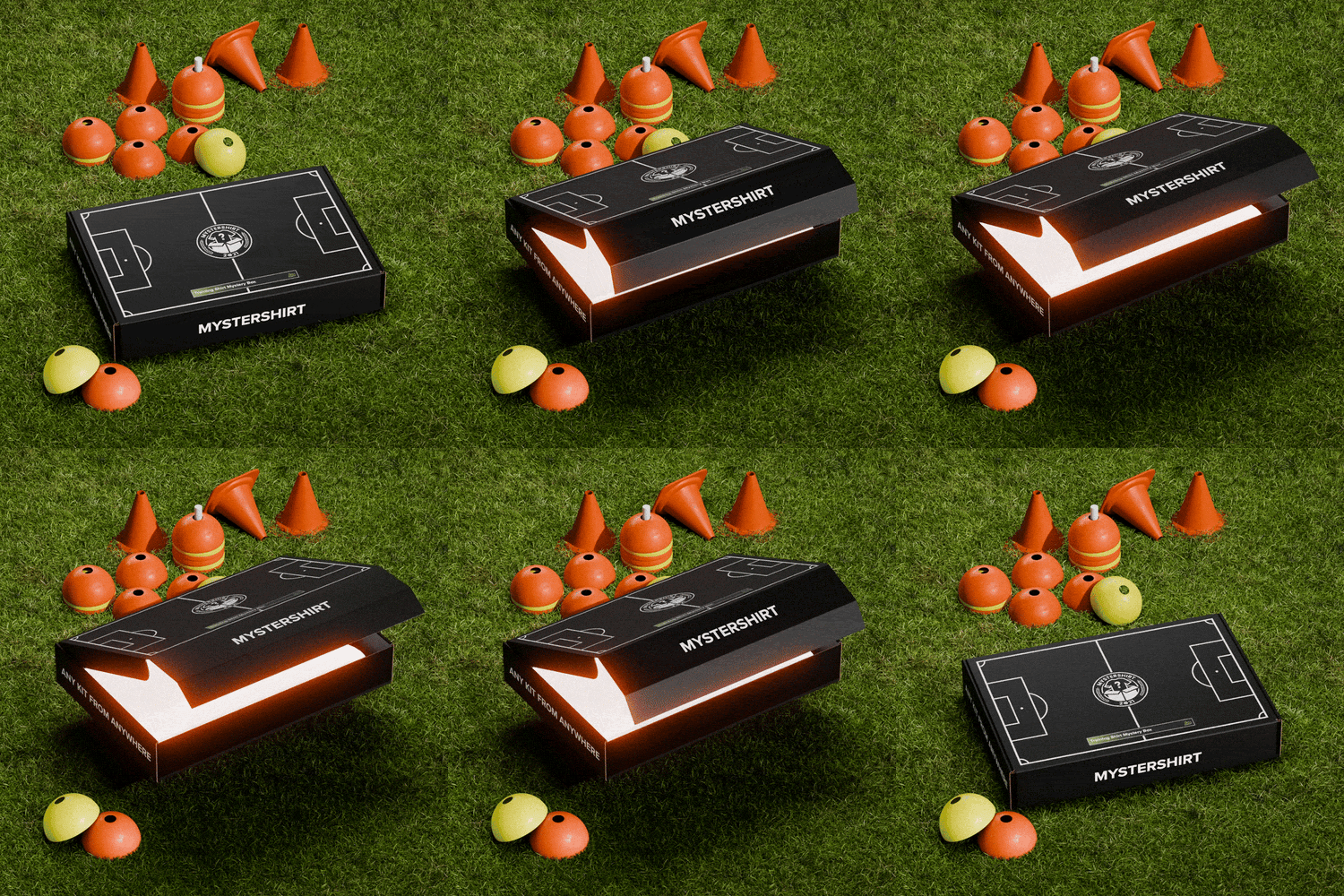
A mystery box is a curated package where the category is clear, but the exact item stays hidden until delivery. In streetwear and football, that usually means you pick a size, choose a box type, add any exclusions, and let the seller make the final selection from available stock.
A premium card-pack model, but for shirts
The closest comparison is a premium trading card pack. You know the sport, the product line, and the rough quality tier. What you do not know is the exact pull.
Football shirt mystery boxes work the same way. The box is not random in the purest sense. It is filtered randomness. Your size, the seller's stock, and any avoid list all shape what can end up inside.
That distinction matters because it clears up a common misunderstanding. Buyers are not paying for total surprise. They are paying for a surprise within a defined lane, which is why a well-run box feels fun and a sloppy one feels like a clearance bin in disguise.

A typical order flow looks like this:
- Choose your size. Size is the first filter, and one of the main ways sellers prevent obvious disappointment.
- Pick a category. That might be retro, premium, kids, club-specific, or a broader football mix.
- Add an avoid list. Better sellers let you exclude rivals, certain colors, leagues, or duplicate clubs.
- Wait for the reveal. Anticipation is part of what you paid for.
On the operational side, surprise-based businesses often depend on systems built for subscription box fulfillment because each order needs different packing rules, stock matching, and quality checks.
What the seller is doing behind the scenes
From the seller's point of view, a mystery box is a sorting and curation system. Product listings in this category often include mixed apparel and accessories such as T-shirts, sweatshirts, hats, jackets, and backpacks, bundled into one purchase while the buyer selects a size first. That setup helps sellers move varied stock while lowering fit risk through size-based curation, as seen in this streetwear mystery box example from Soles District.
Football shirt boxes follow the same logic, just in a narrower category. The seller starts with your size, checks your restrictions, then picks from the shirts they have on hand. That is why exclusion options matter so much. They do not guarantee a grail, but they do cut down the odds of getting something you would never wear, keep, or trade.
Collectors learn this quickly. A good box seller manages uncertainty the way a good scout manages risk. You may not know the exact signing, but you want evidence that the process behind the decision is sound.
The reveal also has value of its own. Unboxing culture made these products popular because people enjoy the suspense, the instant judgment, and the debate over whether the pull was worth it. If you want to see how buyers judge those results in real life, this football shirt mystery box review roundup is useful because it shows what collectors pay attention to after the package is opened.
Decoding the True Value and Price of a Mystery Box
The sticker price tells you what leaves your bank account. It doesn't tell you whether the deal is good. That second question takes more work.
Price is fixed, value is a range
Sellers often market mystery boxes by saying buyers “always” get more value than they pay. That framing treats the purchase as a positive gap between what the box costs and what the contents would normally retail for. The better way to think about it is as an expected-value problem, comparing the box price to the typical retail value of the brands or categories likely to be inside, as discussed in this mystery box product page analysis.
For football shirts, value usually comes from a few moving parts:
- Brand and club desirability
- Whether the shirt is current, retro, or harder to source
- Condition and original tags
- Your personal willingness to wear, trade, or resell it
That last point matters. A shirt can have decent market value and still be low value to you if it's from a rival club or a design you'd never wear.
A simple way to judge a box before you buy
Use this filter before you hit checkout:
| Question | Why it matters |
|---|---|
| Do I know the likely shirt category? | “Authentic football shirt” is clearer than “premium sports item.” |
| Can I exclude clubs or colors? | This lowers the chance of getting a dead-on-arrival item for your collection. |
| Is the seller defining value by retail, resale, or vague hype? | Retail is easier to verify than emotional claims. |
| Would I still feel okay if I got a mid-tier pull? | That's the real test of whether the box price makes sense. |
Here's the collector mindset I'd recommend:
- Start with the floor: Ask what the least exciting acceptable outcome looks like.
- Then consider the ceiling: A retro gem or sought-after club shirt is upside, not the baseline.
- Discount for randomness: The more mystery involved, the more cautious your value estimate should be.
- Factor in friction: If returns are limited and resale takes effort, that reduces practical value.
Don't buy a mystery box because the best-case outcome looks brilliant. Buy it because the worst acceptable outcome still feels fair.
If you want to sharpen that mindset further, this guide to value for money in football shirt buying is useful because it pushes you to compare excitement with actual utility.
The trap for beginners is chasing the dream pull. The smarter move is buying a box where the average outcome fits your taste, wardrobe, and budget. That's how mystery stays fun instead of becoming expensive gambling with laundry.
Your Ultimate Checklist for Authenticity and Quality
For football collectors, authenticity comes before value. A bargain fake is still a bad buy.
Trust signals that matter
Start with the seller, not the shirt photo. Anyone can upload a clean product image. What matters is whether the business behaves like a serious retailer.

My essential checklist looks like this:
- Clear sourcing language: The seller should explain whether items are authentic, deadstock, overstock, retail-sourced, or mixed.
- Visible customer proof: Look for buyer photos, not just polished marketing shots.
- Accessible policies: Shipping, returns, and refund rules should be easy to find and easy to understand.
- Responsive support: Send a pre-sale question. The reply tells you a lot about how they'll treat you later.
A trustworthy seller also stays consistent across channels. If their website says one thing, social posts say another, and customer comments raise the same concern repeatedly, step away.
Football jersey red flags
Shirt collectors should inspect a few details more closely than general streetwear buyers.
Watch for these warning signs:
- Too-vague descriptions: If the listing hides behind words like “inspired,” “fan style,” or “soccer design,” be careful.
- Missing detail shots: Serious sellers usually show material, badges, tags, or at least examples of what buyers can expect.
- No mention of labels or packaging: Authenticity claims are stronger when the seller explains how items arrive.
- Messy club exclusions: If the business can't reliably manage your avoid list, its curation may be sloppy elsewhere too.
Check the seller before you check the stitching. A bad operator can make every promise in the world.
Once the shirt arrives, inspect fabric feel, badge quality, print alignment, sponsor application, wash tags, and overall finish. If you want a more detailed jersey-specific walkthrough, this guide on how to check if your football shirt is authentic is worth keeping handy during your first unboxing.
Quality also includes presentation. A well-packed shirt with proper labeling and careful folding doesn't prove authenticity by itself, but careless packing often travels with careless standards.
How to Choose the Right Mystery Box for Your Goals
Not every streetwear mystery box is trying to do the same job. Some are made for discovery. Some are aimed at collectors. Some are really just a gift product with better storytelling.
Start with your reason for buying
Before you compare options, ask yourself one question. What do you want out of this?
If your answer is “I want a fun shirt I'll wear,” your best option is usually a flexible, broad box with strong exclusion controls. If your answer is “I want something retro or conversation-starting,” then a vintage-leaning or era-specific option makes more sense. If you're buying for a child or as a group gift, practicality jumps ahead of collector ambition.
This comparison helps:

| Box style | Best for | What you're really buying |
|---|---|---|
| Entry-level | New collectors, gift shoppers | A low-pressure introduction to the format |
| Brand-specific | Fans with a defined taste | More control, but less surprise |
| High-value | Serious collectors | Greater upside, but also more risk if the pull misses |
Use the avoid list like a pro
The avoid list is one of the most important features in football mystery boxes, and lots of buyers underuse it. Don't treat it as a minor note. Treat it as your defensive midfield.
Add exclusions that matter:
- Rival clubs: Obvious, but people still forget this.
- Leagues you never wear: If you know you won't touch certain regions or competitions, say so.
- Colors you already own too much of: Collection balance matters.
- Duplicate risks: Mention clubs or styles already sitting in your wardrobe.
You don't need to over-engineer it. If your avoid note becomes a novel, you're fighting the product. Mystery still needs room to breathe.
The sweet spot is controlled surprise. Enough guidance to dodge obvious misses, enough freedom for a real reveal.
A few buyer profiles make the choice easier:
- The young fan: Go simple. Prioritize fit, comfort, and broad appeal over rarity.
- The nostalgia hunter: Look for retro-focused categories and be open on club selection.
- The teammate gift group: Sharing-style boxes work best when everyone agrees on exclusions first.
- The collector: Choose the box that gives the clearest category promise, not the loudest hype.
The right box isn't always the most expensive one. It's the one that matches your goal with the least wasted outcome.
Unboxing Strategies and Building Your Collection
The box landing on your doorstep isn't the end of the process. It's the start of the useful part.

The broader mystery box category isn't a tiny niche anymore. One market projection says the global mystery box market is expected to grow from USD 567 million in 2026 to over USD 1.12 billion by 2034, with growth explicitly tied to influencer marketing and unboxing videos on TikTok, Instagram, and YouTube, according to Intel Market Research's mystery box market outlook. That tells you something important. The reveal is part of the value, not just packaging around the product.
Make the reveal more useful
Don't just rip it open and move on. Unbox with a bit of method.
Try this:
- Record the opening: It helps if there's a dispute about condition, and it's fun to look back on good pulls.
- Check details immediately: Tags, sponsor print, badge finish, and size should all get a first inspection.
- Photograph the shirt flat and on-body: One photo for records, one for style.
- Log the shirt somewhere: Club, season if known, size, condition, and where it came from.
If you enjoy sharing the reveal online, decent short-form editing makes a difference. Tools listed in this roundup of AI content creation tools can help turn a simple unboxing clip into something watchable without spending all evening on edits.
What to do if the shirt isn't for you
Not every pull is a keeper. That doesn't make the box a failure. It just means you need a collector's next move.
Here are the usual routes:
- Trade it: Collector communities often value swaps more than cash deals.
- Sell it carefully: Use clear photos and honest descriptions.
- Gift it: A shirt that misses for you might be perfect for a mate.
- Rotate it into casual wear: Some shirts grow on you once you style them away from matchday.
A smart collection isn't just a pile of shirts. It's a curated group with a story, a bit of variety, and as few dead pieces as possible. Sometimes the weird pull becomes the conversation starter. Sometimes it funds the next buy. Either way, treat every box as part of a longer collecting game.
Frequently Asked Questions About Jersey Mystery Boxes
What if I get a shirt from a club I hate
That's why the avoid list matters so much. Use it properly before ordering. If a seller doesn't offer any way to exclude rivals, leagues, or colors, the risk goes up.
Are jersey mystery boxes returnable
It depends on the seller. Some treat mystery items as final sale because the surprise is part of the product. Others offer a refund policy or satisfaction guarantee. Read the return terms before you buy, not after the box arrives.
Can I request a specific player or signed jersey
Usually, no. The core idea is still mystery. Some sellers run special editions or premium options, but if you need one exact player print or autograph, a direct purchase is the safer route.
How long does shipping take
That varies by seller, warehouse location, and destination country. Check the shipping page and look for realistic ranges rather than vague promises. International delivery can be smooth, but customs and local carriers can slow things down.
Are football mystery boxes better than buying shirts directly
They're better for surprise, discovery, and giftability. They're worse for precision. If you want a specific club, season, or fit outcome, buy direct. If you want a fun, curated pull with collector upside, mystery can be a great option.
Is a streetwear mystery box good for beginners
Yes, if the seller is transparent and the box type is broad enough to avoid niche disappointment. Beginners should focus on authenticity, exclusions, and fair value rather than chasing the biggest possible pull.
If you want to try the format with a football-first seller, Mystershirt specializes in authentic mystery soccer jersey boxes with options for Premium, Retro, Kids, bundles, and sharing. You can choose your size, set clubs or colors to avoid, and buy with the reassurance of a 100-day money-back guarantee.