Mystery t-shirts boxes are no longer just novelty gifts. They're increasingly practical, budget-friendly ways to build authentic sports collections, with sizes often ranging from youth to 5XL.
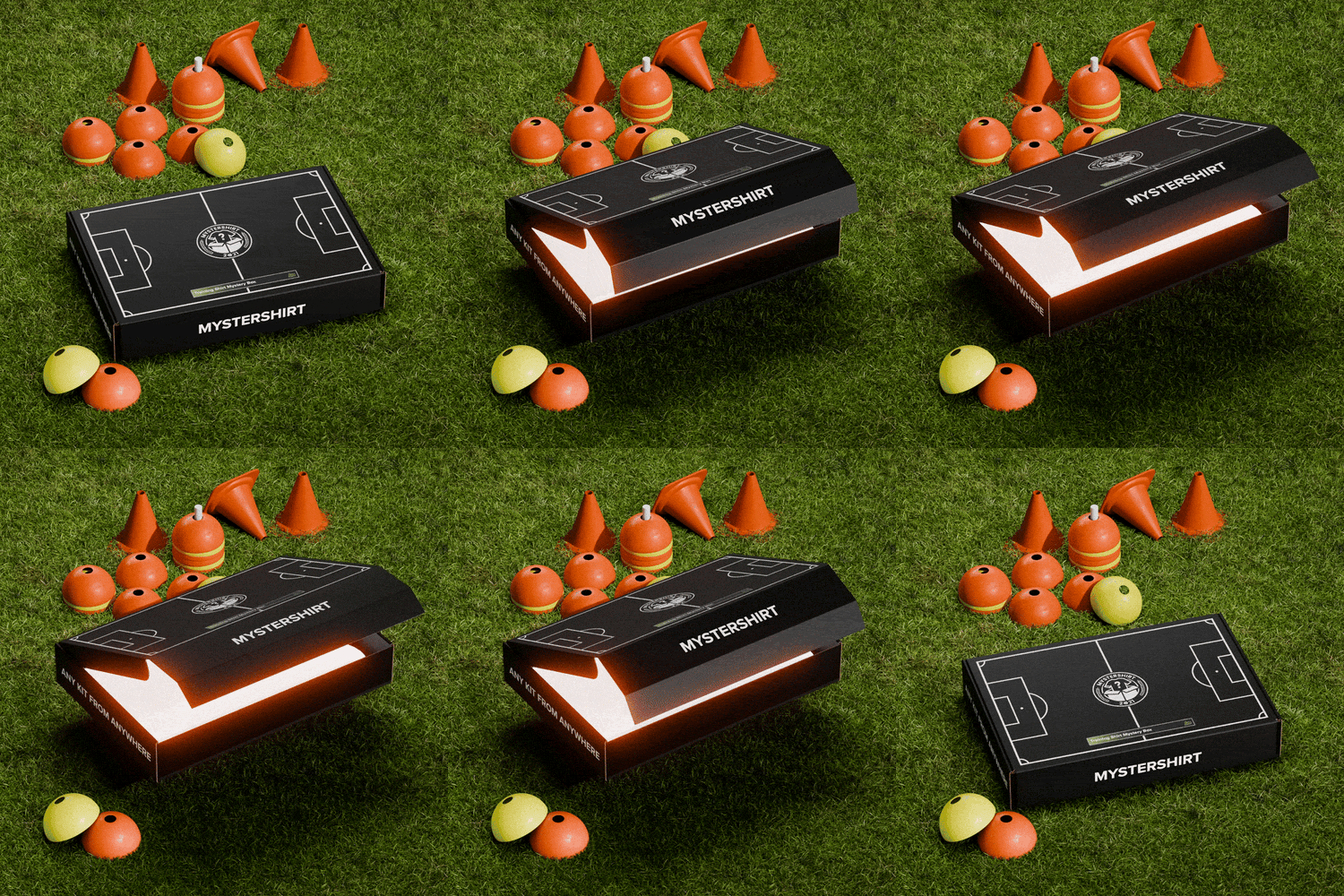
You know the scene. A parcel lands by the door, lighter than a boot box but packed tightly enough to make you wonder what's inside. The tape resists, the cardboard gives way, and for a few seconds you're not shopping for clothing, you're scouting the next addition to your collection. The appeal is obvious, but the smart buyer needs more than suspense. A good t shirts box should deliver wearable sizing, credible authenticity, clear value, and a theme you'll actually use.
The category has room to grow because the underlying product is already enormous. T-shirt trade reached 12 billion imported units and 16 billion exported units in 2024, according to recent global t-shirt market data. Mystery packaging turns that established apparel market into a more curated experience.
Table of Contents
- The Thrill of the Unopened Box
- Defining the Mystery T-Shirts Box Concept
- How the Shopping Journey Unfolds
- Subscriptions Versus One-Off Surprises
- Navigating Sizing, Quality, and Authenticity
- The Perfect Gift and Group Buying Strategy
- Choosing Your Ideal Mystery Box Option
The Thrill of the Unopened Box
The first cut through the tape is the product experience. You aren't choosing between endless filters, comparing tiny thumbnail images, or abandoning a basket because every option looks similar. You've made a controlled decision about the format, then handed over the final design choice to the seller.
That uncertainty works especially well for football fans. A mystery box can uncover a club, era, competition, or shirt style you wouldn't have searched for directly. You might receive a familiar giant, a sharp retro design, or a piece from a football culture you've never collected before. The surprise matters, but the garment still needs to earn its place in the wardrobe.

Collector's rule: Surprise should decide the design, not excuse poor quality.
A t shirts box works best when the buyer controls the important variables and leaves only the fun part unknown. Size, preferred category, unwanted clubs, color exclusions, and garment type should be clear before payment. The design can remain secret because the practical risks have already been managed.
Why the format feels different
Traditional retail gives you maximum control and minimum discovery. A mystery box reverses that balance. You accept less certainty about the individual item in exchange for a faster decision and the possibility of finding something outside your normal search pattern.
That makes the format useful for both new and established collectors. Beginners get a low-friction route into authentic football apparel, while experienced fans can use boxes to broaden a collection without chasing every listing individually. The strongest versions feel like curated scouting rather than random clearance stock.
For a closer look at the emotional mechanics and practical checks involved, see this mystery box unboxing guide. The right mindset is simple: enjoy the reveal, but judge the purchase by what you can wear, verify, and keep.
Defining the Mystery T-Shirts Box Concept
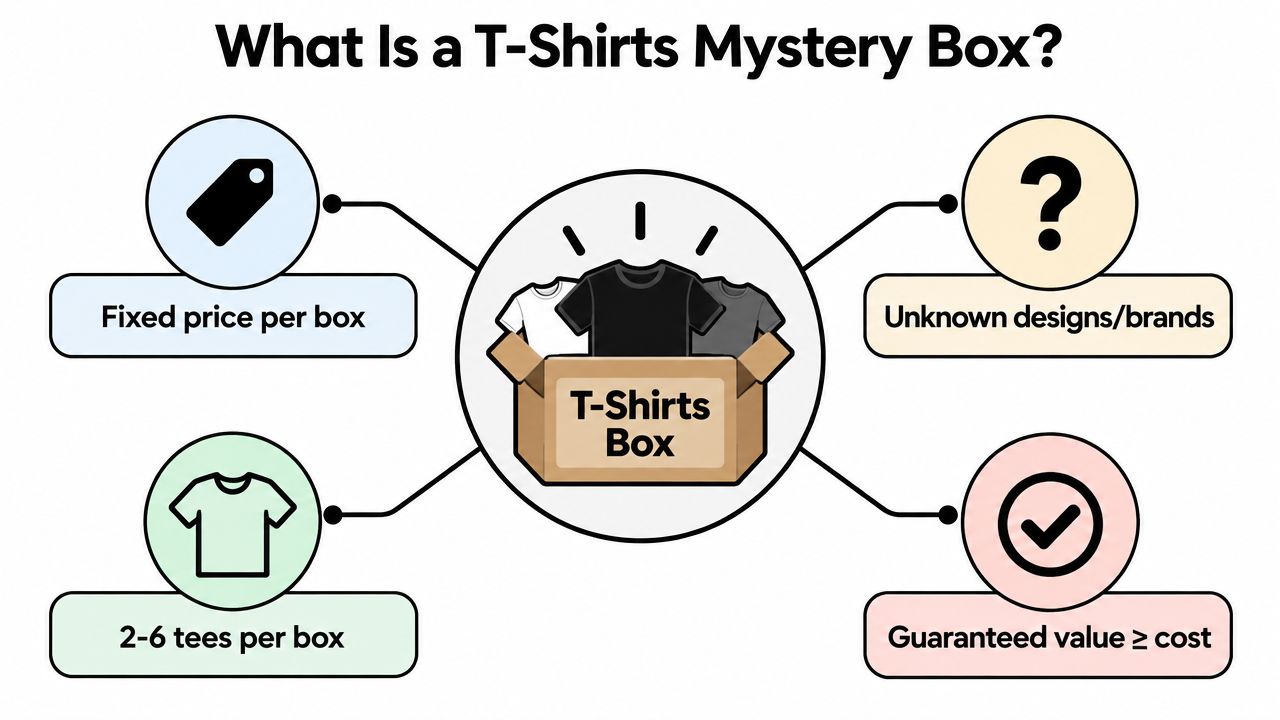
A mystery t-shirts box is a fixed-price apparel purchase with an unknown final selection. You choose the format and usually provide useful constraints, such as size or styles to avoid, while the seller chooses the specific shirts. That makes it different from a plain bulk order, where you select every item, and from a standard subscription, where recurring delivery is the defining feature.
The product can take several forms:
- Single-shirt surprise: One mystery shirt, usually suited to a first purchase or a small gift.
- Multi-shirt collection: Several garments chosen around a sport, theme, era, or general apparel category.
- Premium or retro format: A box focused on higher perceived collectability, older designs, or a narrower football identity.
- Sharing format: Multiple shirts intended for friends, teammates, or family members to divide.
What you control and what you surrender
You control the budget, size, product tier, and exclusions. The unknown element is the exact design, club, brand, or combination. A trustworthy seller makes that boundary explicit. If the product page is vague about whether shirts are authentic, new, vintage, licensed, or second-hand, the mystery isn't the issue. The listing is incomplete.
The commercial model is becoming more familiar outside football. One forecast values the subscription-box sector at $27.7 billion in 2025 and $31.94 billion in 2026, as reported in this mystery clothing box market overview. Those figures don't prove that every box offers good value, but they do show why buyers now recognize recurring and curated surprise formats.
For collectors, the key distinction is novelty versus utility. Novelty asks whether opening the box feels exciting. Utility asks whether the shirt fits, suits your collection, survives regular wear, and represents fair value at the price paid. The modern t shirts box needs both. Remove the excitement and you have ordinary retail. Remove the utility and you have an expensive gimmick.
How the Shopping Journey Unfolds
Your first order should be treated like a scouting report. Before choosing a club or theme, inspect the seller's controls, product details, and return terms. These signals show whether the box was built for collectors or assembled around vague surprise language.
Step one, choose the size before the theme
Start with the size chart. Football shirts vary by brand, cut, season, and intended fit, so a familiar label cannot guarantee the right result. Compare garment measurements with a shirt you already own and know fits well.
A seller may offer sizes from children's ranges through adult 5XL, but broad availability does not guarantee a useful fit. Parents should check whether youth sizes use age labels, letter sizing, or measurements. If you are buying for someone else, confirm that person's preferred fit instead of guessing from height.
Fit comes before club preference. A rare shirt that cannot be worn is a poor result.
Step two, set your tolerance for surprise
Choose the product tier according to your collecting goal. A general mystery box supports discovery. A retro option suits buyers interested in historical styling, older club identities, or distinctive designs. A premium format should explain what makes it premium, such as the shirt's era, condition, authenticity, or selection criteria. A higher price alone proves nothing.
Write down your exclusions before ordering. List clubs you already own, colors you will not wear, leagues you want to avoid, and designs that would feel like duplicates. You will not control the exact shirt, but you can block the most predictable disappointments.
Step three, test the product promise
Read the listing for four answers:
- Authenticity: Does the seller state whether shirts are genuine and explain how that standard is supported?
- Condition: Are items new, vintage, pre-owned, or mixed?
- Returns: Can you return an unsuitable item, and which conditions apply?
- Contents: Does the box contain shirts only, or might it include accessories and substitutes?
Packaging offers another practical clue about the seller's process. Corrugated mailers are commonly measured internally as Length × Width × Depth. The box size should suit folded apparel without leaving the shirt loose inside. This corrugated box sizing guide explains the measurement convention.
Step four, preserve your evidence
Save the confirmation email, preference notes, and return terms. If the parcel arrives damaged, photograph the packaging before opening it. Once opened, check the labels, stitching, print, sponsor details, and measurements before removing tags or washing the shirt.
That discipline protects your return options while keeping the reveal enjoyable. A mystery box should deliver discovery with usable value, not turn basic quality control into a gamble.
Subscriptions Versus One-Off Surprises
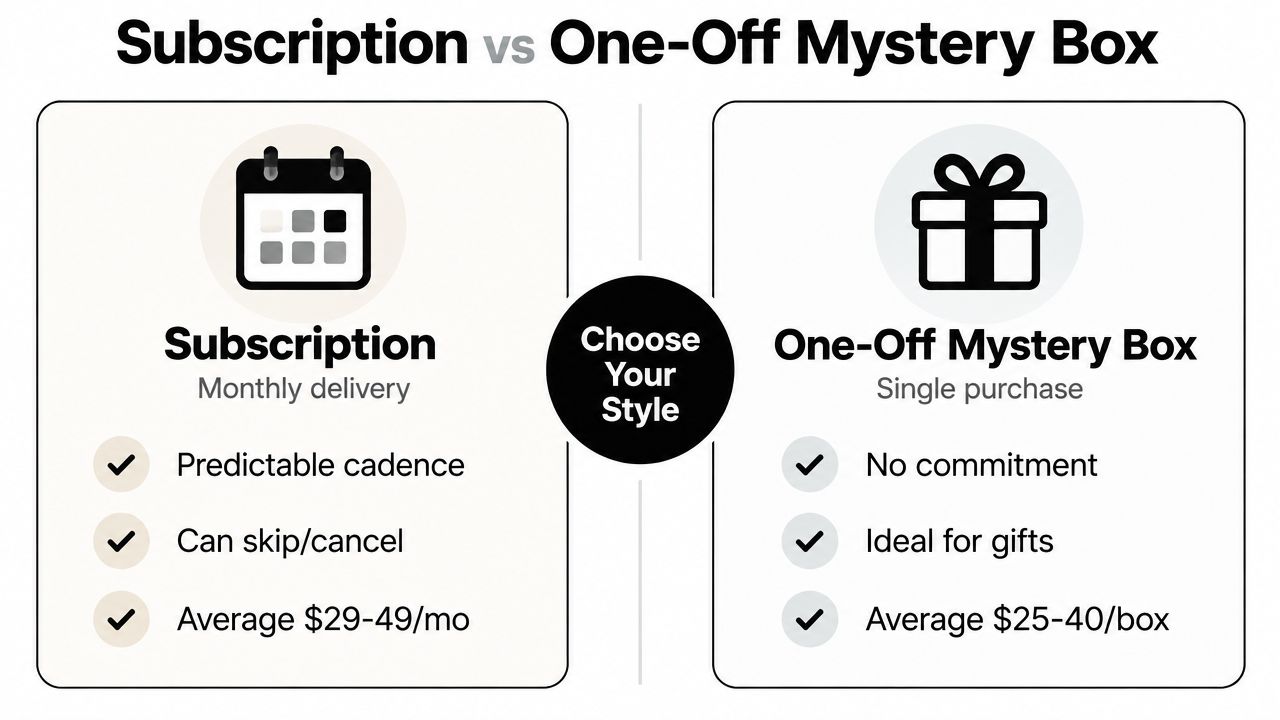
The choice between recurring delivery and a single purchase comes down to inventory rhythm. A subscription suits someone who wants the collection to keep moving. A one-off box suits a buyer who has a particular event, gift, or budget in mind.
| Buying style | Best fit | Main advantage | Main risk |
|---|---|---|---|
| Subscription | Active collectors and regular wearers | A steady flow of new designs | Repeated themes or unwanted buildup |
| One-off box | First-time buyers and gift shoppers | No ongoing commitment | Less opportunity to refine preferences over time |
A subscription creates momentum. Each delivery gives you another chance to discover a club or design outside your usual search habits, and a recurring relationship may let you communicate preferences more consistently. It also demands more honesty about your wardrobe. If unworn shirts are already piling up, another delivery isn't collecting. It's storage.
A one-off purchase keeps the decision clean. You can buy for a birthday, a match-day surprise, a new fan, or your own first experiment with the format. There's no need to remember a cancellation date or justify another parcel next month. For many buyers, that flexibility makes the single box the better starting point.
Match the model to your collector profile
Choose a subscription if you enjoy the discovery process itself, wear football shirts regularly, and have enough information about your sizing and preferences to guide future boxes. Choose one-off purchases if your requirements change by recipient, occasion, or season.
The fashion market is moving blind-box formats beyond collectibles, with recent trend reporting describing expansion into fashion in 2026 and a stronger emphasis on useful fashion sets rather than pure entertainment, as noted in this blind-box fashion trend report. That shift makes subscriptions more credible, but it also raises the standard. A recurring box has to deliver repeatable wearability, not just a dramatic opening.
Before committing, read the cancellation and skip rules. Then compare the format with your actual buying behavior. The right question isn't “How exciting is the next box?” It's “Will I still want another shirt when this one has had time to settle into my collection?”
For a more detailed look at recurring delivery, read this t-shirt box subscription guide.
Navigating Sizing, Quality, and Authenticity
A mystery box can shift from useful collection to expensive disappointment in one delivery. The shirt may look sharp, yet fit badly, arrive in poor condition, or fall short of the seller's authenticity promise. Control the risks before ordering by treating the design as the surprise and the product standard as a requirement.
Sizing deserves close attention because labels vary between brands and shirt types. Compare the seller's chart with a shirt that already fits, checking chest width, length, sleeve shape, and whether the cut is slim, regular, oversized, or unisex. If your measurements sit between sizes, inspect the return policy before paying. A box that cannot be returned is a poor choice when the fit remains unclear.
Sizing uncertainty is a central concern in mystery clothing purchases. Independent buying guidance recommends avoiding vague size ranges and confirming return terms before ordering, as outlined in this mystery box clothing buying guide. Apply that advice directly to football shirts, where replica-style cuts and lifestyle fits can feel very different on the body.
Build an authenticity checklist
Inspect the shirt as soon as it arrives:
- Labels and care tags: Check print quality, alignment, spelling, and construction.
- Badges and sponsors: Look for clean stitching, consistent placement, and materials suited to the shirt.
- Fabric and finishing: Examine seams, hems, ventilation panels, and loose threads.
- Product description: Confirm that the delivered condition matches the original promise.
A reputable seller should define “authentic” in practical terms. The product page should state whether the shirt is official, replica, vintage, new, or pre-owned, along with its condition. Club imagery and football terminology do not prove origin.
Buying standard: If the seller will not explain sizing, authenticity, condition, and returns before payment, skip the box.
Quality determines whether the shirt earns space in your rotation. A well-fitting garment that survives regular washing can become a dependable match-day staple. A rare-looking item that stays folded in a drawer offers little practical value. Collectors may care about club, season, and scarcity, but smart buying also asks whether the shirt can be worn, maintained, and enjoyed. That is how mystery boxes become utility-driven collections rather than short-lived novelty purchases.
The Perfect Gift and Group Buying Strategy
A mystery t-shirts box beats ordinary gift shopping when you know the recipient's size and football identity, but not the exact shirt they want. You avoid pretending to know the difference between every season's third kit, while still giving them something personal, wearable, and fun to open.
The format also creates an event. A single shirt can be wrapped as a reveal, while a larger box gives friends or teammates several moments to compare colors, clubs, and designs. That social element is difficult to reproduce with a standard retail purchase, where the gift is fully known before it reaches the recipient.
Give the recipient useful control
Don't make the gift completely blind. Ask for the person's shirt size, favorite leagues, clubs they already own, and colors they won't wear. You can keep the exact design secret while removing the predictable disappointments.
For children, check the size carefully and avoid assuming that an adult-style shirt will suit them. For serious collectors, ask whether they prefer retro, current, goalkeeper, national-team, or club designs. The more specific the recipient's collecting habits, the more important the preference notes become.
When a group box makes sense
Group buying works well for supporters' clubs, five-a-side teams, birthdays, and shared match-day plans. Each participant can contribute to a combined order, then open the shirts together and trade duplicates or unsuitable styles. That turns uncertainty into part of the social activity rather than leaving one buyer alone with a disappointing result.
A sharing format also simplifies logistics. One delivery, one opening session, and a clear way to divide the contents is cleaner than several separate orders arriving at different times. Set the rules before purchasing, especially around sizes, trades, and what happens if one person receives a shirt they don't want.
The strongest use case is a group that shares enthusiasm but not identical preferences. Everyone wants football culture, yet nobody knows exactly which shirt will appear. That's enough common ground for the surprise to work.
For ideas on organizing a shared purchase, use this friends mystery box guide.
Choosing Your Ideal Mystery Box Option
Choose the box around its job, not its label. A first-time collector needs a low-risk introduction, a regular fan may want a dependable flow of wearable shirts, and a gift buyer needs protection against poor fit or unwanted categories. Decide what the collection must do before considering specific designs.
Use this sequence:
- Set the spending boundary. Decide the maximum value before browsing premium upgrades, signed items, or extra apparel. A mystery format should control choice, not trigger impulse spending.
- Measure the wearer. Compare a well-fitting garment with the seller's size chart. For gifts, ask for measurements instead of trusting a familiar letter size.
- Define the collection's purpose. General boxes suit broad discovery. Retro options fit collectors drawn to older designs. Kids' boxes suit young supporters, while sharing boxes work when opening and trading are part of the plan.
- List useful exclusions. Name clubs already owned, colors you avoid, leagues you do not follow, and styles that will stay unworn. Preferences should guide the seller without turning the mystery box into a selected order.
- Read the protection terms. Check the statements on authenticity and condition, then confirm returns, guarantees, and delivery details before paying.
A practical decision map
Pick a one-off box for a first order, birthday gift, or single collection boost. Choose a subscription if you wear shirts regularly, enjoy repeated discovery, and have room and budget for continuing deliveries. Select a sharing box when opening and comparing shirts with other fans provides much of the value.
Apply a stricter test to premium and retro options. The description should explain the category clearly, including what separates it from a standard box. A premium label without useful detail is a reason to choose the simpler tier.
The market's scale supports this utility-first approach. T-shirt consumption was estimated at 21 billion units and $80.1 billion in value in 2024, while another market summary reported 22 billion units valued at $85.9 billion and projected 25 billion units worth $105.1 billion by 2035, according to the Cognitive Market Research t-shirt report. The figures differ because market reports use different methodologies, but both describe a large, established category. Do not chase volume for its own sake. Choose a box that adds authentic shirts you will wear, trade, or keep for a clear collecting reason.
Mystershirt offers Premium, Retro, Kids, bundle, and Sharing Boxes containing authentic football shirts, with sizes from children through 5XL and preferences for clubs, leagues, and colors to avoid. Visit Mystershirt to choose a box suited to a collection, gift, or group order.