You've probably been there. You're on an unfamiliar product page, you like the photos, but your cursor keeps drifting back to the refund promise. A money back guarantee is the line that tells you whether the store is confident enough to stand behind what it sells, and whether you've got a clean exit if the item isn't what you expected.
That small line carries more weight than most shoppers realize. It shapes trust, sets expectations, and, when written badly, creates disputes that support teams end up untangling later. The practical version is simple. A guarantee is a promise with rules, and those rules matter just as much as the promise itself.
Table of Contents
- What a Money Back Guarantee Really Is
- Who Benefits From a Money Back Guarantee
- Anatomy of a Strong Money Back Guarantee
- How to Claim a Refund Step by Step
- Merchant Best Practices and Real Examples
- Common Questions and Final Checklist
What a Money Back Guarantee Really Is
The easiest way to read a money back guarantee is as a plain-English promise. If the product or service doesn't meet the stated condition, the seller agrees to give the money back. That sounds simple, but the core meaning comes from the parts underneath it.
A workable guarantee usually has four building blocks. It needs a refund trigger, which is the event that starts the refund right. It needs a clock, which tells customers how long they have to claim. It needs eligibility rules, which explain who qualifies and what condition the item must be in. It also needs a refund method, because customers need to know whether the money goes back to the original payment method, through store credit, or some other route.
Practical rule: if a guarantee doesn't say when the clock starts, what counts as eligible, and how the refund is paid, it's not a guarantee customers can actually use with confidence.

There's also a long retail history behind that promise. Josiah Wedgwood is credited with pioneering a satisfaction-or-money-back promise on pottery, and by the post-Civil War years in the U.S. the practice spread as retail competition intensified. In one historical study of Champaign-Urbana, Illinois, guarantees became widespread after 1864, and by the early 1870s they were generally integrated with one-price selling, which helped modern mass distribution take shape as described in the historical overview.
A useful way to compare the refund side of the business is with a broader trust resource like building customer trust with returns. That distinction matters because customers often use the words return and refund interchangeably, while merchants need to know exactly which step happens first.
Who Benefits From a Money Back Guarantee
Customers benefit first because the guarantee lowers the risk of saying yes. If someone is buying from a store they do not know well, the promise of a refund can make the decision feel safer. It does not remove every doubt, but it lowers the fear of being stuck with a bad purchase.
For shoppers, the upside is easy to feel. A strong guarantee gives them recourse if the product arrives damaged, does not match the description, or does not solve the problem they thought it would. That is one reason buyers pay attention to return and shipping terms before they commit. A guarantee is often less about refunding regret and more about giving the customer a fair off-ramp.

Merchants benefit too, but in a different way. A clear guarantee can reduce pre-sale hesitation, answer some support questions before they are asked, and make the store feel easier to try. It can also create cleaner post-purchase data, because refund requests reveal where a product page, sizing guide, or delivery promise is failing.
The downside is real as well. U.S. retailers lose more than US$260 billion annually to customer returns, which equals about 8% of total retail sales according to the economics overview. Refund promises therefore have to balance trust with control, especially when abuse, worn items, or serial return behavior enter the picture. If the policy is sloppy, the merchant absorbs the mess.
A good support stack can help here. Teams looking for automation often review best AI customer support tools because better triage, faster replies, and clearer self-service flows can keep guarantee requests from turning into a backlog. That matters most when shoppers ask the same three questions over and over, and the policy page is not answering them cleanly.
Shipping uncertainty and refund anxiety often travel together in the buyer's mind, especially for cross-border orders. A practical reference point is the international shipping guide, because buyers usually want to know whether a delay, customs issue, or lost parcel changes their refund options.
One helpful way to picture the whole policy is from both sides of the counter. The customer wants a safe exit if the purchase misses the mark, while the merchant wants a process that separates genuine problems from routine second thoughts. That balance is where a guarantee earns trust instead of creating confusion.
Shoppers do not just ask, “Can I get my money back?” They ask, “What happens if the item arrives late, wrong, or broken?”
Anatomy of a Strong Money Back Guarantee
A strong guarantee starts with clear choices. Those choices tell shoppers what to expect and tell the merchant how claims will be handled when they arrive. Without that clarity, the policy reads like a promise, but works like a guess.
A good way to read the policy is from both sides of the counter. The customer wants a safe exit if the item misses the mark. The merchant needs rules that separate a real product problem from a routine change of mind. A useful guarantee makes both sides feel the process is fair, instead of forcing either side to decode vague wording.
Start time and claim window
The first choice is when the clock starts. Some stores count from purchase, others from delivery, and that difference changes the length of protection. If a customer waits for a parcel and the clock already began at checkout, the useful window gets shorter before they even open the box.
Clear policies name that start point in plain language. A short window can still work if the rest of the process is simple. A longer window can also work if the business is ready to support it. Trouble begins when the policy stays vague, because confusion turns into disputes before anyone has even looked at the product.
Eligibility and exclusions
The next decision is who qualifies. Good policies say whether the item must be unused, in original condition, or returned with labels and packaging. They also list exclusions, because not every product should be handled the same way.
Marketplace-style guarantees make that distinction easy to see. eBay frames its money-back guarantee around misdescription, damage, and non-delivery, which is different from a broad dissatisfaction promise as described in eBay's policy. That matters because customers usually care less about abstract satisfaction and more about whether the item arrived as promised.
The refund economics matter too. When returns become expensive at scale, merchants need language that matches real liability, not hopeful wording. That pressure is part of why guarantee terms are usually stricter than shoppers first expect as covered in the economics overview.
Shipping, refund method, and claim path
The last decisions are the ones shoppers feel most directly. Does the seller cover shipping? Is the refund full or partial? Does the money go back to the original card, or somewhere else? A policy that leaves out these details forces both sides to fill in the blanks.
The structure usually becomes clear when you break it into parts:
- Clock start: purchase date or delivery date
- Eligibility: original condition, unopened, or product-specific rules
- Shipping: refunded, partially refunded, or excluded
- Refund route: original payment method, store credit, or another method
- Claim channel: form, email, or support ticket
That is why policy guidance keeps returning to the same core elements. A guarantee is designed, not improvised, and the design choices shape customer trust as much as merchant exposure as laid out in the policy guidance.
A concrete example makes the structure easier to picture. If Mystershirt sets a 100-day guarantee, the promise only feels real when the terms spell out when the 100 days begin, what condition the item must be in, and how the refund is issued. A customer checking the order page or a confirmation email should be able to confirm the timeline through the delivery confirmation before they ever need to file a claim.

How to Claim a Refund Step by Step
The cleanest refund claims usually start before the customer contacts support. The shopper reads the policy carefully, checks the deadline, and gathers the details that prove the order exists. That usually means an order number, screenshots or photos, and delivery tracking if shipping is part of the dispute.
Re-read the policy before sending anything
A lot of refund friction comes from people asking for the wrong thing. If the policy covers damage but not dissatisfaction, or if the clock starts at delivery instead of purchase, the customer needs to know that before writing the first message. The small print becomes useful instead of annoying at that point.
If the store has a clear claim window, respect it. If the policy says the item must be returned, send it back in the condition the policy requires. If the guarantee says the refund goes to the original payment method, expect the money to land there, not in a different account.
Submit proof and keep the message simple
The best refund requests are short and specific. State the order number, the problem, and the remedy requested. Attach the evidence the policy asks for, nothing more and nothing less.
A helpful reference on expense reimbursement without hassle can be useful here because the same rule applies in both settings, clear documentation speeds up the decision. Merchants move faster when they can verify the claim without chasing missing information.
If the store asks for a return, use the shipping confirmation process they provide and keep the tracking number. An internal guide like delivery confirmation is the kind of resource that helps reduce arguments about whether the item arrived.
Escalate only if the merchant stalls
If support stops responding, the customer still has options. Chargeback rights may apply depending on the payment method and the facts of the case, and consumer-protection agencies can also be part of the escalation path. The FTC returned more than $324 million to consumers in 2023 through law-enforcement actions, which shows why formal complaint channels still matter according to the FTC figure cited in the economics overview.
Keep the first message factual. The faster the claim reads like a record and not a rant, the easier it is for a support team to approve it.
Merchant Best Practices and Real Examples
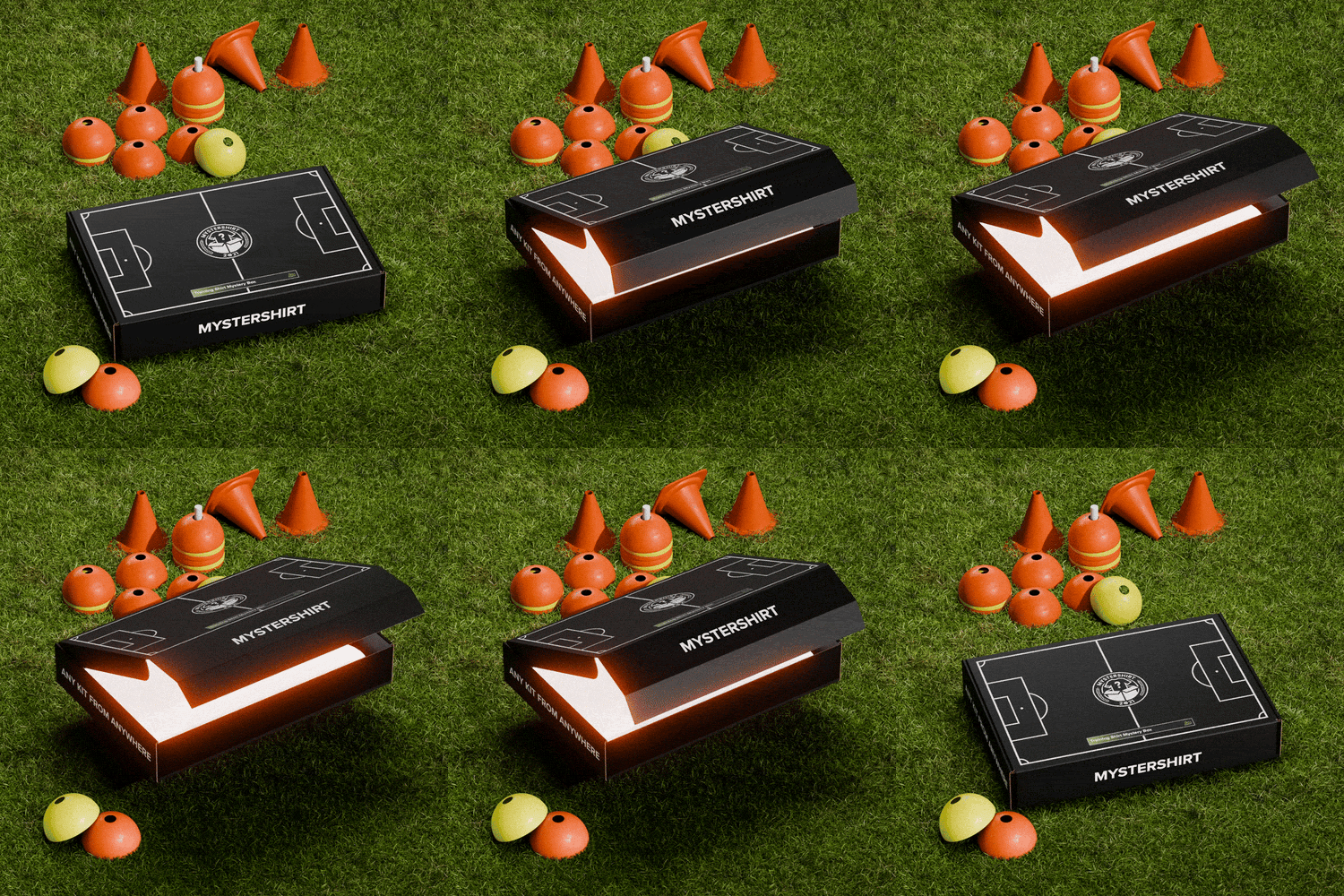
A long guarantee works only when the merchant can explain it in one breath. Mystershirt's 100-day money-back guarantee on its Mystery Soccer Jersey Boxes is a useful example because the offer is easy to understand, and the product itself already has trust signals built in, including authentic shirts, worldwide shipping, and size selection. The guarantee doesn't sit alone, it supports the rest of the buying decision.
What the policy has to do on the product page
The policy should be visible where people make the purchase decision. If customers have to hunt for it, the guarantee stops doing conversion work and starts acting like fine print. The wording should tell buyers the claim window, the refund trigger, and what happens next in plain language.
That matters even more for products with surprise elements. A mystery box can create excitement, but excitement also raises uncertainty. A guarantee calms that uncertainty by giving the buyer a defined exit if the item lands outside expectations.
One internal example worth checking is the customer satisfaction score, because merchants often learn more from post-purchase feedback than from the initial sale page. Support teams can use that feedback to refine eligibility rules, delivery wording, and claim flow.
What merchants should avoid
The biggest mistakes are usually boring. Vague language creates confusion. Hidden restocking fees create resentment. Country-specific consumer rights can override whatever the store hoped to say. Fraud filters are sensible, but they shouldn't be so harsh that legitimate buyers get trapped.
A practical policy usually handles abuse by focusing on documentation, not by trying to outsmart every bad actor. If a business sees repeated claims from the same account, it can investigate patterns without making the policy unreadable for everyone else. That's better than writing a policy that sounds protective but is impossible to administer.
A useful way to think about it is this. A guarantee should answer the customer's question before support ever sees it. If the store can't tell a shopper what counts, when it counts, and how it gets paid out, the refund flow isn't ready.
Merchant rule: write the guarantee for the least confused customer, not the most compliant one. Clear policies reduce argument, and they also reduce accidental promises the store never meant to make.
Common Questions and Final Checklist
Mystershirt's 100-day money-back guarantee works as a good running example because it's simple enough for a shopper to understand, but still specific enough for a merchant to manage. That's where many stores struggle. They want the trust boost, but they forget that the policy has to answer ordinary questions before they turn into support tickets.
A common one is whether a partial refund still counts as a money back guarantee. The honest answer is yes, if the policy says that's what it offers. But if the customer expects a full refund and the policy only allows partial recovery, the store needs to say that clearly up front. The label matters less than the actual promise.
Taxes and shipping are the next confusion point. Some policies refund the product cost but exclude shipping. Others include shipping only in certain cases. The customer should be able to tell that from the policy without decoding legal language. The same goes for digital products, which are harder to return and therefore usually need tighter eligibility rules.
Another question is what “satisfaction” means. In practice, it can mean anything from “the item works as described” to “the product met the stated use case.” That's why legal and marketing language should not blur together. A broad satisfaction claim sounds friendly, but it can become expensive fast if nobody defines it.
A quick checklist helps both sides:
- For shoppers: check the clock, the eligibility rules, and the refund method before buying.
- For merchants: make the trigger, window, exclusions, and payout path obvious on the page.
- For both sides: keep screenshots, order numbers, and delivery records.
- For disputes: go back to the written policy before escalating.
That's the value of a strong guarantee. It doesn't just promise a refund. It creates a process that people can follow without guesswork.
If you want to see what a clear, customer-facing guarantee looks like on a live store, visit Mystershirt. Its Mystery Soccer Jersey Boxes pair authentic shirts with a defined refund promise, which makes it a practical example of how trust, product positioning, and refund policy can work together on the same page.